Smithsonian to Preserve and Make Neil Armstrong’s Apollo 11 NASA Space Suit 3D Printable


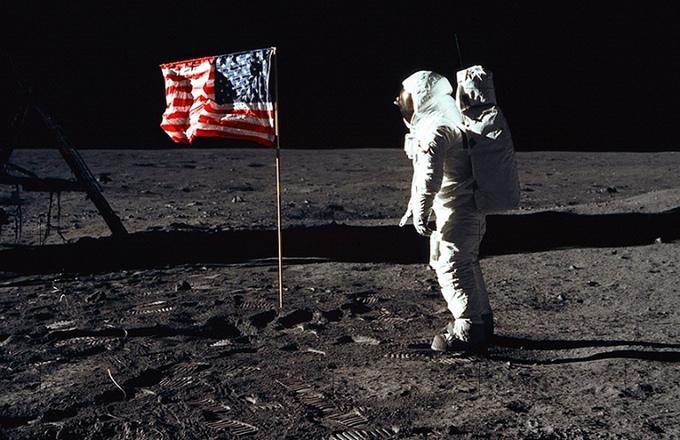 If you are my parents’ age and a citizen of the United States then it’s very likely that one of your most memorable national news stories was that of NASA’s Apollo 11 moon landing. It was 46 years ago today–on July 20, 1969–that NASA’s Neil Armstrong first stepped foot on the dusty celestial body we call the Moon.
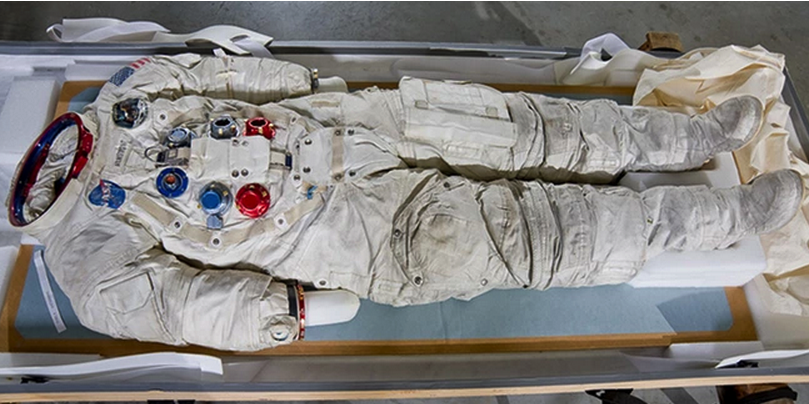
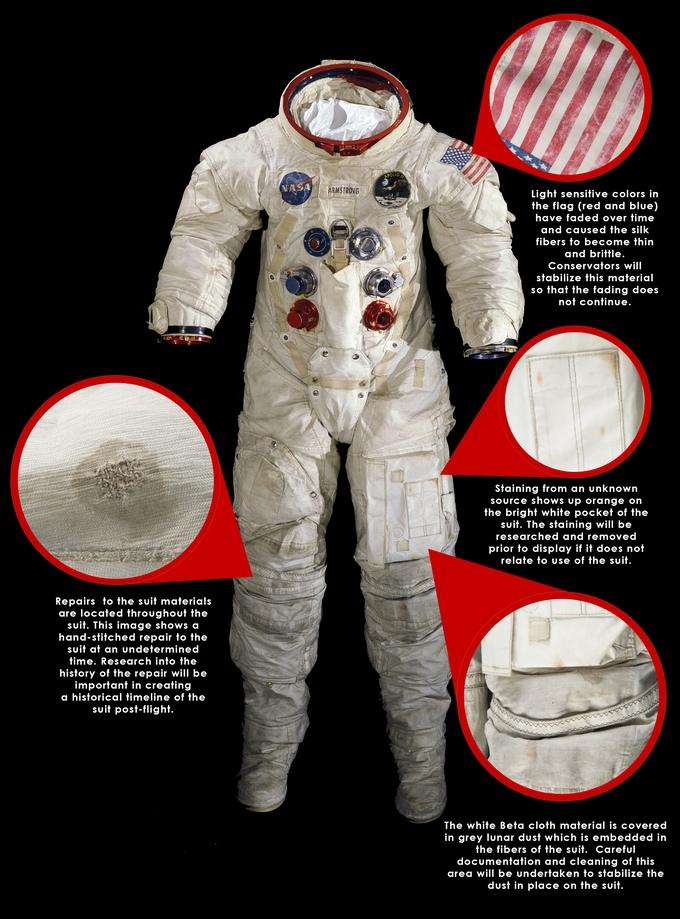
As the 50th anniversary of this historic event approaches in July 2019, the Smithsonian’s National Air and Space Museum would like to do something real special to mark the occasion. That’s why they’ve launched their first ever Kickstarter campaign which seeks to raise $500K for the conservation, preservation and digitization of the famous suit Neil Armstrong wore during those historic steps.
“It’s missing something,” explained Phil Plait when describing the current Apollo 11 exhibit at the National Air and Space Museum. “The complete suits are not even on display. They’ve been stored away in a special facility for their own protection, and that includes the complete space suit that Neil Armstrong wore when he walked on the moon. The years have taken their toll on Neil’s suit but now the technology exists to bring it back to its former glory, digitize it and put it on exhibit.”
Once preserved the suit will act as a cornerstone for a new exhibit called Destination Moon set to open sometime in 2020 at the Smithsonian’s National Air and Space Museum. In the process it will provide museum-goers a first-hand look at the actual suit worn by Armstrong, as well as many other historic artifacts from the moon landing.
“This is an epic endeavor, but we can do it with your support,” explained General John R. Dailey, the John and Andrienne Mars Director for the National Air and Space Museum. “By supporting us now it will ensure that we have this suit preserved for future generations. This is your chance to be a part of history.”
Not only will the Reboot the Suit Project enable the Smithsonian to conserve this invaluable relic to the past, but in the process they will also be 3D/CT scanning the entire suit, eventually making the scans available to the public who wish to 3D print any 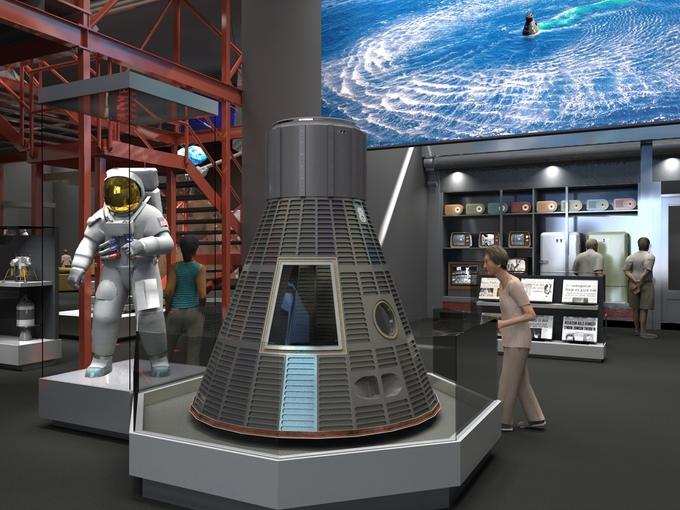 part of it or even the entire thing. In fact many of the rewards to those backing this initiative include actual 3D prints or 3D files of the suit.
For any pledge of $35 or greater, the Smithsonian will send you the 3D scan data of the suit in advance, prior to making it available to the public online. In addition, for those who are feeling really generous and pledge over $1,600, the Smithsonian will send you a limited-edition 3D print of Neil Armstrong’s spacesuit glove that you can try on for yourself.
The Kickstarter campaign will run until August 19th, at which point if they’ve reached their half-million dollar goal, the team at the Smithsonian will begin the conservation, scanning and preservation process. Let us know if you’ve made a contribution, and what you plan on doing with the 3D scans of this national relic once you get them. Discuss in the Neil Armstrong 3D Printable Suit forum thread on 3DPB.com. Check out the video below explaining this project in further detail.
Podcast: Play in new window | Download
Subscribe to Our Email Newsletter
Stay up-to-date on all the latest news from the 3D printing industry and receive information and offers from third party vendors.
Print Services
Upload your 3D Models and get them printed quickly and efficiently.












You May Also Like
Excellent Desktop Injection Molding, Made in Italy by Robot Factory
I was captivated when I saw my first Robot Factory 3D printer. The robust, precise machine was built to last. And this was in an era of very flimsy, disposable,...
Pogačar & Fairlight Cycles Show Us Low Cost 3D Printed Components for Bikes
There has been a lot going on in 3D printing for bicycles over the years. The most successful implementation so far is in bicycle seats. Carbon 3D printed seats are...
3D Printing News Briefs, June 18, 2026: Reseller, Relocation, Metal Space Powder, & More
We’ll start with business news in today’s 3D Printing News Briefs, as XJet appointed a value-added reseller in Germany, BIO INX is expanding its presence in the Italian market, and...
Researchers Combine AI and Bioprinting to Create Tiny Blood Vessel Networks
If 2026 has a theme in bioprinting, it may be blood vessels. Researchers can already print incredibly sophisticated tissues. The harder part is keeping those tissues alive. Without a network...