Solar-Powered Road Trip Across Africa Relies on 3D Printed Spare Parts

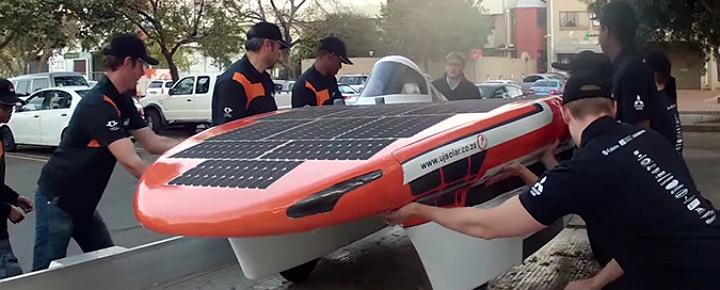
The Ilanga II project is now taking their show on the road.
A group of university students and lecturers are now on a road trip of more than 2,500 miles where they plan to test their solar powered car.
The University of Johannesburg Solar Project is all about promoting the study of alternative energy, energy management, and sustainable engineering design, and the showpiece of the initiative is the design and construction of solar and alternative energy-powered vehicles.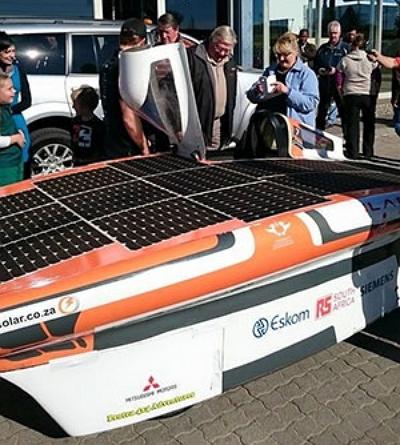
Back in 2011, a group of B.Eng students at UJ built the first of the series, Illanga (isiZulu for “sun”), and it was subsequently entered in the 2012 Sasol Solar Challenge race. Now the project has expanded to include collaborative efforts between undergraduate and postgraduate students from the Engineering Science, Industrial Design, and Marketing Departments at the school.
An engineering project manager at the university’s manufacturing research center, Warren Hurter, is one of three drivers for the test run. The Ilanga II is powered entirely by solar panels, and its road trip toolbox includes a 3D printer.
Hurter says the printer was brought along on the trip to build replacement parts in case any of the original parts fail on the grueling trip. He adds that 3D printing was employed on the project to produce steering components, various buttons, a battery holder, and a number of brackets to affix the solar roof panel to the machine’s subframe.
And this is something more than simply a test project, it’s a working – and somewhat speedy – green vehicle. 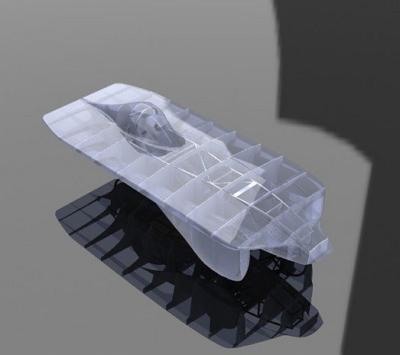 According to Nickey Janse van Rensburg, a lecturer in mechanical engineering at the University of Johannesburg Energy Movement lab, it has a top speed of 140 kph.
The “engine” of the Ilanga II is driven by 300 lithium ion batteries and nearly 1000 ultra-thin solar panels, each roughly the size of a business card. The vehicle is the third solar-powered car in the design series and follows the Ilanga and the Ilanga 1.
A version of the car took the Technology and Innovation Award at a previous Sasol Solar Car Challenge, an international solar car race between Pretoria and Cape Town.
The thin film photovoltaic technology used to power the car’s batteries was developed and patented by UJ Professor Vivian Alberts as part of her work at PTiP Innovations.
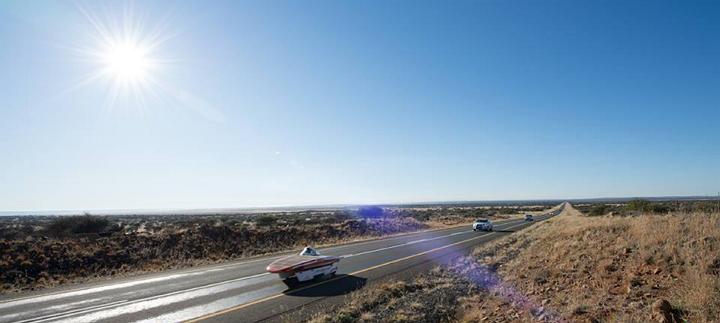 Aside from turn signals and headlights, the vehicle lacks most of the comforts of a standard car, and the drivers say it’s a touch on the noisy side to drive as it lacks sound padding. From outside the car, it’s virtually silent and, of course, creates no emissions.The project was sponsored by Eskom and Siemens, among others, and a support convoy carries various spare parts and the 3D printer.
The road trip, which began on June 18, is scheduled to end in Gaborone at the UJ Solar Car lab on June 29. You can follow the ‘epic journey’ via Twitter and Facebook updates from the team.
 How big a role do you think 3D printing will play in the development of future iterations of automotive technology? Let us know in the Solar Powered Car 3D Printing Road Trip forum thread on 3DPB.com.
Subscribe to Our Email Newsletter
Stay up-to-date on all the latest news from the 3D printing industry and receive information and offers from third party vendors.
Print Services
Upload your 3D Models and get them printed quickly and efficiently.













You May Also Like
EOS Bets on Mexico’s AM Market with Axiomatek Sales Channel Deal
Mexico is one of the biggest beneficiaries of the push to diversify manufacturing out of China. This development is perhaps inevitable given the current global trade environment, but even with...
Stratasys Showcases 3D Printed Automotive Applications & New Printer at IMTS 2026
Just ahead of last week’s International Manufacturing Technology Show (IMTS) in Chicago, Stratasys launched the F870, a new large-format, production-grade FDM 3D printing platform designed to drive industrial manufacturing at...
3D Printing Financials: $28M in China, U.S. Deals and a Metal AM Comeback
Money continues to go into additive manufacturing (AM). From a $30 million raise for a Chinese metal 3D printing company to new funding for naval AM and a European company...
Let the Games Begin! Xi Throws Down the Advanced Manufacturing Gauntlet
Sangmin Lee went to TCT Asia back in March and reported on the event for 3DPrint.com. He wrote two articles arguing that China’s AM industry looks “ready to scale.” This...