NEODiVR Environment-sensing VR System – 3D Printing, iPhone 6 & Structure Sensor Come Together

 As the world of 3D printing evolves and revolves, it has developed kinships with other technologies that seem to function as symbiotic cousins. Both virtual and augmented reality fit right into that category, and not only are they parallel similar technologies, but they often employ 3D printing due to the affordability and flexibility involved in prototyping. With many iterations usually being required, for AR and VR, it’s usually very helpful to be able to create a new prototype on whim or at the last minute.
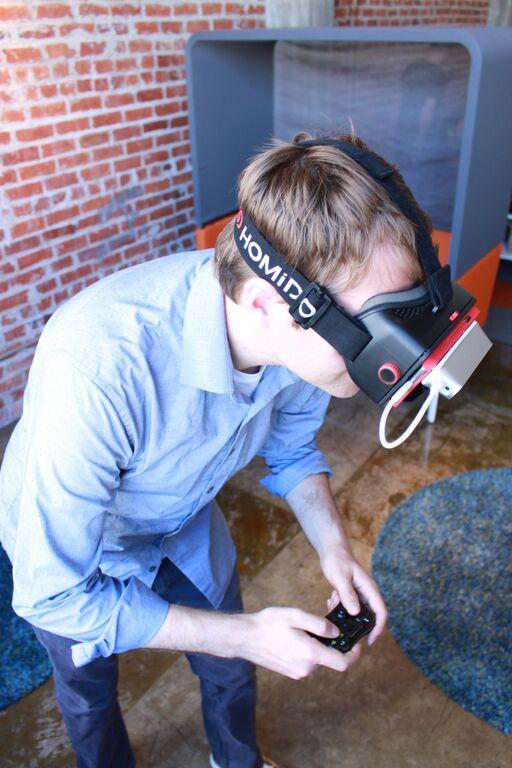 And now, factoring 3D printing right into the final product, along with the iPhone 6, Occipital has announced today at the Augmented World Expo in Santa Clara (AWE 2015) that users can now create their own AR experience through the NEODiVR system with just four things:
- Structure Sensor
- 3D printed NEODiMOUNT case and matching NEODiVR conversion plate
- HOMiDO VR headset
- iPhone 6
While you can try this out if you are on hand today at the Expo, it’s easy to put together if you own the iPhone and a Structure Sensor. If so, all you will need extraneously is the HOMiDO VR headset and the ability to 3D print a custom attachment piece to create the system.
This is a spectacular AR gizmo that allows you to enter another world right from your living room or yard. Previously this technology was connected only to the iPad; with the inception of the iPhone 6, however, the entire setup is able to be transferred to the smartphone.
“You may remember that I’ve covered the previous version at CES of this device when we had it hooked up to a tablet,” says Michael Balzer of All Things 3D. “At that time I thought what a great idea if we could apply this to a headset, so I spent the last six months creating what I call NEODiVR.”
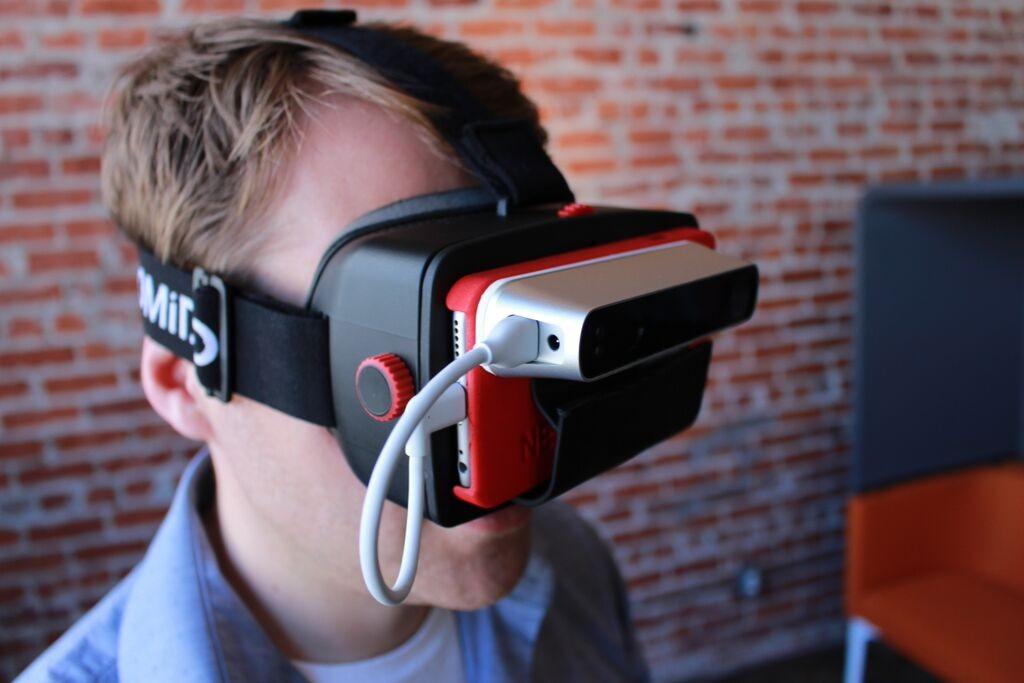
 In the video you will find below, he shows off the 3D printed iPhone case that he designed, which is attached to the Structure Sensor, as he dons the headset, allowing him to experience VR and AR with six degrees of motion.
One puts on the headset and connects the Structure Sensor, which quite simply adds a depth sensor allowing every step you take in your living room to be recreated in the virtual world, whether you are crouching like a ninja or high-stepping it in pure unabashed fun.
“What they have done by attaching the sensor to the actual screen means they now are able to project the prime sensor feel or pattern and pick up the mesh information in real time of the objects around them,” says Balzer.”
This means you aren’t just going into the technology blindly either as physical objects are introduced into the VR world, eliminating the risk of tripping, embarrassment, and bodily injury.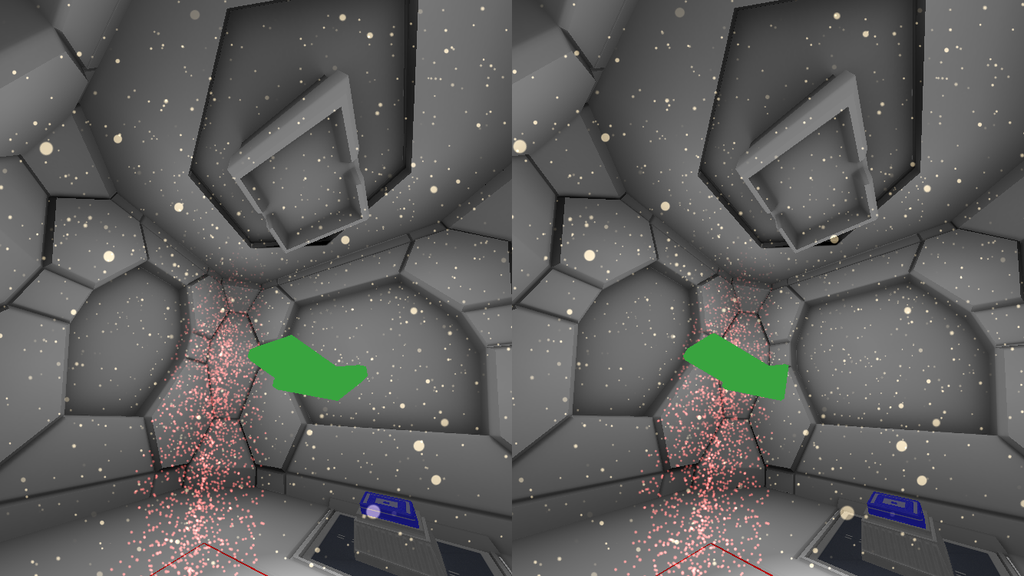
It is a compact mobile device requiring no power source, and allows you to use 3D printing brackets to attach it to the iPhone or to an iPad with a Lightning connector. It allows your smartphone to understand the world in 3D.
The sensor is a hardware platform that works quite well on an iOS device, allowing you to:
- Perform 3D mapping of indoor spaces, with measurements and ‘virtual redecoration’
- Integrate AR games where virtual is completely connected to the physical world
- Use body scanning during fitness tracking, as well as virtual clothes fitting
- Play virtual reality games using 3D environments imported from the real world
- Perform 3D object scanning just using the app, without hardware
Does this look like a VR/AR device you’d like to put together yourself and try out? Will you or were you on hand at AWE 2015 to check this out? Tell us about it in the Occipital’s NEODiVR AR/VR System forum over at 3DPB.com.
Subscribe to Our Email Newsletter
Stay up-to-date on all the latest news from the 3D printing industry and receive information and offers from third party vendors.
Print Services
Upload your 3D Models and get them printed quickly and efficiently.











You May Also Like
Scientists Create Stretchy 3D Printed Implants for High Blood Pressure Treatment
Researchers at Pennsylvania State University (Penn State) say they may have found a softer, less invasive way to treat severe high blood pressure. In a new study published in the...
Harvard’s Jennifer Lewis Lab Is 3D Printing Artificial Muscles That Twist and Bend on Demand
Researchers at Harvard John A. Paulson School of Engineering and Applied Sciences (SEAS) have developed a new way to 3D print materials that can move on their own, bending, twisting,...
3D Printing News Briefs, May 2, 2026: Soft Robots, Agricultural Waste, & More
In this weekend’s 3D Printing News Briefs, we’ll start off with a multi-laser metal powder bed fusion 3D printer and post-processing news. We’ll end with research into soft robotics and...
Harvard SEAS Engineers Develop 3D Printing Method for Soft Robotic Components with Programmable Shapes
The world of soft robotics is still largely in its pure research phase, but the R&D landscape has started to produce examples of early-stage commercialization. Researchers have started to refine...