Waldo3D: Find Matching 3D Print Models from 2D Images

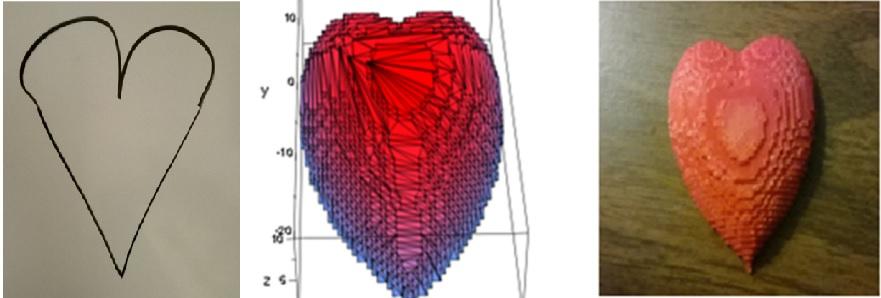 One of the most interesting and promising aspects of the 3D printing industry is the 3D scanning process. Taking full 3D scans of existing objects allows printers create an exact replica of existing objects and has helped to advance 3D printing’s role in rapid-prototyping even further. Many are working on democratizing this ability, like Cappasity’s ultrabook 3D scanning software, or others working to shrink down 3D scanning capabilities onto mobile phones, like Intel or Scandy’s smartphone 3D scanning projects.
However, one doesn’t always have the object they’d like to replicate on hand. Or what about those who are unfamiliar with CAD or other 3D modeling software yet need to build an object without necessarily having the ability to digitally define the parameters? A group of researchers in the Department of Computer Science and Engineering at the University of Nevada, Reno is working on a solution to that issue.
Waldo3D is a software and web interface that will take advantage of a database with a vast library of 3D models to enable anyone to find a design that they need or want by simply uploading a 2D image. The system will recognize an upload by using software similar to Facebook’s DeepFace paper, and then match it with an existing 3D model. Waldo3D would be able to recognize not only 2D images, but sketches created by the user as well. The Waldo3D database would also be extendable, allowing a user to upload 3D image files.
The proposed steps for using the Waldo3D system are as follows:
- Input an object by uploading a picture.
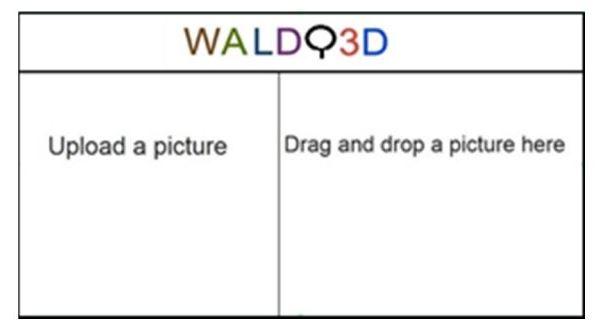
- Enter keywords used to describe the object and help the Waldo3D system search for a matching image.
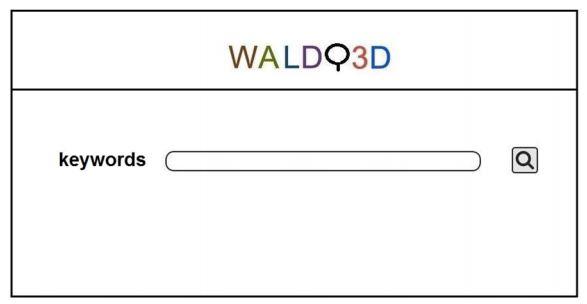
- Select from a number of choices that Waldo3D will offer.
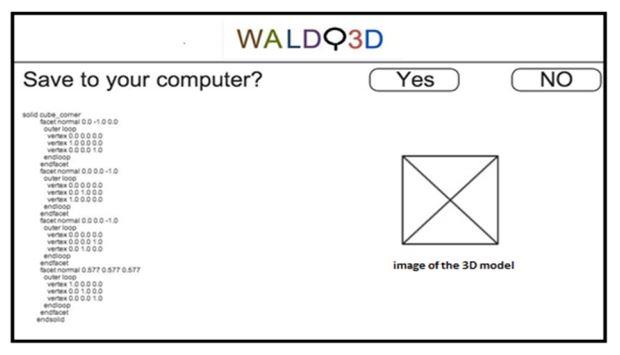
- Waldo delivers the STL file, which can then be printed by the user.
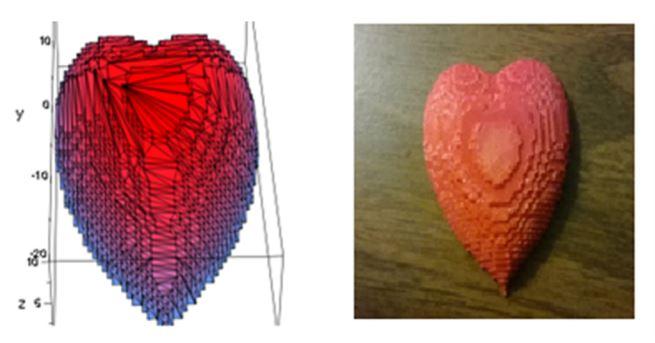
The benefits of the Waldo3D system are that it’s easy to use and appeals to a broader user base by making it easier to find an idealized model desired object.
However, one shortfall of the project is that the STL file is not identical to the 2D input. As the database of 3D files grows, and as users add more content, that could partially remedy that issue.
Some others are approaching the 2D to 3D modeling process from a more direct angle. For example, the Android app eXtrudy or Sur3D’s Selva3D Web App, which allow users to transition 2D images to 3D models directly within the applications, both also aiming to broaden the user base of people interested in 3D printing.
The work being done to enable anyone’s ideas to come to life via the 3D printing should serve to further push the adoption of the process in many areas. As 2D scanning improves, it will be fascinating to see what creative users could come up with.
Have you used 2D to 3D technology? Do you have a favorite? Let us know what you think of the new Waldo3D idea over in the Waldo3D Project forum thread at 3DPB.com.
Subscribe to Our Email Newsletter
Stay up-to-date on all the latest news from the 3D printing industry and receive information and offers from third party vendors.
Print Services
Upload your 3D Models and get them printed quickly and efficiently.













You May Also Like
How Should Businesses Build New Business? Dirk Simon Weighs In — Part 1
Dirk Simon had deep experience in materials and chemistry before joining the 3D printing industry. Instrumental in BASF and Farsoon’s market introduction, Dirk has spent a lot of time thinking...
The Frankenservice Part 2: Have Your Cake and Eat it Too
This series of articles delves into a thought experiment. What if we let go of using a few machines very optimally, but instead use lots of different machines to meet...
The Additive Chicken Coop, Part IV: Lemmings
If we look at our past, we can see how making custom machines, incessantly watching ourselves, and our inability to rescope shaped our industry. We have also looked at the...
The Additive Chicken Coop, Part III: Bananas
A friend of mine, Ed Davis, once pointed out the level of strategic replication in additive. I wasn’t aware of it before and haven’t been able to unsee it since....