3D Printed Cell Phone Battery Charger Lets You DIY for a Higher Quality Product


These days, it really does seem that, for every problem, there’s a DIY approach–and thanks to the growing global community of makers, tinkerers, and problem solvers, there’s a 3D printed solution. Here’s one all the way from Istanbul, Turkey: A do-it-yourself, 3D printed cell phone charger. Sure, these devices are already on the market but if you can make your own and even improve on the standard model, then why not?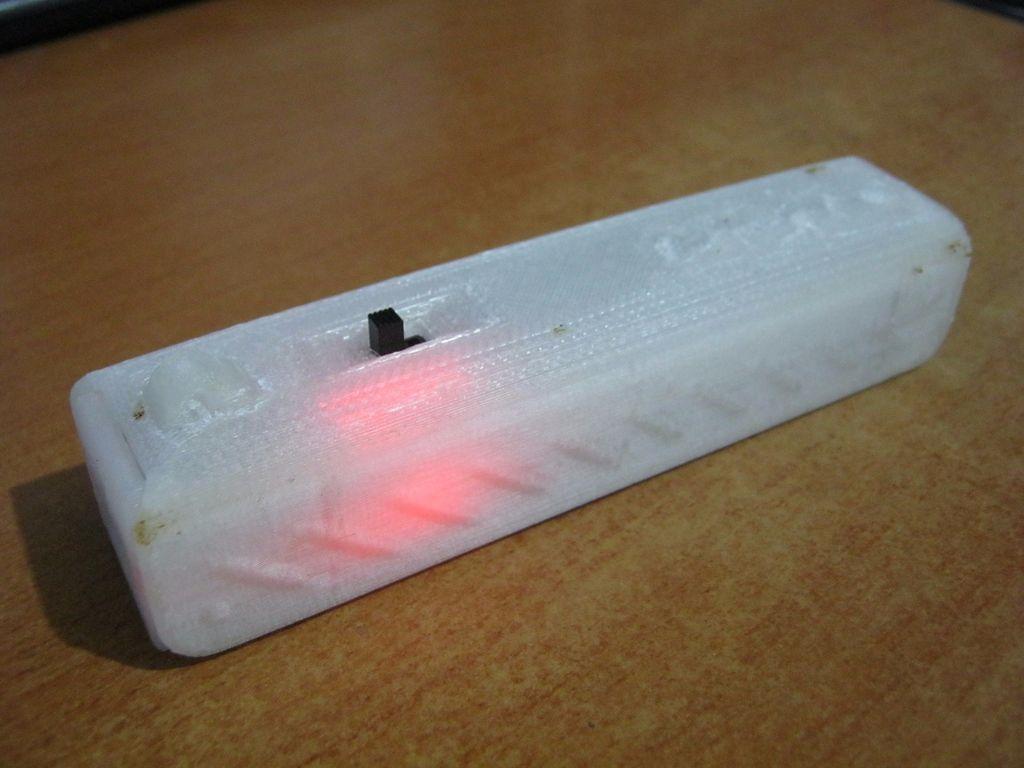
Instructables contributor Dr. Özkal Özsoy, who goes by “hobbyman,” agrees and so he set about creating a 3D printed, battery-powered phone charger that seems only to fall short in the aesthetics department–according to his girlfriend, anyway, to whom he gifted the device. He was a good man for the job, as we’ve seen from some of his other Instructables contributions, like his modular 3D printed robot and dummy security camera.
There’s nothing miraculous about these devices. They’re basically powerful batteries that simply need to be charged themselves ahead of time. Given that you’ve planned ahead at least that much, they can save you in those situations where you may be unable to plug your phone directly into an outlet for recharging or when you just plain forgot to charge your phone. It’s your back-up plan.
Özsoy purchased one such device from eBay and it was the envy of his girlfriend, so he decided that, rather than buying another one and waiting the nearly two months it could take to arrive in the mail, he’d figure out how to make one himself. He had batteries as well as the charging and USB power supply modules on hand, plus a 3D printer and the know-how, so he got to work.
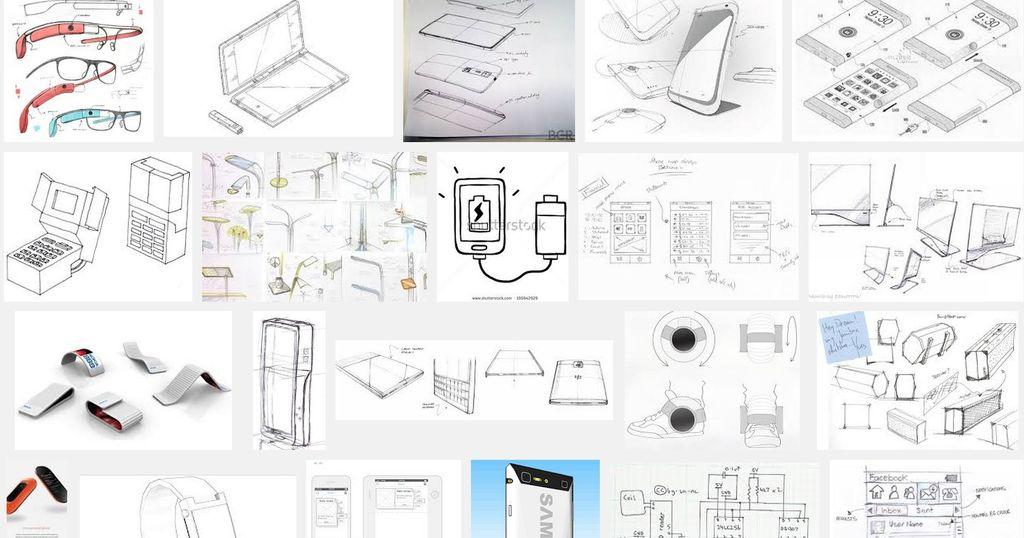
He began the project by doing a market review, looking to see what was out there. He recalled, “There are many products of a similar kind on the market. On the internet you can find hundreds, maybe thousands of different kinds.” Mentally filing away their different characteristics, all of the pluses and minuses, he began sketching and quickly decided on a basic design, “a boxy, rectangular shape with rounded corners.” He also decided that his phone charger would have two main parts that would connect and lock into place, eliminating the need for screws.
Özsoy created a list of the electronics parts he used to construct the charger (he provides links to suggested products available through eBay on the Instructables page):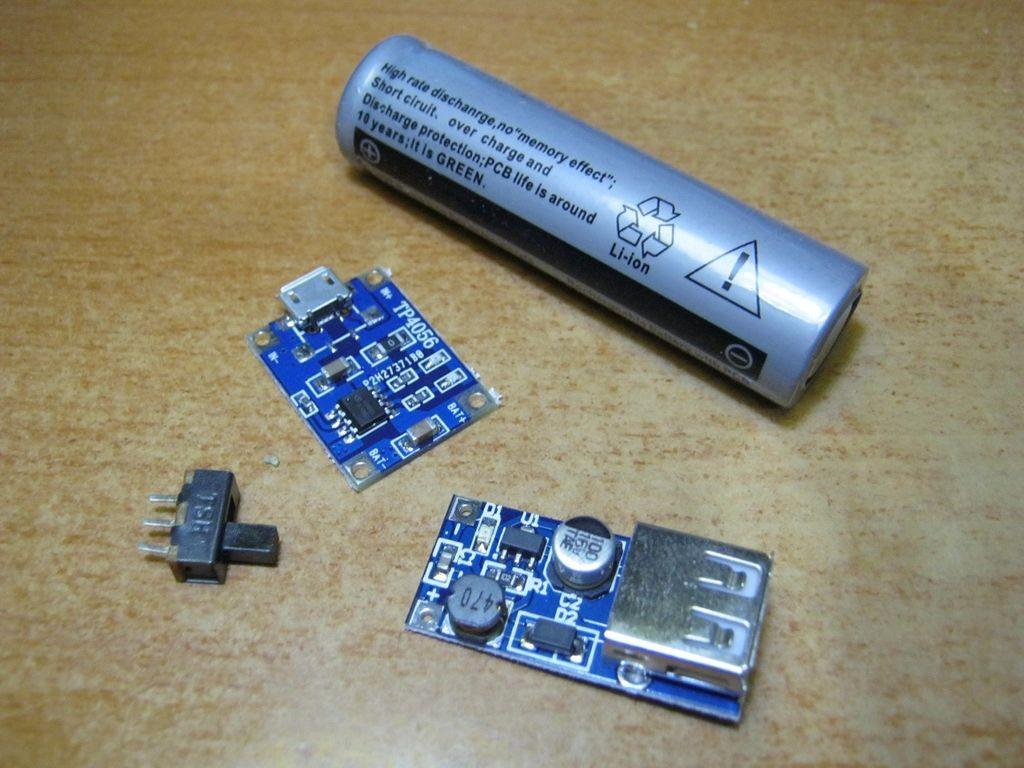
- Two rechargeable batteries
- Battery charging modules
- USB power regulator module
- A switch
- Battery contacts
The 3D modeling was accomplished using Solidworks. Before beginning, he did some sketching and thinking about how best to size and shape the case. Beginning with a basic rectangular prism, he worked through the steps, creating the internal details and eventually cutting the required components to create three parts: The upper body, the lower body, and the internal support. Finally, he added the internal details.
His STL files are available on the Instructables page. Özsoy used his UP 3D printer to produce the printed parts, which took about five hours and used around 40 grams of ABS filament. He used semi-transparent filament so that the LEDs on the electronic modules can be seen from the outside.

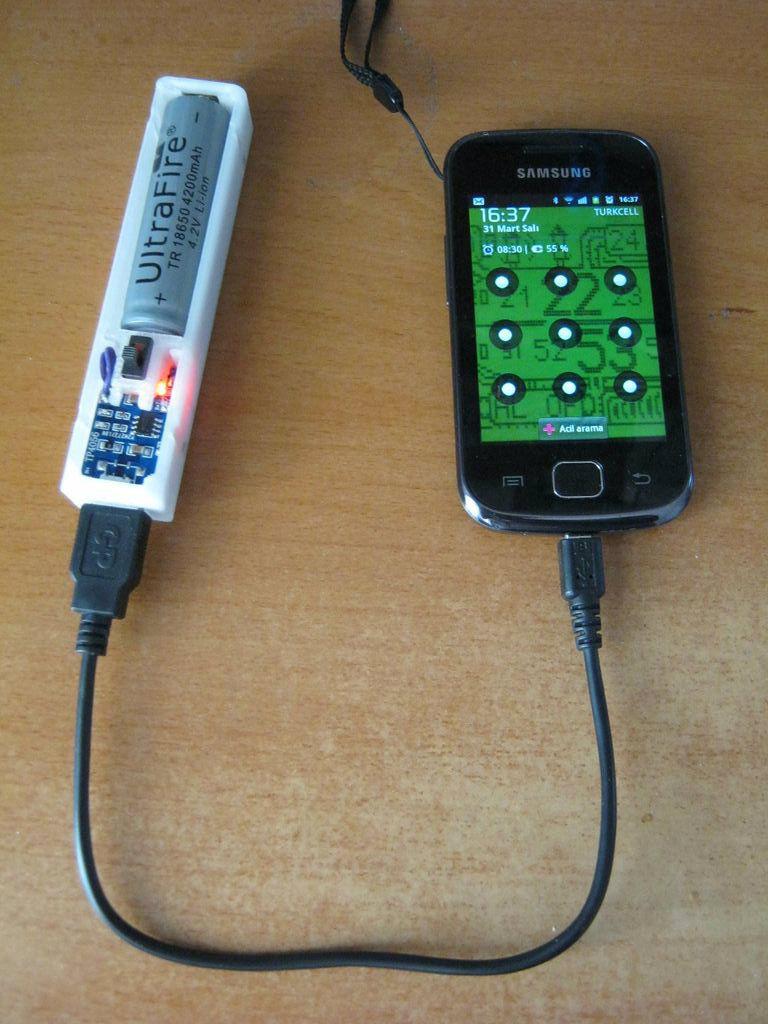
The results of Özsoy’s DIY, 3D printed phone charger project are pretty great, actually.
There are a couple of caveats, however: You need to be sure the device works properly before closing the case as the interlocking mechanism works so well it can be a little challenging to open the device again once it’s closed. Also, one commenter pointed out the the UltraFire batteries Özsoy used may not be the best choice, and that there are other 18650 ion batteries that may hold a charge longer, so you may want to do some research before installing the batteries.
Lastly, as mentioned above, when gifted with the great new device, Özsoy’s girlfriend found the appearance of the charger somewhat plain. She asked him to paint it and add a light.
“I plan to make an additional led light part which will be inserted to the usb port when necessary and I guess there is also a small paintjob is waiting in the near future,” he said. “Maybe I should leave the painting to her.”
Now the great little DIY device can multitask and it can look stylish while in use, although we imagine that, in that critical moment when you realize you’ve neglected to charge your phone the charger becomes an almost life-saving device, you won’t much care what color it is.
Is this charger something that would charge your creative batteries? Let us know if you’ll try out your own in the 3D Printed Cell Phone Charger forum thread over at 3DPB.com.
Subscribe to Our Email Newsletter
Stay up-to-date on all the latest news from the 3D printing industry and receive information and offers from third party vendors.
Print Services
Upload your 3D Models and get them printed quickly and efficiently.













You May Also Like
3D Printing News Briefs, October 10, 2026: Drones, WAAM, Ceramics, & More
We have a packed 3D Printing News Briefs for you this weekend! First, America Makes celebrated the recent National Manufacturing Day with 3D printed drones, and then it’s on to...
3D Printing News Briefs, October 3, 2026: Hypersonics, Hotends, & More
We’re starting off with defense in this weekend’s 3D Printing News Briefs, as Titomic was awarded a $5 million U.S. defense contract, and VulcanForms announced a partnership with Specter Aerospace...
The Part Is Only Half the Story: Why 3D Printing Needs a Digital Thread
A 3D printed part can generate a lot of information. The challenge is keeping track of it. Manufacturers need to know which design was used, what material went into the...
Advanced Manufacturing at IMTS 2026: 3D Printing and AI and Drones, Oh My!
Last week’s International Manufacturing Technology Snow (IMTS) in Chicago welcomed over 90,000 attendees to the jungle that is McCormick Place. With over 1.17 million square feet of exhibit space, and...