India’s Hindustan Aeronautics, Ltd. is Now 3D Printing Aircraft Engine Components

“Given the high expectation built around the Company, my priorities would be to concentrate on operational excellence, and build the company as technology powerhouse,” said T. Suvarna Raju upon taking position as the new Chairman at Hindustan Aeronautics, Ltd. (HAL) at the beginning of this month.
Raju’s vision for HAL is to move India’s only manufacturer of military aircraft ever mor e firmly into the realm of world-class aerospace firms, and is embracing his government’s push toward “Made-in-India” labels affixed to high-quality products. He recognizes that “the Best of Technologies can never be bought, it can only be developed,” and to that end is enhancing HAL’s focus on research and development. HAL has developed a strategic business unit (SBU) to focus on the unmanned aerial vehicle (UAV) market, which in India alone has the potential to be worth $2 billion.
As it turns out, 3D printing will be along for the ride.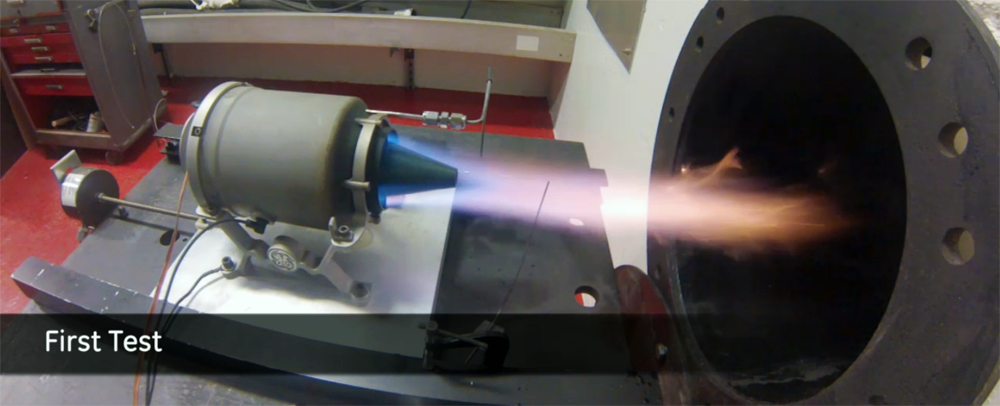
HAL is looking to additive manufacturing to create components for a 25-kilonewton (kN) aircraft engine, with the overall project valued at Rs 458 crore (over $73 million USD). Raju recently told India’s Deccan Herald that the project was going smoothly until recently, when a supplier reneged on the deal. The 6-and-a-half-year-long project requires the critical components that this particular vendor was due to contribute, and so their backtracking could easily have halted progress quite rapidly. HAL, however, is not one to give up so quickly, and instead of looking to that outside supplier or trying to find another, the company purchased its own 3D printing equipment.
The company’s first engine design is ready for display; an operational version of the engine will be shown next week at Aero India, “Asia’s Premier Air Show.” HAL will have the unit on display at their exhibition space.
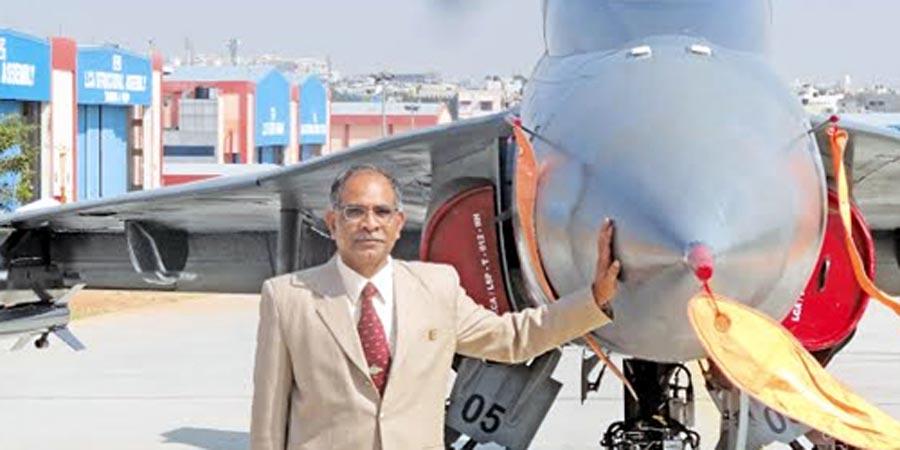
T. Suvarna Raju
HAL’s successful designs also include an 8-kg UAV, which will also be shown at Aero India. The next step there is creating a 10-kg rotary unit, for which R&D is already underway, including work with IIT Kanpur. Researchers there have successfully created a quadcopter, so further UAV development seems right on track.
Raju “would like HAL to grow as a knowledge based organization,” which dovetails with his drive toward company R&D activity. Under Raju’s oversight, HAL has earmarked 10% of its post-tax profit for R&D ventures. Further adding to their research and development efforts is HAL’s drive to set up chairs in academia, including at campuses such as IIT Channai (working on gear boxes), IIT Mumbai (communications), IIT Kharagpur (radar and electronic warfare), and IIT Kanpur (UAVs).
Under Raju’s direction, HAL seems to be on the right track toward tech-based progress. India’s sole military aircraft producer seems to be increasingly well positioned to lead the country’s charge forward, and 3D printing capabilities at the company will serve only to enhance that process. Rapid prototyping will lead to improvements in iteration — a certain benefit in creating such ambitious projects as the 25-kN one on the table now.
Let us know what you think about India’s development in the 3D printing space in the HAL 3D Printing for Engine Components forum thread over at 3DPB.com.
Subscribe to Our Email Newsletter
Stay up-to-date on all the latest news from the 3D printing industry and receive information and offers from third party vendors.
Print Services
Upload your 3D Models and get them printed quickly and efficiently.











You May Also Like
StoneFlower 3D Launches Laboratory-Scale 3D Printer for Construction Materials
StoneFlower 3D has launched a new 3D printer designed for laboratory-scale research and development with concrete, mortars, clays, and other advanced mineral materials. The system is intended for researchers, designers,...
3D Printing News Briefs, February 7, 2026: Generative AI, USVs, Microgravity, & More
Today’s 3D Printing News Briefs is a bit of a mixed bag. We’re starting with generative AI tools for 3D design from MIT, and then news about USVs. Moving on,...
Breaking the Bottleneck: How Automated Post-Processing Is the Key to Scalable Dental 3D Printing
The dental industry has undergone a dramatic transformation over the past decade. Traditional fabrication methods, such as manual casting, milling, and hand finishing, are being steadily replaced by digital workflows...
3D Printing News Briefs, February 5, 2026: Advisory Board, Virtual Twins, & More
We’re starting with business in today’s 3D Printing News Briefs, including a new website launched by Metamorphic AM. Massivit appointed two senior leaders to its advisory board, and Dassault Systèmes...