Bringing LAIKA’s Stop-Motion Animation Characters to Life with Full-Color 3D Printing


It is a labor of intense love and hard work to make a stop-motion animation film. They are created frame by frame, with the objects and characters in the frame moved incrementally in each one. Each frame is digitally captured, and when played back in sequence, it looks like everything is moving. One of the world’s most renowned stop-motion studios is LAIKA, which has long used 3D printing to make its films. In fact, the studio received Academy Award nominations for its five previous features: Coraline, ParaNorman, The Boxtrolls, Kubo and the Two Strings, and Missing Link.
Just a few weeks ago, LAIKA released its latest movie, Wildwood, made with 33 puppets, over 1,000 artists, and zero AI. Inspired by Colin Meloy’s 2011 novel of the same name, the film takes place in a fantasy world, and features the voice talents of Jacob Tremblay (Room, Wonder), Carey Mulligan (Shame, Promising Young Woman), Mahershala Ali (Moonlight), Angela Bassett (Black Panther: Wakanda Forever), and many others.
“A headstrong teenager sets off to a forest outside Portland to find her kidnapped brother and navigates a world of talking animals, bandits, and powerful figures driven by grief and ambition,” reads the movie’s description on IMDB.com.
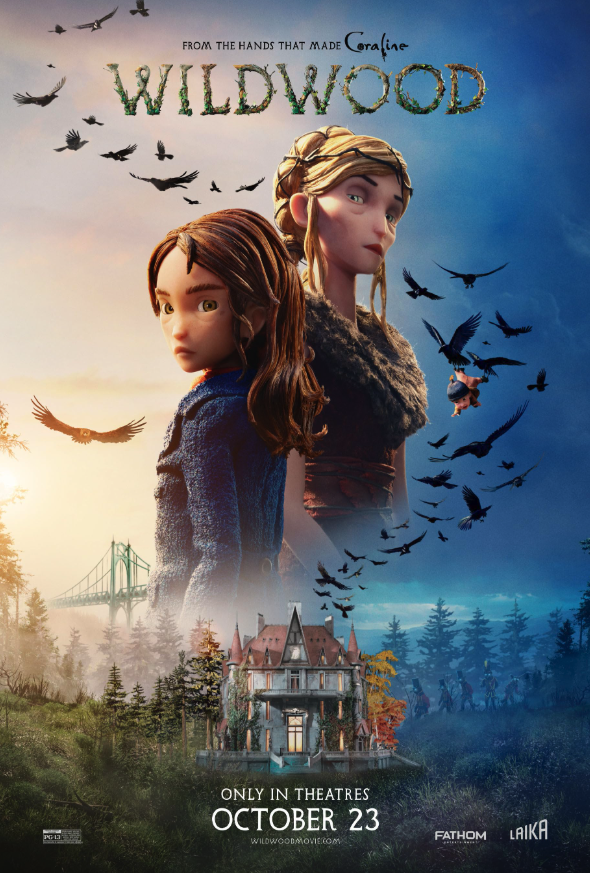
Image: IMDB.com
Based in Portland itself, LAIKA says that Wildwood is its most ambitious production yet. Having had an up close and personal look at the making of its last movie, Missing Link, which won a Golden Globe award, I almost can’t believe it; in 2019, LAIKA said that Missing Link was its most ambitious. But I guess if you’re not trying to top yourself, what’s the point, right? Go big or go home!
The studio has been using Cuttlefish, a full-color 3D printer driver developed by the Fraunhofer Institute for Computer Graphics Research IGD, since 2016. At the time, Brian McLean, LAIKA’s Director of Rapid Prototype, had been awarded the Scientific and Engineered Oscar plaque for “pioneering the use of 3D printers in stop motion animation,” and was in search of new methods to improve the studio’s 3D printing and animation work. The collaboration with Fraunhofer IGD began when LAIKA discovered the institute’s 3D printing research in a scientific publication.
After completing a few initial test prints with the Cuttlefish software, LAIKA and Fraunhofer IGD signed a long-term licensing partnership that’s still going. The 3D printer driver was first used in the making of Missing Link, and now again for Wildwood.
“We quickly realized that Cuttlefish® could deliver the quality required for professional stop-motion productions,” said Philipp Urban, Head of Research and Development 3D Printing at Fraunhofer IGD. “Its use in international film productions today is a powerful example of how research finds its way into creative applications.”
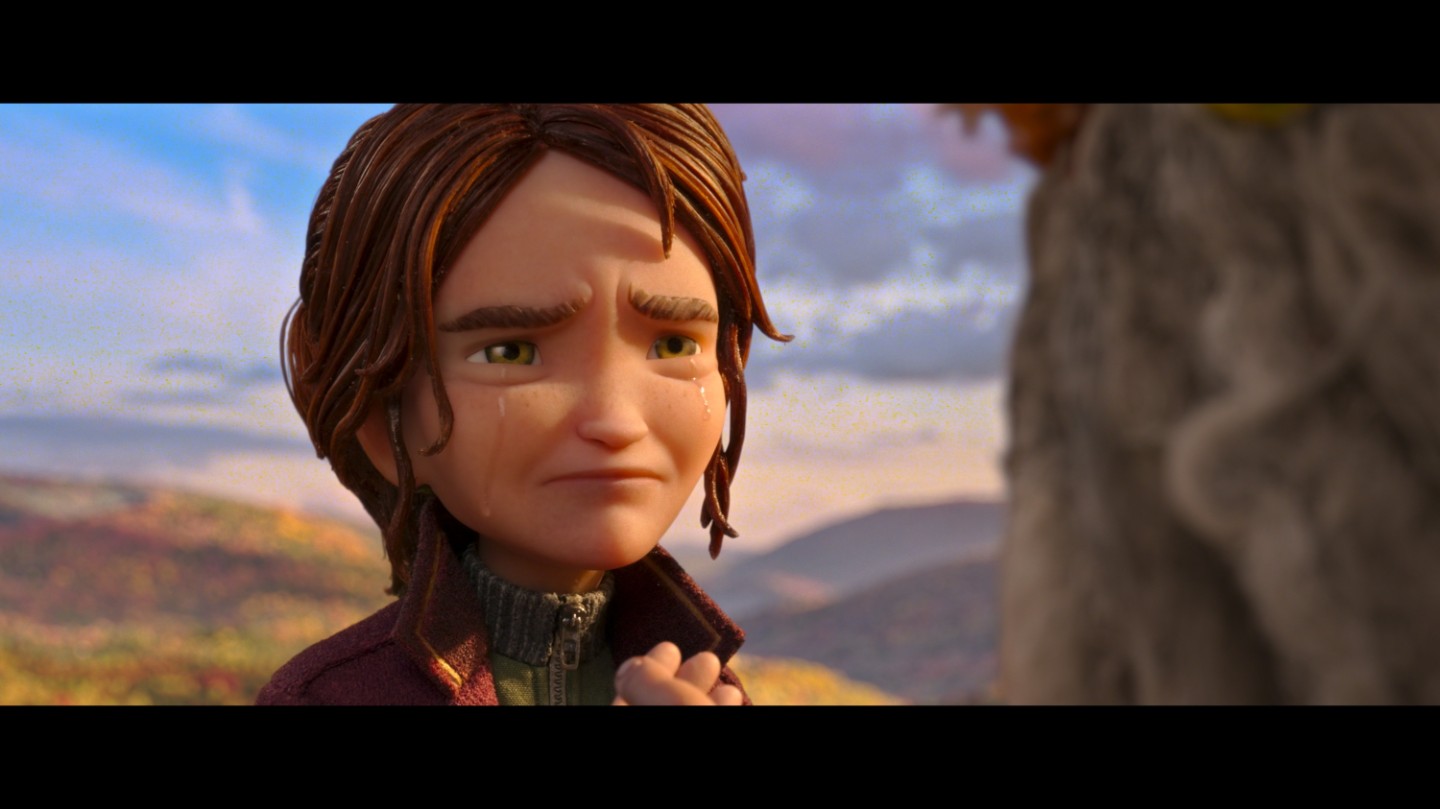
The emotional power of the human experience brought to life one frame at a time through ingenuity, the artists’ hands, and innovation. Image: LAIKA
From raised eyebrows and sly smiles to crying, LAIKA animates its characters’s facial expressions by using up to 24 different 3D printed faces per second. The Cuttlefish software converts the studio’s digital 3D models into optimized print data. This way, LAIKA is able to consistently and accurately reproduce its textures, colors, and fine geometries, even on the smallest of parts. That’s because Cuttlefish uses special methods, developed by the Fraunhofer IGD team, that enable color processing, surface optimization, and texture sharpening. Some of the features include adaptive thickening (adding material where structures are too thin), high-poly meshes with high resolution textures, surface dither (removing staircase artifacts without lowering performance), and more.
Fraunhofer IGD added multiple enhancements to Cuttlefish to meet the demanding needs of Wildwood animation. LAIKA then used Stratasys PolyJet technology—specifically the J750 and J850 systems—to print more than 142,000 bespoke facial expressions for the film’s characters.
“Wildwood is an amazing cinematic experience; the scale, scope, and emotional impact of this film are unprecedented in animation. In order to accomplish a story of this complexity, we needed a process that could create intense and deep emotional facial performances, with rich skin tones and fine details, and the only way that was possible was through artists blending technology and innovation into a seamless practical effect,” said McLean.
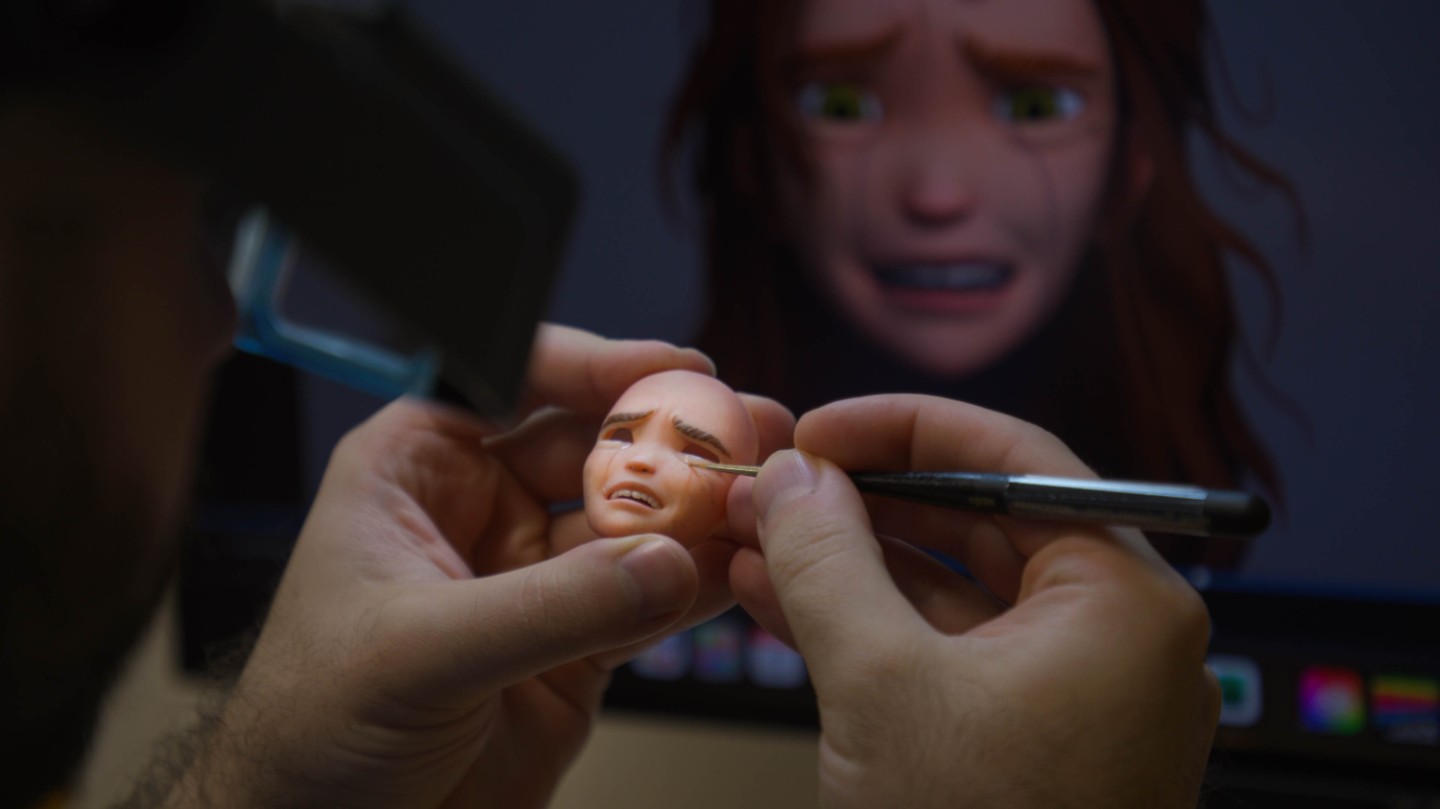
Every expression, tear, and intricate human emotion was meticulously crafted for every scene in LAIKA’s latest stop motion epic, Wildwood. Image: LAIKA
What’s perhaps most interesting about the collaboration between LAIKA and Fraunhofer IGD is that it shows just how versatile software that’s created through applied research can be, whether it’s used for applications like industrial manufacturing and medical technology, or stop-motion film production.
“A studio like LAIKA sets some of the most demanding requirements in full-color 3D printing,” said Urban. “Technologies that prove themselves in this environment can create value across many other industries.”
Wildwood by LAIKA was released in U.S. movie theaters October 23rd, and in Germany November 5th. I can’t wait to get my ticket!
Featured image courtesy of LAIKA
Subscribe to Our Email Newsletter
Stay up-to-date on all the latest news from the 3D printing industry and receive information and offers from third party vendors.
Print Services
Upload your 3D Models and get them printed quickly and efficiently.











You May Also Like
3D Printing News Briefs, November 5, 2026: Tungsten, Color Mixing, Prosthetic Socket, & More
We’re starting with business from Xact Metal, 3D Systems, and Freemelt, and moving on to materials from Snapmaker and hybrid manufacturing with Eplus3D. We’ll end with a custom prosthetic socket,...
Center for Solid State Manufacturing & ASTRO America’s Winning Formula for Turning AM Into US Competitive Advantage
Additive friction stir deposition (AFSD) has a lot of promise, but when it comes to expanding its adoption, AFSD also faces even more challenges than does the broader AM industry....
3D Printing News Briefs, October 31, 2026: Hybrid Manufacturing, Contract Manufacturers, Nitinol, & More
Happy Halloween! There’s nothing scary in today’s 3D Printing News Briefs, except for how much news there is to share! We’ve got stories about an IPO, additive manufacturing (AM) quality...
3D Printing News Briefs, October 29, 2026: 3D Printed Satellite Parts, Mandrel, Car Accessories, & More
We’re starting with metallized polymer micro-AM components for satellites in today’s 3D Printing News Briefs, and then moving to a new facility, an award-winning gas storage manufacturing project, and Snapmaker...