Additive Manufacturing Simulation, Monitoring, Inspection, & More at Formnext 2026


Formnext 2026 is getting closer, and we’re already seeing lots of 3D printing industry news ahead of the trade show in Frankfurt. In this pre-event roundup, we’ll tell you about some of the technologies displayed at the show that are working before and during the printing process to ensure jobs turn out correctly.
PanOptimization Showcasing PanX Simulation Software
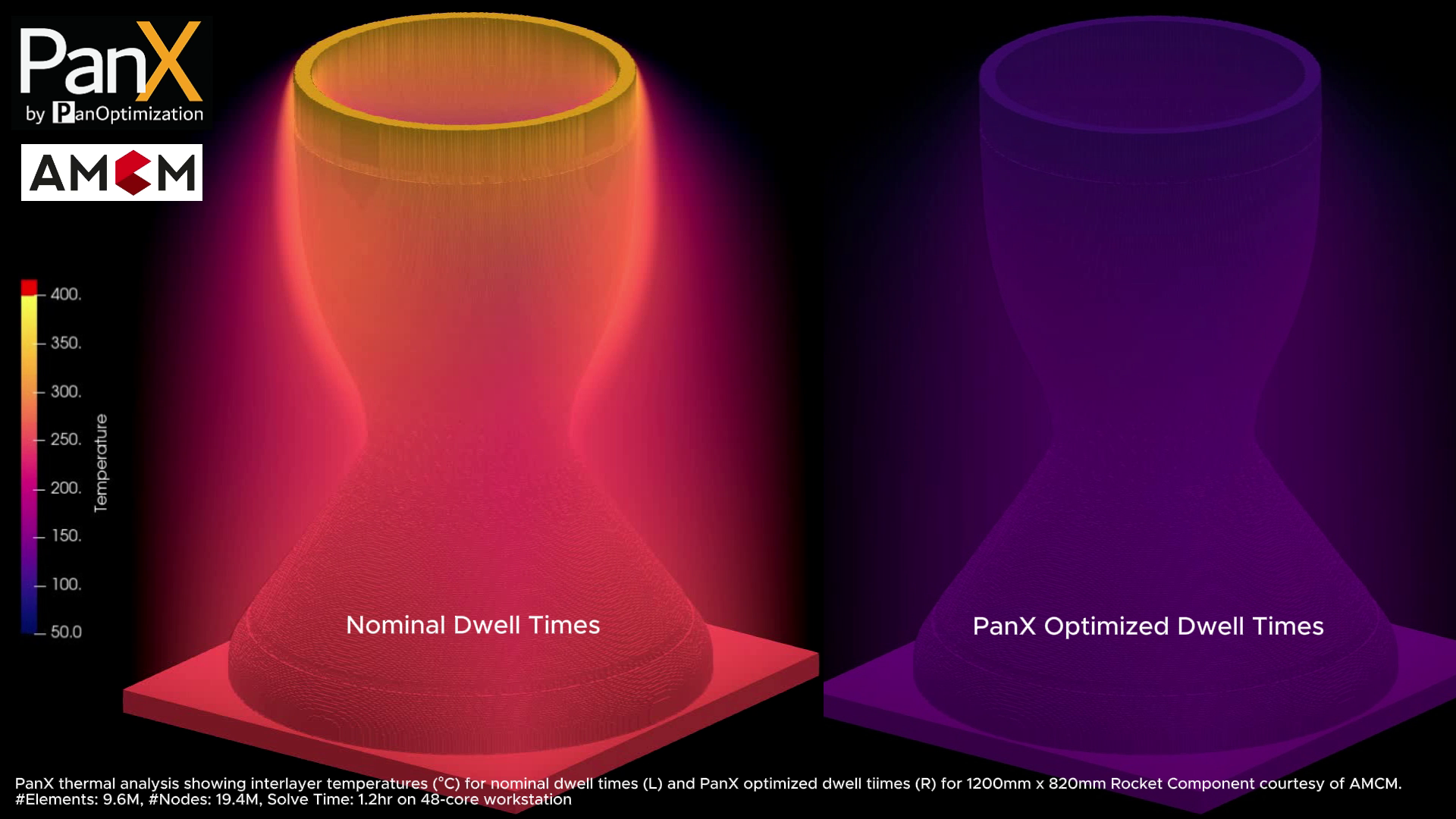
PanOptimization, an additive manufacturing (AM) simulation software provider, says that if a build has to fail before it teaches you something, you learned it too late. So the company invites metal AM users dealing with failed builds and part qualification, long development cycles, and out-of-tolerance parts to have a discussion with them at Formnext, and learn how to change the way they solve these problems with its PanX software. There’s still a lot of process knowledge in metal AM that comes via physical iteration, and failed prints still happen, along with prints that fail to meet the necessary dimensional tolerance. Typically, users respond by inspecting and adjusting the part after it comes out of the machine, and then trying again. PanX, with its physics-based thermo-mechanical simulation, takes these decisions upstream, allowing engineers to look at how a build will likely behave before printing it. This enables more informed decision-making before wasting precious time and resources. PanX, now being used by Nikon SLM Solutions, is designed for full-part and full-build analysis, and incorporates process parameters, boundary conditions, and printer-specific timing. PanOptimization says the software can help find and expose risks earlier.
“Every build iteration has a cost that goes far beyond just scrapped material. It consumes machine capacity, operator attention, engineering time, and inspection effort. Even components that successfully print and meet their design intent, may have sub-optimal build plans that pass on massive hidden cost into production in the form of unnecessary print time,” said Erik Denlinger, Co-Founder and Chief Engineer at PanOptimization. “Other mature industries use simulation to deal with these types of issues, and AM should too.”
Visit PanOptimization at Booth D49, Hall 11.0, to discuss your production and qualification problems.
Additive Assurance Demonstrating AMiRIS Platform
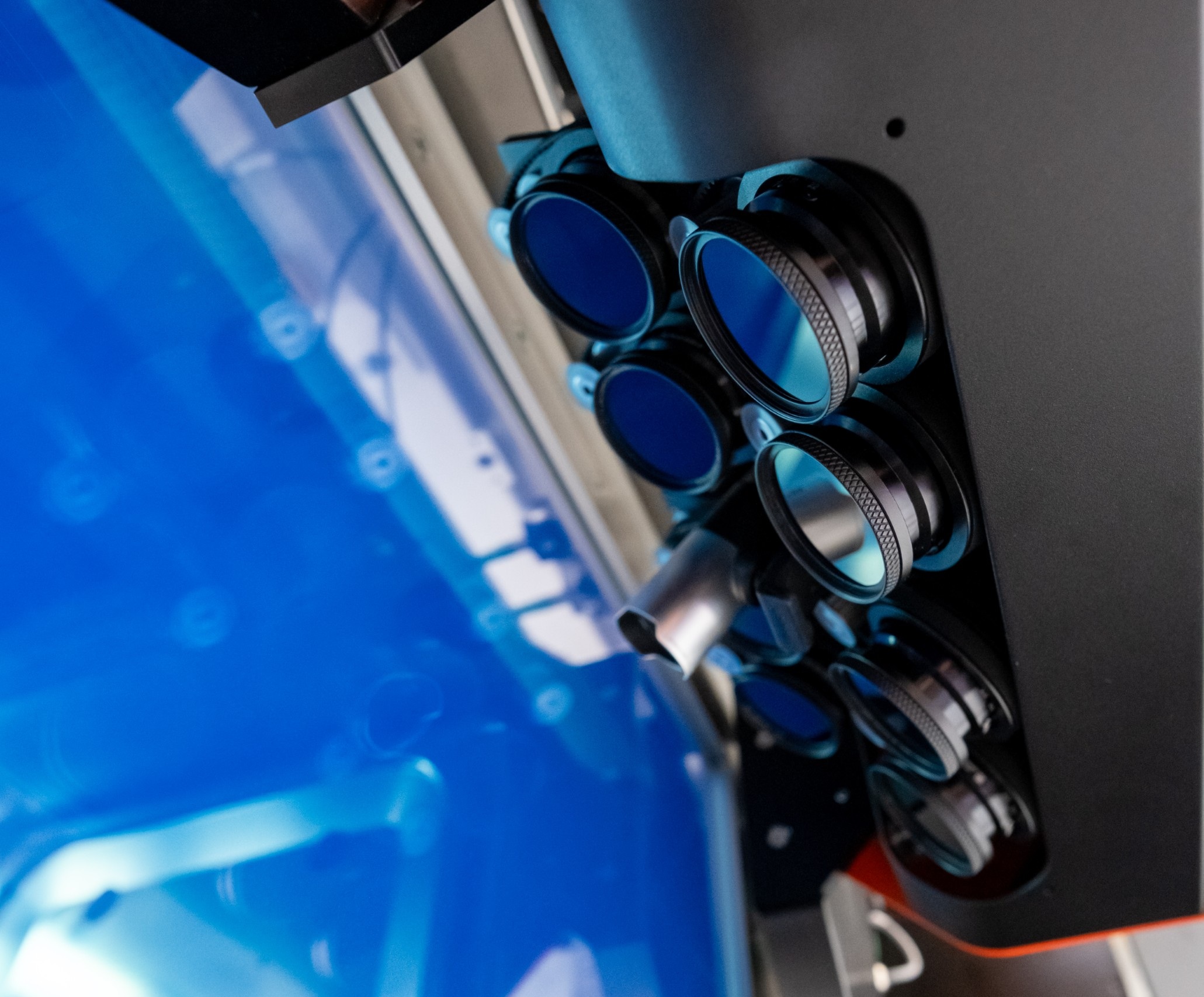
While manufacturers are able to print increasingly ambitious metal parts, they’re not always able to prove these parts consistently, quickly, or economically. Aussie company Additive Assurance will be demonstrating its real-time in-situ quality assurance platform for laser powder bed fusion (LPBF). The platform, called AMiRIS, uses high-resolution, near-infrared sensing, automated analytics, and browser-based reporting to increase confidence in LPBF builds. Available for both standard and large-format printers, AMiRIS gives users full-build visibility, allowing them to compare builds and parts against “known-good references,” localize anomalies in the process, and create real, traceable evidence. By capturing and analyzing what actually happens during the process, teams can make better-informed decisions, and AMiRIS Inside makes it possible to directly integrate QA. Additive Assurance wants Formnext visitors to bring their real inspection challenges, applications, and quality bottlenecks, so they can determine where in-situ QA could help.
“The people we want to meet at Formnext are not looking for another dashboard. They are dealing with real production problems such as CT queues, builds that fail late, investigations that take days, unexplained process variation, and quality decisions that are harder to defend than they should be,” said David Menzies, Chief Commercial Officer at Additive Assurance.
“Our job is to show how in-process evidence can remove some of that friction and help them build a quality strategy that scales.”
Additive Assurance will be located at Booth E41, Hall 12.1, in the Victorian Government Pavillion.
Phase3D Introducing Next Generation of Fringe Inspection
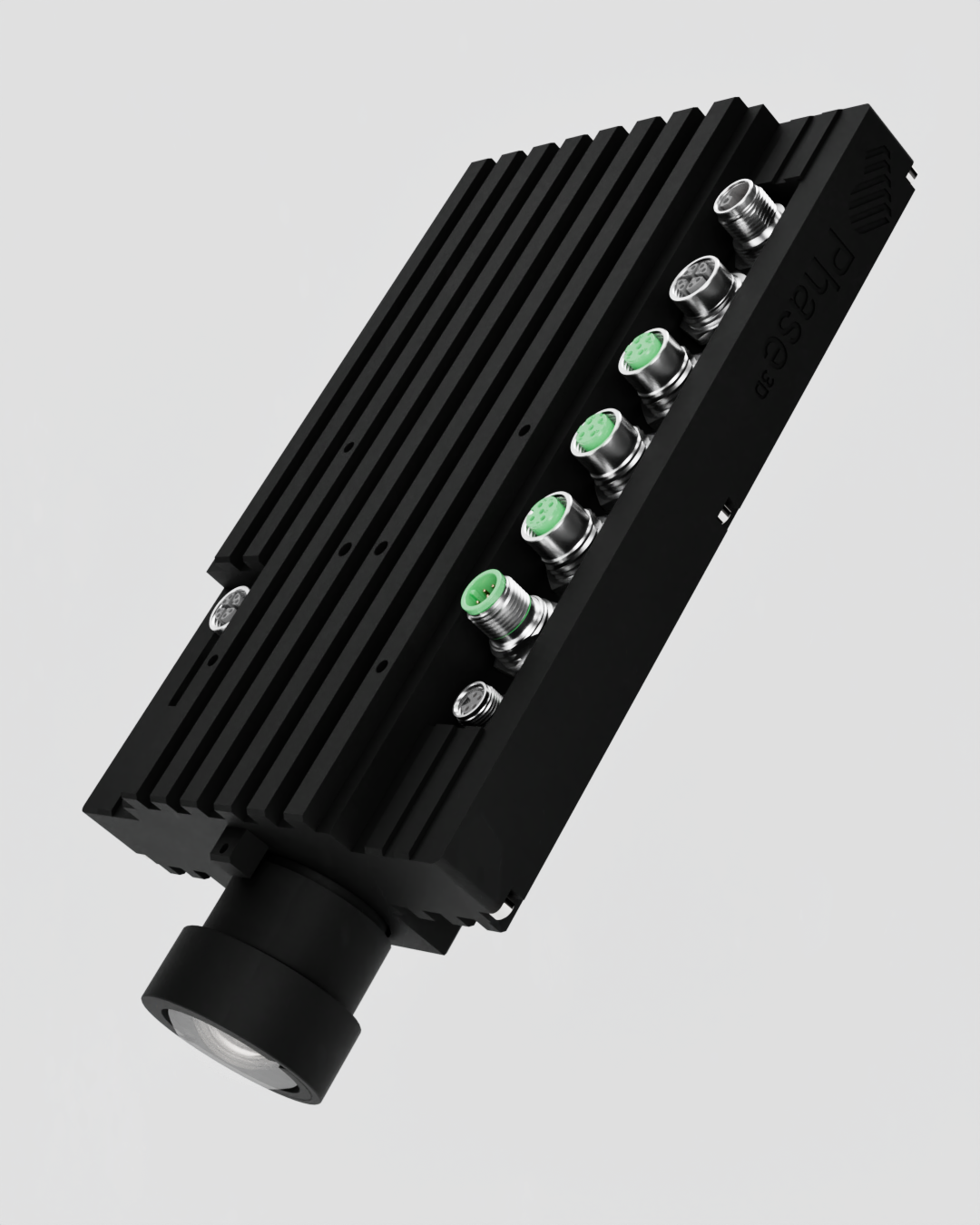
Phase3D’s next-generation Fringe Inspection hardware features a custom projector adapted specifically for LPBF and OEM integration.
At Formnext, Phase3D will be introducing the next generation of its Fringe Inspection hardware, the result of a multi-year development project and designed for scalable OEM integration. During printing, the solution uses structured light to measure the build surface, which produces layer-by-layer height data and measurements. Engineers can take these findings and use them to find anomalies and quantify their magnitude, and investigate any powder bed changes. The first version of Fringe Inspection was built from off-the-shelf components, and this one is a custom-designed product meant for volume production. The hardware is centered around a customized projector that was developed specifically for LPBF inspection, with integrated GPU, IPC, and memory adding computing to the product’s architecture, and it’s all housed inside an aluminum enclosure with passive cooling. Fringe Inspection has multiple triggering and connectivity options to make it easy to integrate onto a printer, and it accommodates different machine interfaces and inspection workflows. All told, this could make it practical to deploy quantitative inspection across a fleet of printers.
“This is the result of years of development focused on what comes next for additive manufacturing. We have built a product specifically for LPBF, with the computing and connectivity to support OEM integration from the outset. We want manufacturers to know that Phase3D is preparing to scale with them,” said Dr. Niall O’Dowd, Founder and CEO of Phase3D.
Learn more about the next generation of Phase3D’s Fringe Inspection at Booth A56, Hall 11.0.
amsight Demonstrating Connected AM Quality Management

amsight software connects all quality data from powder to final part – enabling a proof of quality, and production optimization through data.
Like PanOptimization, amsight also has a challenge for Formnext visitors: see how its quality management software can address some of the most persistent, and expensive, production problems in industrial AM. While many companies have invested a lot in materials and printers, they’re lacking when it comes to demonstrating quality, with engineers manually combing through multiple spreadsheets and disconnected databases to find the data they need. amsight plans to show how its AM quality management software can solve these issues by connecting powder, process, machine, post-processing, and inspection data in a dedicate platform. The software offers QR-based powder tracking, automated data collection and reporting, comprehensive traceability, and built-in Statistical Process Control (SPC), so manufacturers can improve their efficiency, lower administrative costs, and produce reliable evidence of product quality. Additionally, amsight complements manufacturing execution (MES), corporate quality-management, and enterprise resource planning (ERP) systems already available on the market.
“Bring us the quality-management challenge that repeatedly creates problems in your operation. It might be an unexplained increase in scrap, difficulties tracking powder reuse, or the time your engineers spend preparing qualification reports,” said Peter Lindecke, Co-Founder and CCO of amsight. “We want visitors to leave understanding how these problems can be addressed, and what that can mean commercially.”
Bring your specific quality management challenge to amsight at Booth E81, Hall 12.1.
Subscribe to Our Email Newsletter
Stay up-to-date on all the latest news from the 3D printing industry and receive information and offers from third party vendors.
Print Services
Upload your 3D Models and get them printed quickly and efficiently.











You May Also Like
GKN Will be Pivotal to A NATO-Wide AM Buildup
Last week I wrote about how a return to less strained relations between the US and the rest of the North Atlantic Treaty Organization (NATO), and a related resumption of...
AM & National Competitive Advantage, Part Two: Digitalization and the Changing Nature of Industrial Clusters
In part one of this series, I discussed the declining productivity growth rate in US manufacturing through the lens of Michael Porter’s 1990 text The Competitive Advantage of Nations, and...
Russia’s 3D Printed Missiles & Can NATO Get Its Act Together?
For most of US history, however much the two major parties differed on domestic policy (in some cases a lot, overall less than you’d think), there was always essentially a...
The Pentagon’s AM Buildup Has Shifted from Technology to Logistics
It would be very difficult for me to guess how many times I’ve written a post that includes some reference to how the Pentagon‘s scaling challenge with additive manufacturing (AM)...