New University of Miami Facility Brings Bioprinting Closer to Clinical Reality


The University of Miami‘s Miller School of Medicine has opened a new bioprinting facility that is already being used to create living tissues, patient-specific implants, and advanced drug delivery systems. The facility could help move bioprinting technologies closer to real-world clinical use.
Located within the Dr. John T. Macdonald Foundation Biomedical Nanotechnology Institute (BioNIUM), the facility brings together researchers, engineers, and clinicians under one roof. The goal is to accelerate the development of personalized medical treatments and regenerative medicine technologies.
“It’s a little bit like Star Trek,” said Sylvia Daunert, director of BioNIUM and Lucille P. Markey Chair in Biochemistry and Molecular Biology. “We make molecules called nano-carriers that recognize diseased cells. They act like a GPS and deliver drugs where they’re needed. These technologies are making a huge impact on medicine.”
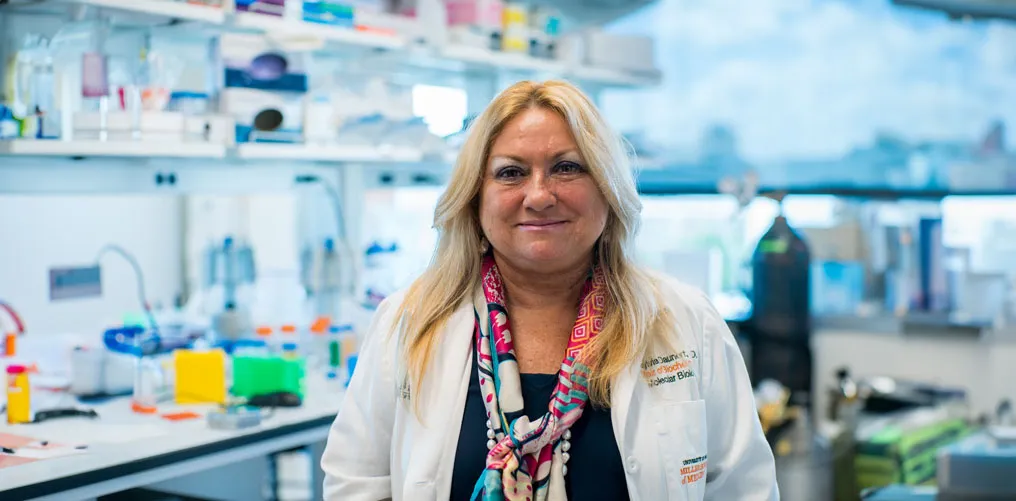
Dr. Sylvia Daunert is the director of the BioNIUM, which houses the 3D Bioprinting Facility. Image courtesy of the University of Miami.
What sets the new facility apart is the range of technologies available in a single location. Researchers can use the center to develop so much, including tissue models, bone regeneration scaffolds, bioactive molecules, microfluidic devices, microneedles for drug delivery, surgical models, neural interfaces, and artificial organs. What’s more, the university says the platform can create features as small as 200 nanometers while preserving living cells during printing.
“We’re making operating tools for surgeons, creating artificial tissues, layer by layer, for discovery research, recreating bones and developing microfluidics for point-of-care tests. We can make microchips for computer-brain interfaces, artificial organs,” said Dr. Daunert. “We’re pushing the envelope of what science can do.”
The new facility is designed to work with living cells, growth factors, and other sensitive biological materials. Unlike many conventional manufacturing processes that rely on high temperatures, the platform operates under conditions that help preserve the viability of those materials.
“If you look at some of the other things that have been done, like heating up filaments to hundreds of degrees for extrusion…that would kill cells,” said Vasudev Vivekanand Nayak, a mechanical engineer and operational manager of the 3D Bioprinting Facility as well as a postdoctoral researcher at the Miller School of Medicine. “If you have any sort of temperature-sensitive drug that you want to incorporate within your tissue constructs, extreme heat would destroy it. You need equipment that can print live cells or any sort of bioactive molecules or growth factors at a physiological temperature. It’s really hard to do and has not been attempted in many cases in the past. But it’s happening here.”
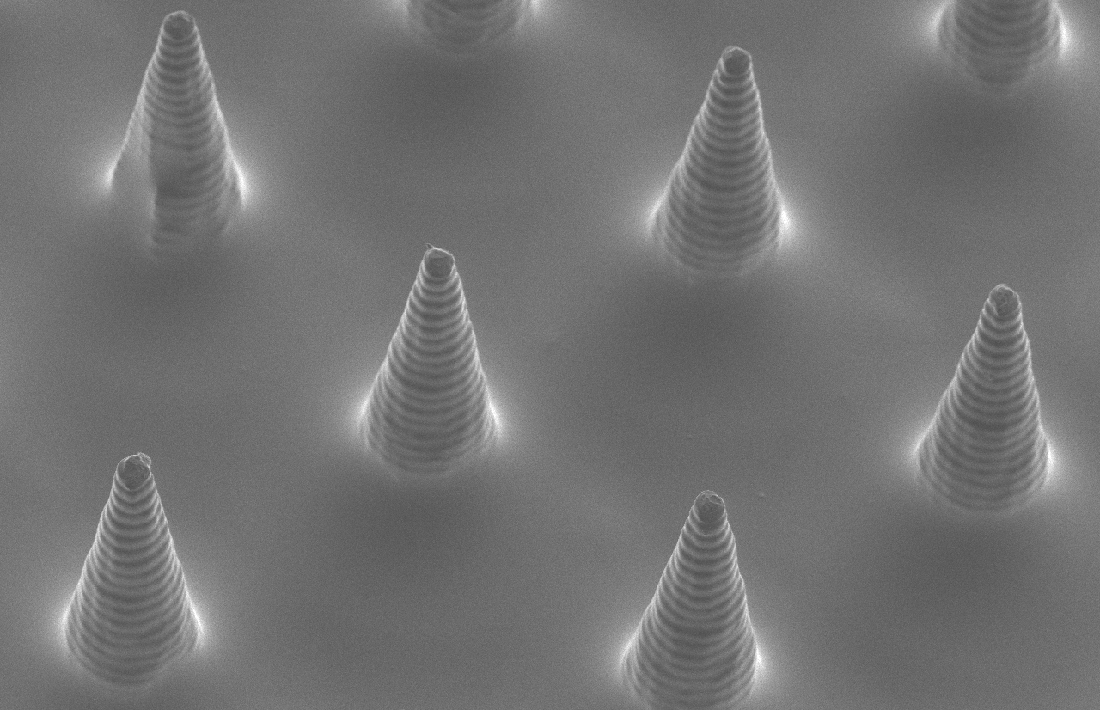
Microneedle array for drug delivery, made in the 3D Bioprinting Facility. Image courtesy of the University of Miami.
Because the facility is housed within BioNIUM, users also have access to nanofabrication tools including photolithography, electron-beam lithography, advanced imaging, and materials characterization equipment. Those resources can be used alongside the bioprinting systems as projects move from development to testing.
Some of that work is already underway. Paulo Coelho, a professor of surgery at the Miller School of Medicine who leads the research initiatives behind the 3D Bioprinting Facility, is developing 3D printed scaffolds designed to help patients regenerate bone lost to trauma, disease, or surgery. The technology has shown promising results in animal studies, and researchers are preparing for future clinical trials.
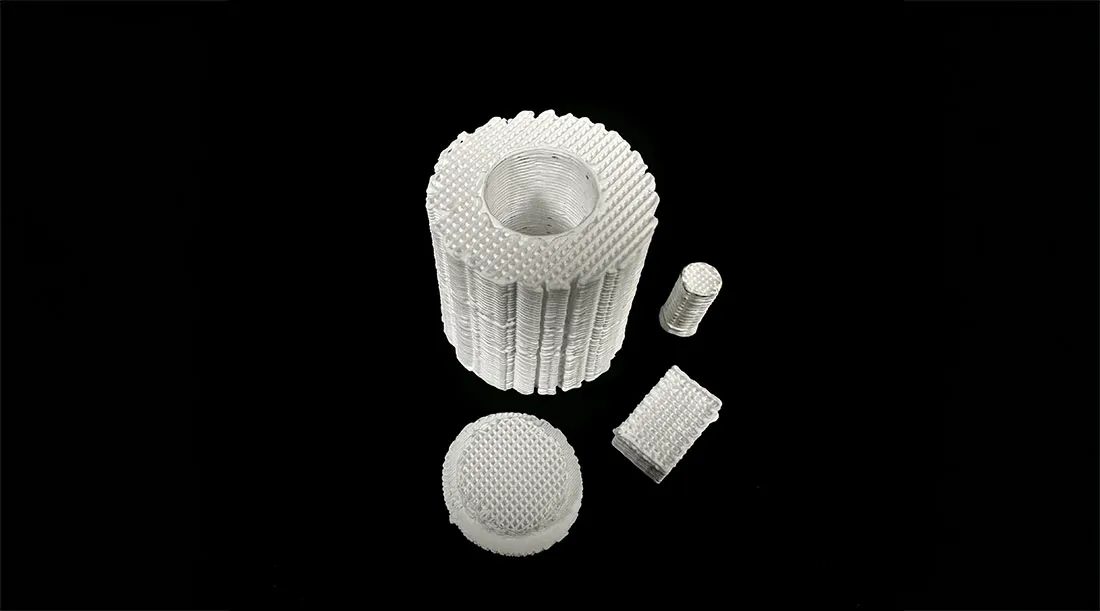
3D printed bone scaffolding from the BioNIUM’s 3D Bioprinting Facility. Image courtesy of the University of Miami.
Researchers are also exploring new ways to create skin, cartilage, bone, and nerve tissue. The long-term goal is to develop implants that help the body repair itself more naturally. And while major hurdles remain, progress continues in areas such as tissue viability, vascularization, and implant performance.
Subscribe to Our Email Newsletter
Stay up-to-date on all the latest news from the 3D printing industry and receive information and offers from third party vendors.
Print Services
Upload your 3D Models and get them printed quickly and efficiently.













You May Also Like
Apple Opens New US Advanced Manufacturing Center for Second Year in a Row
The US added 5,000 manufacturing jobs in July, although in its article on the subject, Wall Street Journal notes that there are still (slightly) fewer manufacturing workers in the US...
Kupros Launches Cu29 V2, Announces Process for Embedded Electronics from Desktop FFF & FDM
In addition to its more traditional uses, the centrality of copper to an unusually large number of high-growth industries has led more than a few observers to argue that it...
DEVCOM Armaments Center Demonstrates Remote 3D Printing of Electronics at Valiant Shield 2026
The US Army’s DEVCOM Armaments Center, headquartered at Picatinny Arsenal in New Jersey, has become one of the US military’s most important hubs for drone R&D. At the recent Valiant...
Polish Electronics 3D Printing OEM XTPL Sells 10 More Printhead Modules to First Chinese Customer
Smartphones, laptops, and all other such devices are only getting more expensive. As evidenced by Apple’s cautioning of higher prices for this year’s new iPhone line, the problem is largely...