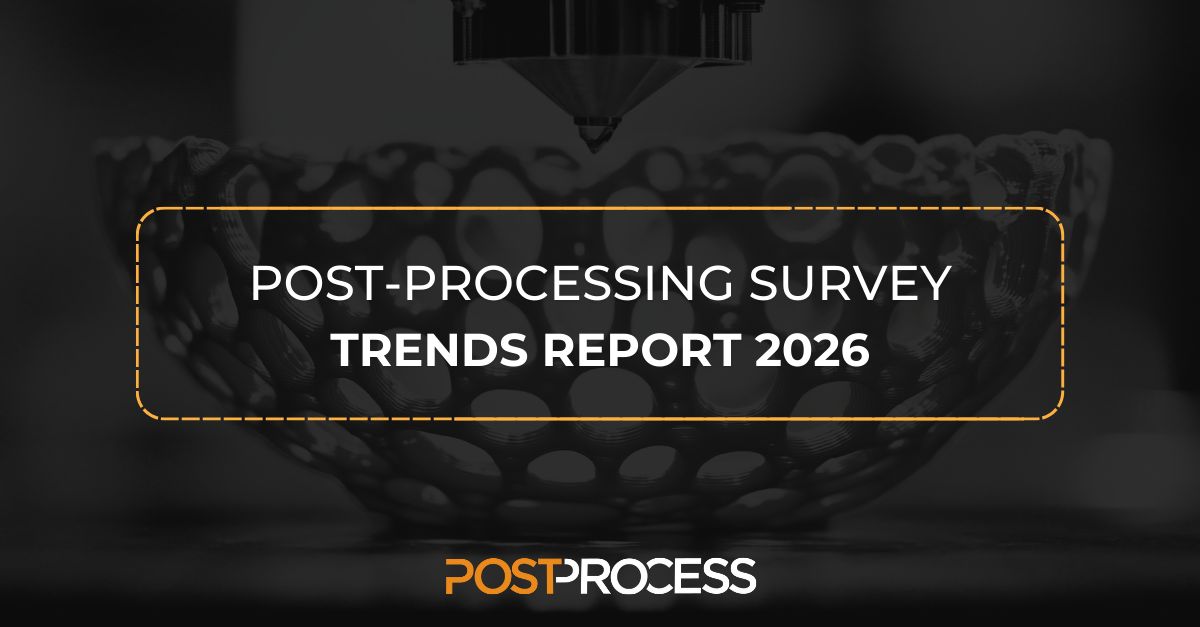
What the 2026 Post-Processing Survey Reveals About the Future of AM


As additive manufacturing (AM) continues its transition from prototyping to production, industry attention is shifting toward one of the most demanding but often overlooked parts of the workflow: post-processing.
The newly released 2026 Additive Post-Processing Survey Trends Report, conducted and published by PostProcess Technologies, offers a snapshot of how manufacturers are approaching post-printing operations today and how those strategies are evolving as additive manufacturing adoption grows. Now in its fifth edition, the survey gathers perspectives and looks at trends from additive professionals across industries, including automotive, aerospace, defense, medical, and general manufacturing.
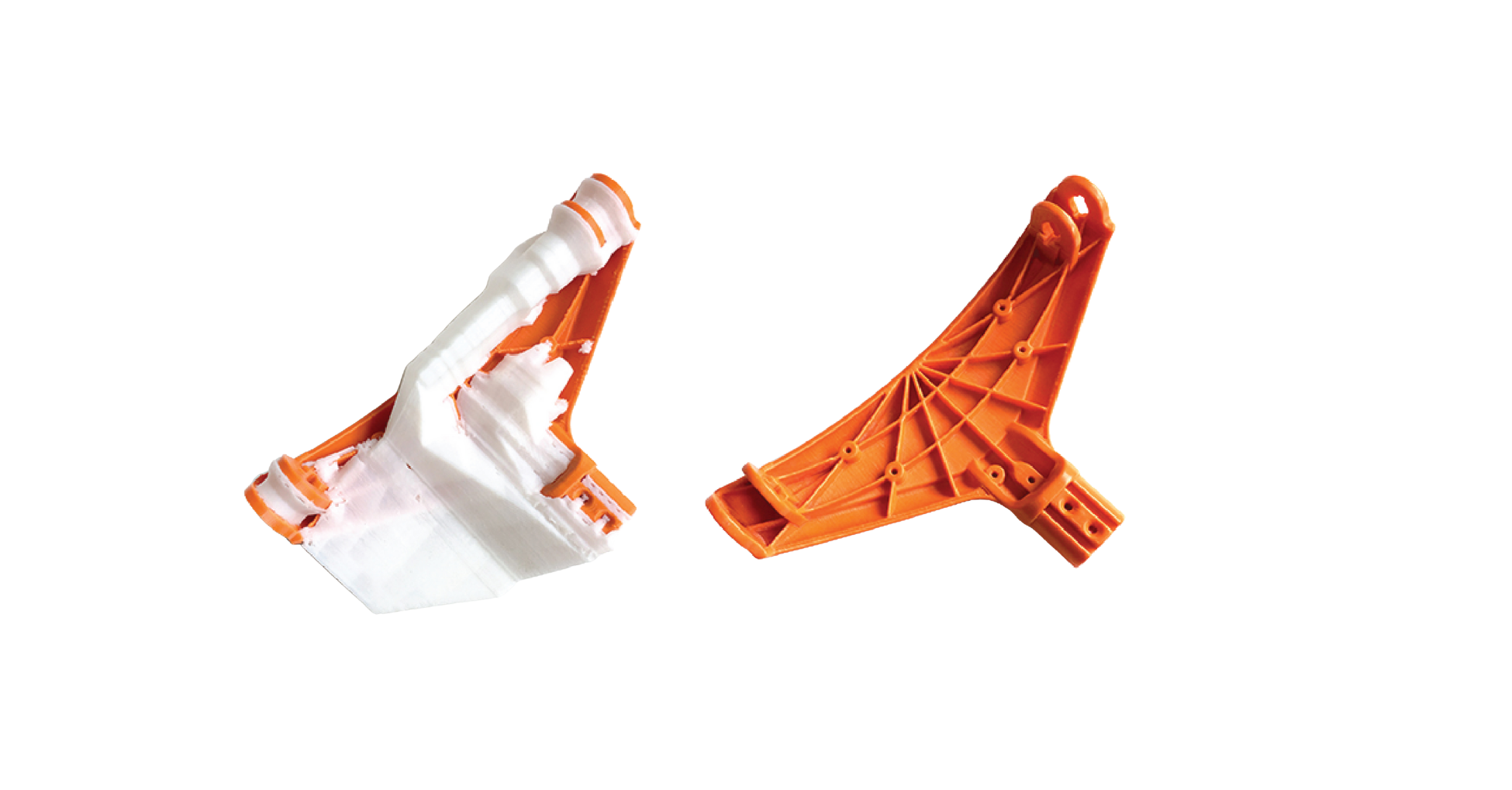
Post-processing encompasses a wide range of activities required to transform a printed part into a finished product. These steps may include support removal, resin cleaning, powder removal, curing, surface finishing, and other secondary operations.
As AM technologies expand into production environments, these steps are increasingly important and can influence everything from part quality and production throughput to workflow efficiency and facility operations. Organizations are recognizing that post-processing is becoming a challenging bottleneck in their complete end-to-end process.
Respondents to the survey report that the time and labor required to finish parts remain one of the most significant constraints in scaling their operations. At the same time, companies operating multiple printing technologies often face an even more complex post-processing landscape, as each technology introduces its own materials, processes, and finishing requirements.
As a result, post-processing is becoming a central focus for organizations looking to improve workflow efficiency and production readiness.
Growing Attention to Safety and Sustainability
Alongside productivity considerations, the survey also highlights increasing awareness around the environmental and safety aspects of post-processing operations.
Many traditional post-processing workflows rely on manual handling of parts, solvents, resins, or fine powders. As additive manufacturing adoption grows and production volumes increase, manufacturers are paying closer attention to how these processes affect operator safety, facility cleanliness, and environmental compliance.
Issues such as chemical handling, waste management, and operator exposure to hazardous chemicals are becoming more prominent topics within companies that are looking to scale their AM production. These concerns are particularly relevant in industries with strict regulatory requirements, such as aerospace, medical, and dental, but they are increasingly part of the conversation across the broader AM ecosystem.
For many organizations, addressing environmental, health, and safety (EH&S) considerations is not just about compliance; it is also about building scalable, sustainable manufacturing operations that can support long-term growth.
The Next Phase of Additive Manufacturing
Another notable trend reflected in the survey is the growing maturity of additive manufacturing users. Many respondents report several years of experience working with AM technologies, offering a knowledgeable perspective on the bottlenecks and challenges across the complete additive workflow as the industry moves into more production-oriented use cases.
With that shift comes a broader perspective on what it takes to successfully implement additive manufacturing at scale. Printing technology itself remains essential, but companies are increasingly evaluating the entire workflow—from design to print to post-processing — to get to the final part.
In this context, post-processing is emerging as a key factor that can determine whether additive manufacturing programs succeed in meeting their performance, cost, and production goals.
Explore the Full Findings
The 2026 Additive Post-Processing Survey Trends Report provides a deeper look at the challenges, priorities, and investment trends shaping post-processing in additive manufacturing today.
For industry professionals seeking a clearer understanding of how their peers are approaching these issues and how post-processing strategies may evolve in the coming years, the full report offers valuable insights.
Download the complete report to explore the findings and learn more about the trends shaping the next stage of additive manufacturing adoption.
Subscribe to Our Email Newsletter
Stay up-to-date on all the latest news from the 3D printing industry and receive information and offers from third party vendors.
Print Services
Upload your 3D Models and get them printed quickly and efficiently.











You May Also Like
BMF Turns Up the Speed with microArch S150 Series
Boston Micro Fabrication (BMF) is releasing the microArch S150 Series. This series comprises two compact desktop systems. There’s a speedy microArch S150 Ultra and a more lab- or experiment-oriented microArch...
AM Forum Berlin 2026: Tough Love From BMW’s Timo
We’re once again in the lovely city of Berlin, at the absolutely immense Estrel Center. The congress center, a musical and theater venue, towers over the easternmost reaches of the...
Targeted Applications, Expanded Platform: XJet’s Strategic Vision for AM’s Next Chapter
The additive manufacturing sector has undergone a period of “creative destruction” over the past months, moving beyond a “growth at all costs” mentality into an era of consolidation and strategic...
Next-Gen CAD/CAM Tool Accelerates Development of Innovative AM Electronics Applications
3D-printed electronics is an emerging field that combines additive manufacturing techniques with the integration of electronic components to produce previously unachievable results. It enables the creation of complex, customized electronic...