ICON Opens Sales of Its Titan Construction 3D Printer, Promises Walls for $20 per Square Foot

Construction 3D printing company ICON has taken a major step toward commercializing its technology. The Austin-based firm announced the launch of the Titan program, which will allow builders to directly purchase and operate ICON’s large-scale robotic construction systems for the first time.
Until now, ICON’s construction printers were mostly deployed through partnerships or projects managed by the company itself. But now, with Titan, builders can acquire the entire system, including robotics, software, materials, training, and ongoing service, to construct buildings using ICON’s technology.

3D printed walls.
The company says the system could reduce the cost of building wall systems by up to 40%, bringing costs down to roughly $20 per square foot, compared to typical industry costs of roughly $30–$35 per square foot for conventional wall systems.
For an industry struggling with labor shortages, rising costs, and housing shortages, ICON believes robotic construction could become a critical tool. Workforce shortages are still today one of the sector’s biggest challenges, with 92% of construction firms reporting difficulty finding workers, and industry forecasts suggesting the sector will need about 349,000 additional workers in 2026 just to meet demand.
At the same time, the U.S. housing market faces a supply gap of more than 4 million homes, the result of years of underbuilding. Rising material prices and labor shortages have further pushed up construction costs, creating pressure across the industry and prompting builders to look for technologies that could deliver housing faster and with fewer workers.
“I don’t think it will be news to most people that the cost, speed, and quality of conventional construction is simply not delivering what the world needs from the industry right now,” said ICON co-founder and CEO Jason Ballard. “After nearly a decade of research, development, and field operations, we believe it’s time to put these technologies directly into the hands of other builders.”
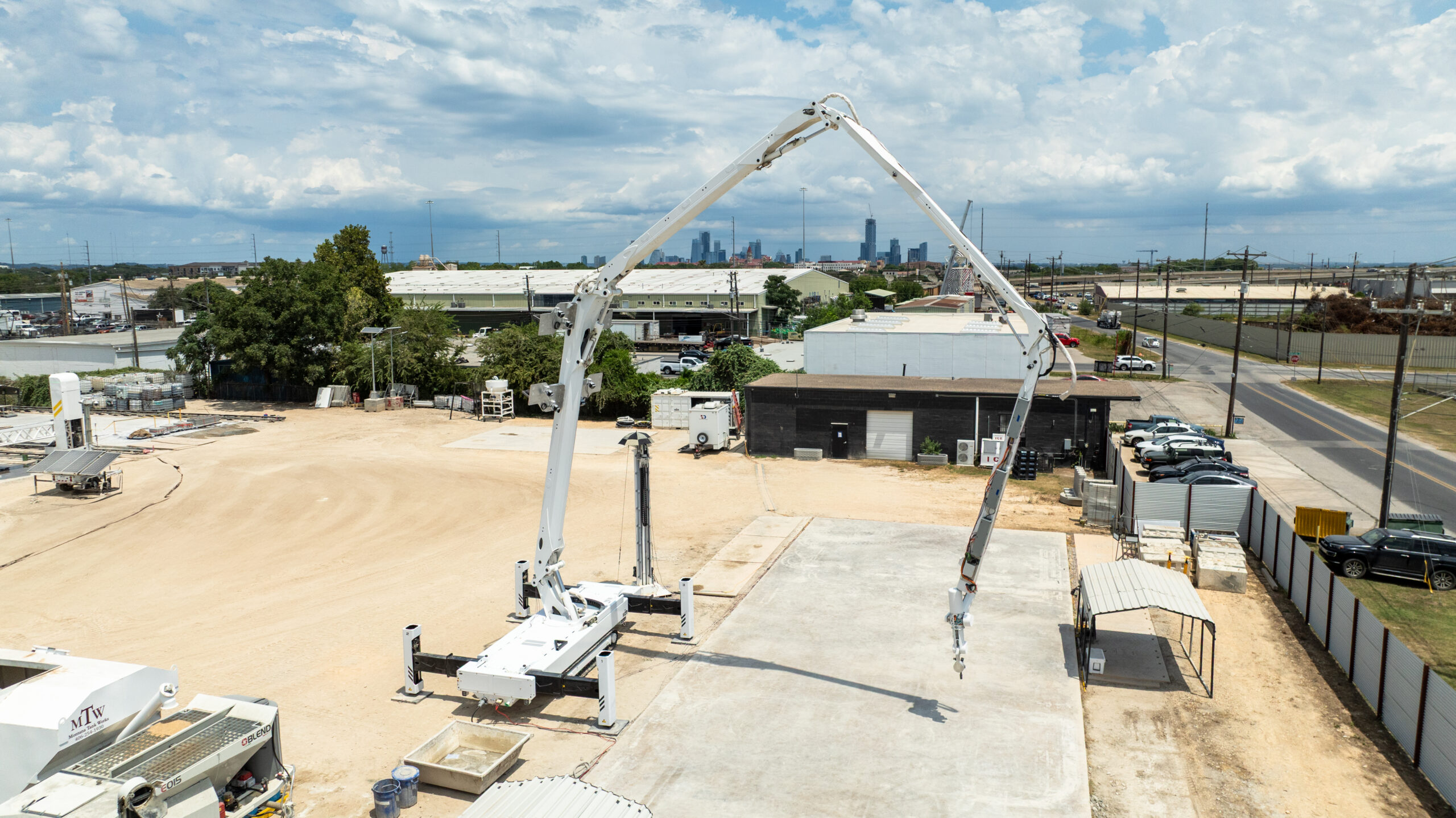
ICON’s Titan.
From Experimental Projects to Builder-Owned Systems
ICON has spent years demonstrating construction-scale additive manufacturing in real projects. The company has printed more than 245 homes and structures across the United States and Mexico, spanning affordable housing, military housing, commercial buildings, and experimental architecture.

Multi-story home development designed by BIG.
Now the company is moving toward a model where builders themselves can own the robotic construction systems.
“The Titan program is for builders who don’t want to choose between high quality, higher speed, and lower cost. These are tools for builders who are tired of the status quo, and want to be part of the solution,” continued Ballard.
The Titan system is designed to print multi-story wall systems using large robotic equipment that extrudes specialized construction materials layer by layer. Alongside the machine, ICON is offering a broader ecosystem that includes architectural design tools, project logistics support, permitting guidance, and workforce training.
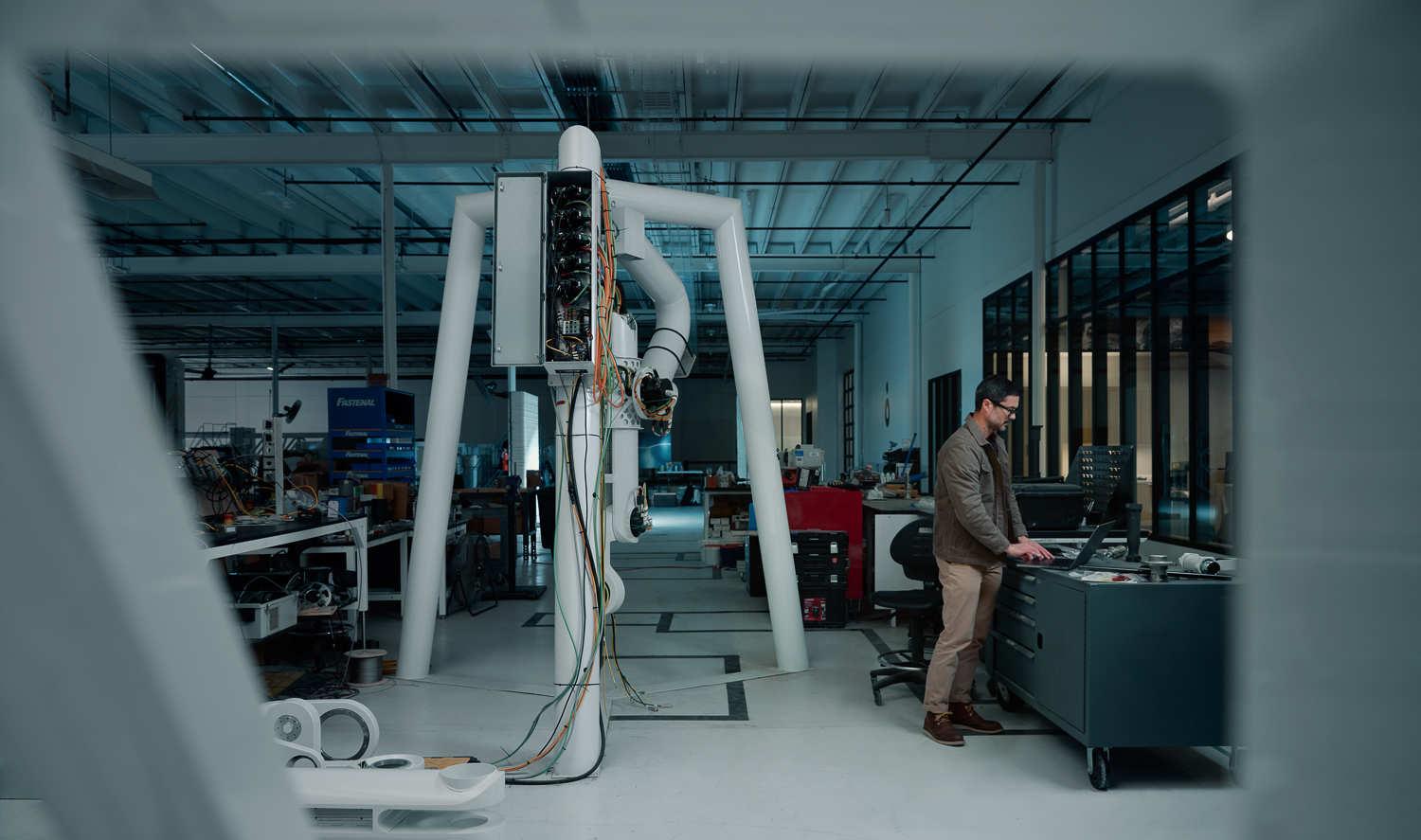
Building Titan.
Reservations for Titan are now open with a $5,000 deposit, and the company expects customer training to begin in the third quarter of 2026, with the first systems delivered in early 2027.
Early reservation customers will receive priority access, preferred pricing, and support services, including architectural plans from ICON’s digital design catalog.
Early Customers Already Planning Projects
Several early adopters are already planning projects using Titan. One of them is Ghost Factory, a housing platform company that aims to scale residential construction across multiple states. According to Ghost Factory co-founder Spencer Padgett, Titan could help builders better control supply chains and stabilize construction costs.
“By integrating Titan machines into our building platform, we gain the ability to stabilize structural costs, strengthen control over our supply chain, and move faster than traditional builders when conditions change,” Padgett said.

Multi-story home development designed by BIG.
Other early reservation holders are exploring projects ranging from rebuilding homes destroyed by California wildfires to expanding housing supply in major U.S. cities.
ICON also plans to deploy Titan internally for several high-profile projects, including housing at Community First! Village, a 35-foot-tall 3D printed church designed by Overland Partners, and a 60-home multi-story development in Austin designed by Bjarke Ingels Group (BIG).
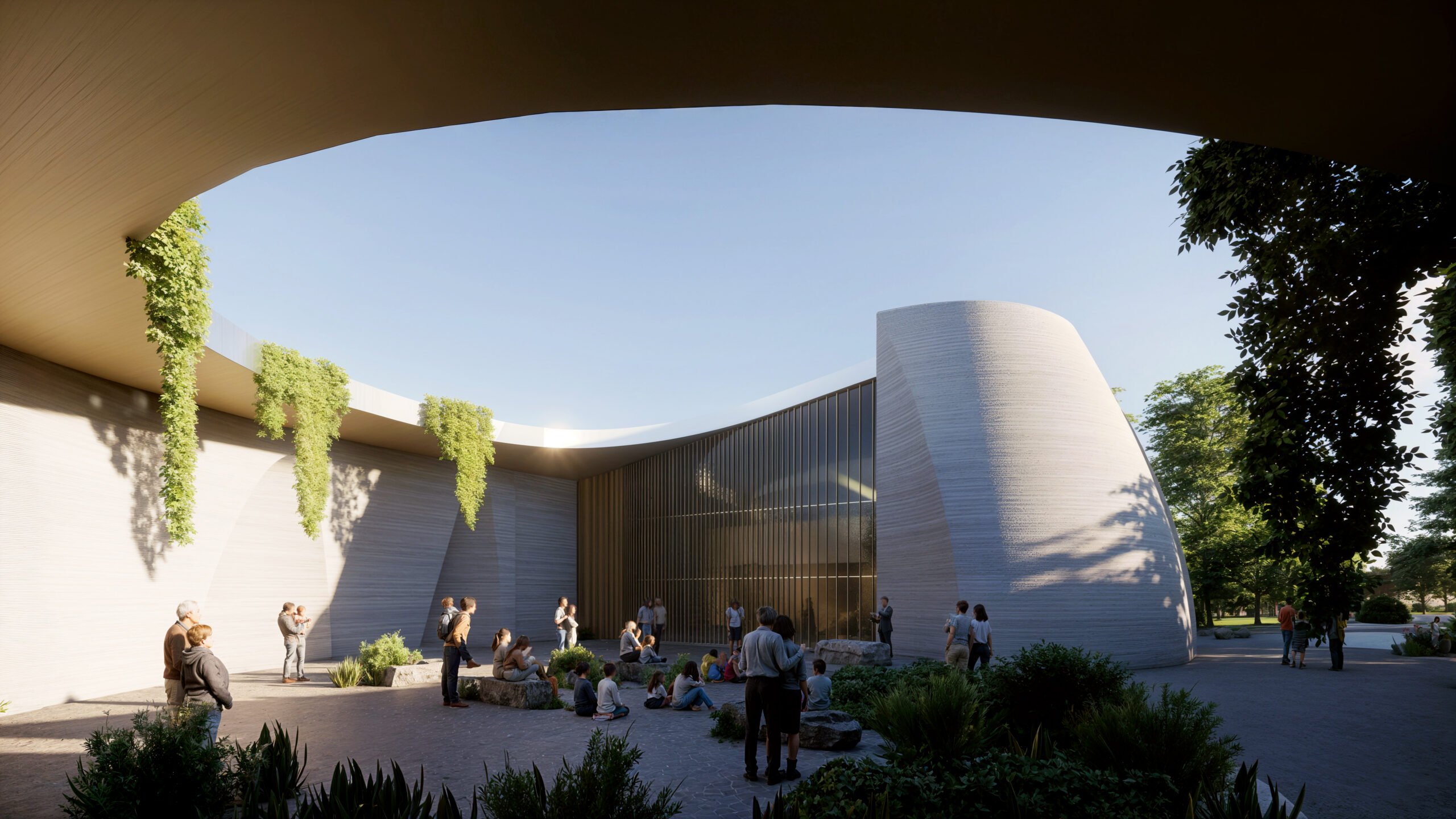
3D printed church by Overland Partners.
A Bigger Vision for Robotic Construction
For ICON, Titan is much more than just a new machine. It’s a sign that robotics and automation may soon change the construction industry. In fact, Ballard believes that over time, robots and artificial intelligence will fundamentally transform how buildings are designed and built.
“In the future, I believe nearly all construction will be done by robots, and nearly all construction-related information will be processed and managed by AI systems,” he said.
According to Ballard, that combination could reduce both the cost and time required to build homes while improving quality and design flexibility.
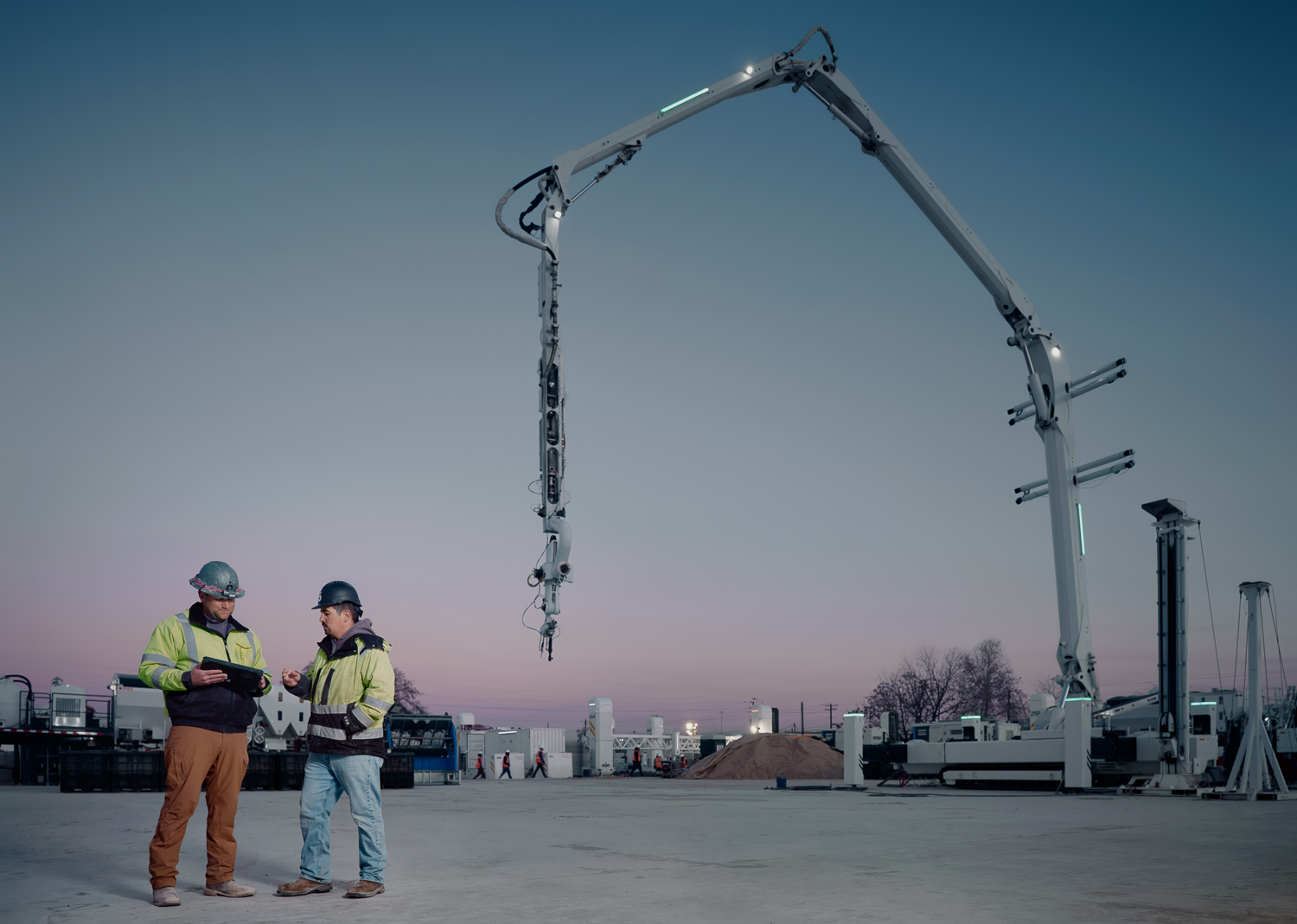
Operating Titan. Image courtesy of ICON.
If ICON succeeds, construction-scale 3D printing may no longer be limited to experimental projects run by tech companies. Instead, it could become another tool for builders, promising faster construction, lower costs, and an entirely different way to build homes.
Images courtesy of ICON
Subscribe to Our Email Newsletter
Stay up-to-date on all the latest news from the 3D printing industry and receive information and offers from third party vendors.
Print Services
Upload your 3D Models and get them printed quickly and efficiently.













You May Also Like
AI Design and Point-of-Care Integration Headline ADDITIV Medical 2026
Medical additive manufacturing is expanding rapidly inside major healthcare institutions. In 2026 alone, hospital systems including Indiana University Health and Sheffield Teaching Hospitals launched dedicated point-of-care 3D printing facilities to...
GKN Aerospace’s UAV Demonstrator with 3D Printed Engine Avoids ITAR Regulations
The US CIA director recently made an unannounced visit to Moscow that has naturally raised much speculation, while the EU and NATO have now officially accused Russia of being behind...
The Business Case for 3D Printed Stents
A new 3D printed stent developed at New York University (NYU) does not look like the devices doctors typically use today. Instead of a simple tube, the prototype resembles a...
3D Printing Financials: 3D Systems, Prodways, and Align Build on Positive Momentum
The latest earnings from 3D Systems (NYSE: DDD), Prodways (EPA: ALPWG), and Align Technology (Nasdaq: ALGN) show that the 3D printing market continues to move forward. Some businesses are growing...