Scaling Beyond 10 Printers: When Support Becomes a Bottleneck


The leap to industrial-scale 3D printing is a support problem, not a hardware problem.
A 3D print farm is a centralized facility that uses a large number of 3D printers to mass-produce parts or products. These farms operate with the goal of increasing production rates, minimizing printer downtime, and running machines continuously for high-volume output. For many 3D print farms, scaling up the amount of 3D printers feels like momentum, more capacity, faster turnaround and bigger opportunities until inconsistency in operations slows down production at a massive scale.
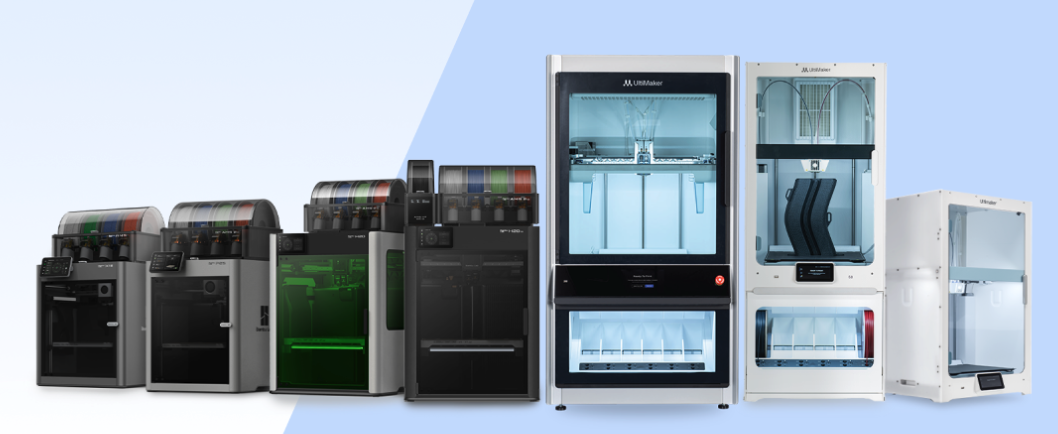
Early on, a DIY approach works. Operators know every machine, troubleshooting happens in real time, and fixes are quick enough to keep production moving. But as print farms scale, something shifts. The same strategies that worked at five or ten printers begin to fail at twenty, thirty, or fifty. Not because the hardware can’t keep up, but because of inadequate support.
As facilities begin to scale, inconsistency becomes the biggest risk. Output quality varies by operator, machine performance wears over time, and minor failures turn into major setbacks. At scale, every small issue compounds, a clogged nozzle or calibration error isn’t an inconvenience, it’s multiplied across an entire fleet. What once felt manageable becomes unpredictable, and growth starts to slow, not from lack of demand, but from lack of operational stability.
Dynamism can help break through the scaling barrier, offering training programs to equip operators and teams with the knowledge needed to maintain consistency and confidence. And by providing standardized installation services to ensure systems are set up correctly for production environments. Dynamism is ready to help scale operations by offering standardized training, installation and ongoing product support.
Training is often the first missing piece. Dynamism’s experienced technicians will educate your team on best practices, material nuances, or failure prevention. Formal training ensures consistency across shifts and locations, reduces operator-induced errors, and shortens ramp-up time for new hires. A trained team doesn’t just react to problems, they prevent them.
Installation is another overlooked factor. Printers dropped into production environments without proper setup, calibration, or workflow planning often struggle from day one. Environmental factors, network integration, material handling, and post-processing considerations all impact performance. Dynamism’s professional installation ensures machines are production-ready from the start, reducing early failures and setting the foundation for long-term reliability.
Product support is the final piece that keeps operations running reliably over time. Dynamism provides ongoing support services, including repairs, troubleshooting, and product knowledge with no need to outsource support or rely on fragmented resources. Whether virtually or onsite, acting as your dedicated support knowledge base, helping teams stay productive, reduce downtime, and keep systems operating at peak performance.
Scaling a print farm isn’t about owning more machines, it’s about building the support structure to run them successfully. With the right training, installation, and ongoing support, growth becomes predictable, sustainable, and profitable. Without it, even the best hardware eventually hits a wall.
Dynamism is a Bronze Sponsor for Additive Manufacturing Strategies (AMS), a three-day industry event taking place February 24–26 in New York City. The conference brings together industry leaders, policymakers, and innovators from across the global AM ecosystem. Registration is open via the AMS website.
Subscribe to Our Email Newsletter
Stay up-to-date on all the latest news from the 3D printing industry and receive information and offers from third party vendors.
Print Services
Upload your 3D Models and get them printed quickly and efficiently.











You May Also Like
When a Factory Stops Being a Building and Starts Being a Machine
Metal manufacturing still carries the layout and logic of an older industrial age. Most factories run as a collection of isolated disciplines, each with its own equipment, staff, and data....
Bridging the Gap: 2D to 3D AI in Manufacturing
For decades, the early stages of manufacturing have been defined by a simple, frustrating trade-off: you can have it precise, or you can have it fast. AI just broke that...
Hardware is Dead. Here’s What Actually Wins in Additive Manufacturing.
Hardware is rapidly commoditizing across additive manufacturing. Specifications have converged. Price competition has intensified. Margins have compressed. For companies attempting to scale additive manufacturing beyond prototyping, this shift has profound...
The Real ROI of Personalized 3D Printed Medtech in Oncology
Discover how patient-customized 3D printed devices like Stentra™ significantly reduce high toxicity-related treatment costs and improve workflow efficiencies to handle more cases more effectively overtime. Introduction: The Economic Paradox in...