At AIAA SciTech 2026, 3D Printing Showed Its Range — Part II

At AIAA SciTech 2026, 3DPrint.com moved between the show floor, exhibitor booths, and technical discussions, speaking with companies, researchers, and engineers about how 3D printing is being used today in aerospace and defense, and where it’s still evolving.
Across those conversations, the same themes emerged. Primes and government labs focused on scale, qualification, and repeatability, where parts must meet strict flight requirements. At the same time, startups and university teams emphasized speed and iteration, using 3D printing to test new ideas and move quickly from design to experiment. Many discussions also centered on measurement, finishing, automation, and materials; work that determines whether additively manufactured parts can move from early builds into flight-ready programs. And that contrast set the tone for much of the event.
That mix was clear on the show floor itself. Major primes such as Boeing, Northrop Grumman, Lockheed Martin, RTX, Siemens, and more were recruiting, meeting with partners, and engaging directly with engineers, students, and startups throughout the week. Meanwhile, additive-focused booths, like VulcanForms, Lithoz, Fathom, Lab AM 24, and ZEISS, showed how 3D printing now fits into everyday aerospace work.

The show floor at AIAA SciTech Forum 2026. Image courtesy of 3DPrint.com.
The Role of Measurement and Qualification
One of the strengths of events like SciTech is that they place additive manufacturing (AM) within a much broader aerospace context. Rather than focusing on printing alone, conversations often moved quickly into measurement, qualification, and process control.
At the ZEISS booth, optical scanning and inspection were described as increasingly critical as additively manufactured parts move into real aerospace programs. While automotive remains ZEISS’s largest market (roughly 70 percent of its customer base), aerospace and aerostructures now account for around 20 percent, with AM playing an increasingly important role.
They also described the scale of some of that work. One of the largest scans discussed involved a C-130 aircraft. Rather than capturing the entire structure at once, half of the aircraft was scanned and then mirrored, a process that still took two to three days to complete. Large geometry takes time if accuracy matters, explained Zeiss.
Still, according to ZEISS, one of the biggest challenges customers face when inspecting 3D printed parts isn’t the scanner itself. It’s preparation. Highly reflective parts may need a light spray coating. Targets must be placed correctly. Surface prep has to be consistent. When those steps are rushed or skipped, scan data can end up with gaps or voids, undermining the entire inspection process.
In practice, AM raises the bar for rigor rather than lowering it. Printing can be fast, but qualification takes time, which helps explain why aerospace AM continues to move carefully even as production capabilities advance.
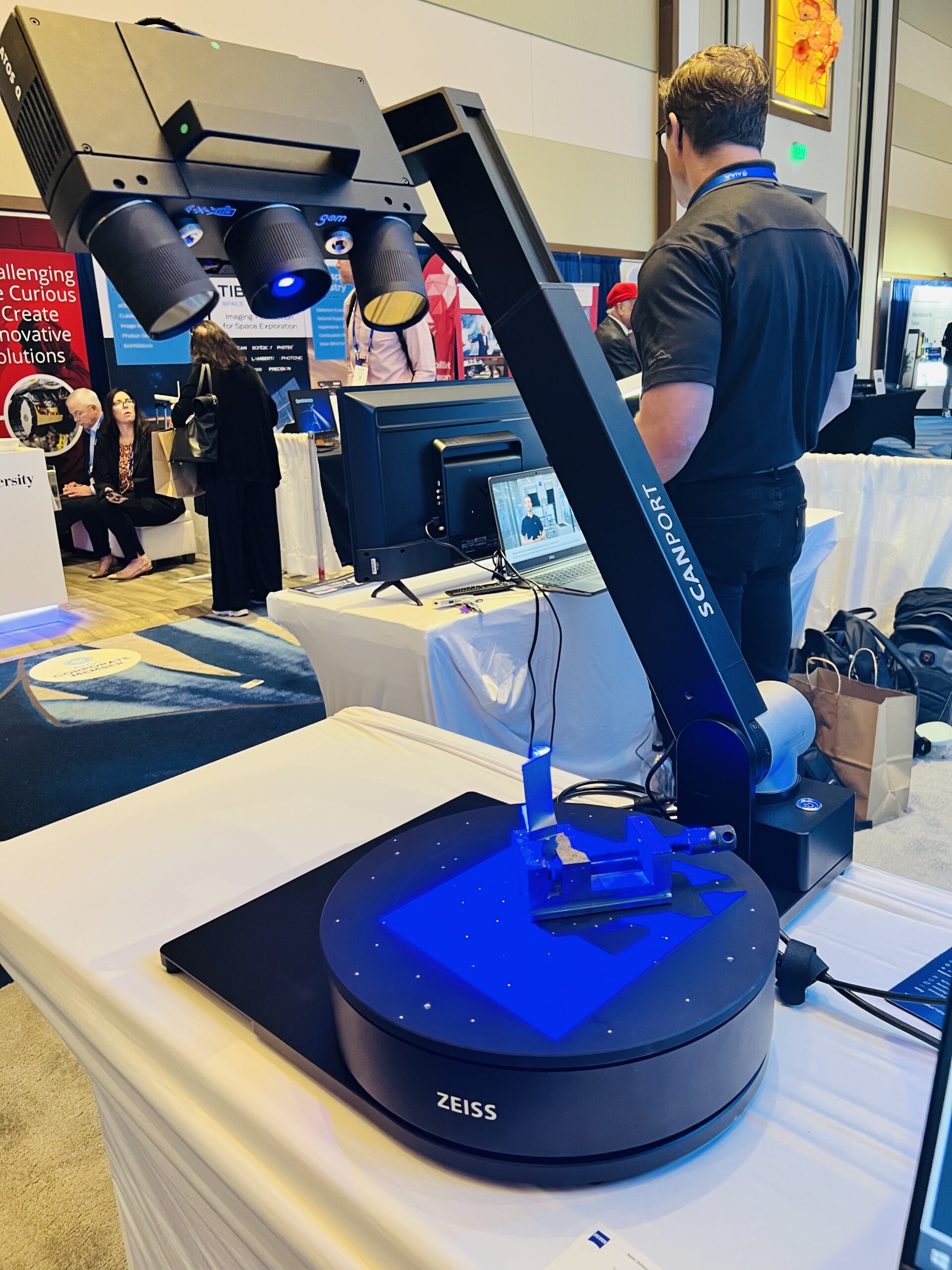
Zeiss at AIAA SciTech Forum 2026. Image courtesy of 3DPrint.com.
Universities and the Next Generation of AM Work
That balance between speed and rigor was especially visible on the university side of the show.
One of the most encouraging aspects of AIAA SciTech was the strong university presence on the expo floor. Across aerospace engineering, materials science, propulsion, and structures, universities showed how 3D printing is already being used in hands-on research. The focus was practical: lightweight structures, new materials, faster testing cycles, and student-built systems that can move quickly from design to experiment.
These programs were clearly designed for real-world use. The focus wasn’t just on research papers, but on training future engineers and connecting university labs with industry, government, and defense partners. In several booths, students walked visitors through printed components, test rigs, and flight-ready platforms, explaining not just what they built, but why.
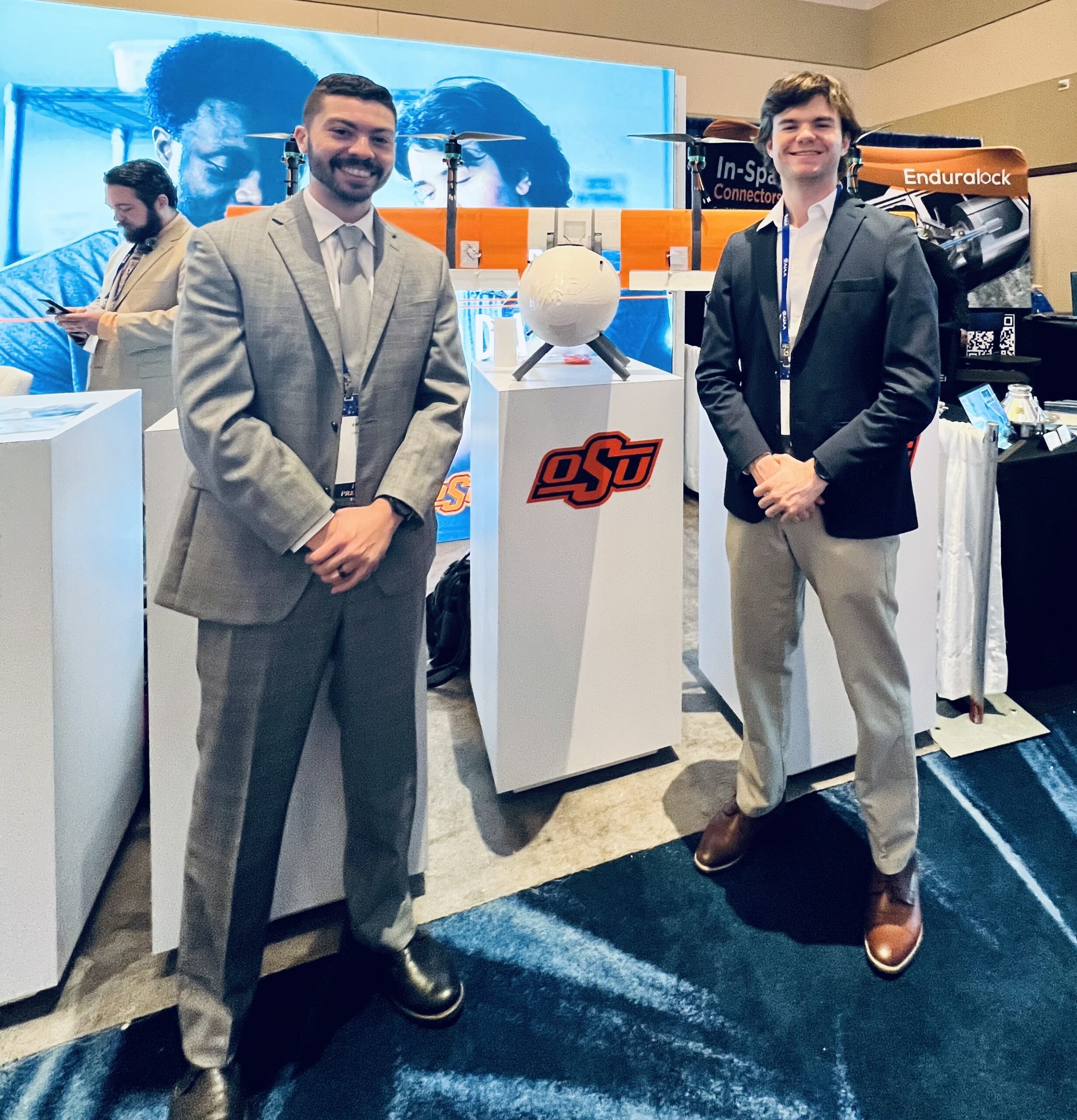
Anthony Comer and Zach Atkinson from the Oklahoma Aerospace Institute for Research and Education at AIAA SciTech Forum 2026. Image courtesy of 3DPrint.com.
For example, at the Oklahoma Aerospace Institute for Research and Education, Assistant Professor of Aerospace Engineering at Oklahoma State University, Anthony Comer, described how AM is integrated directly into flight research. Graduate research assistant Zach Atkinson explained that the Simulation to Flight Applied Research Laboratory takes novel aircraft configurations from digital simulation all the way to physical flight testing. Using aerodynamic modeling techniques, the group designs and builds aircraft, then compares simulation results with real flight data, often using 3D printed components to move quickly from design to testing.
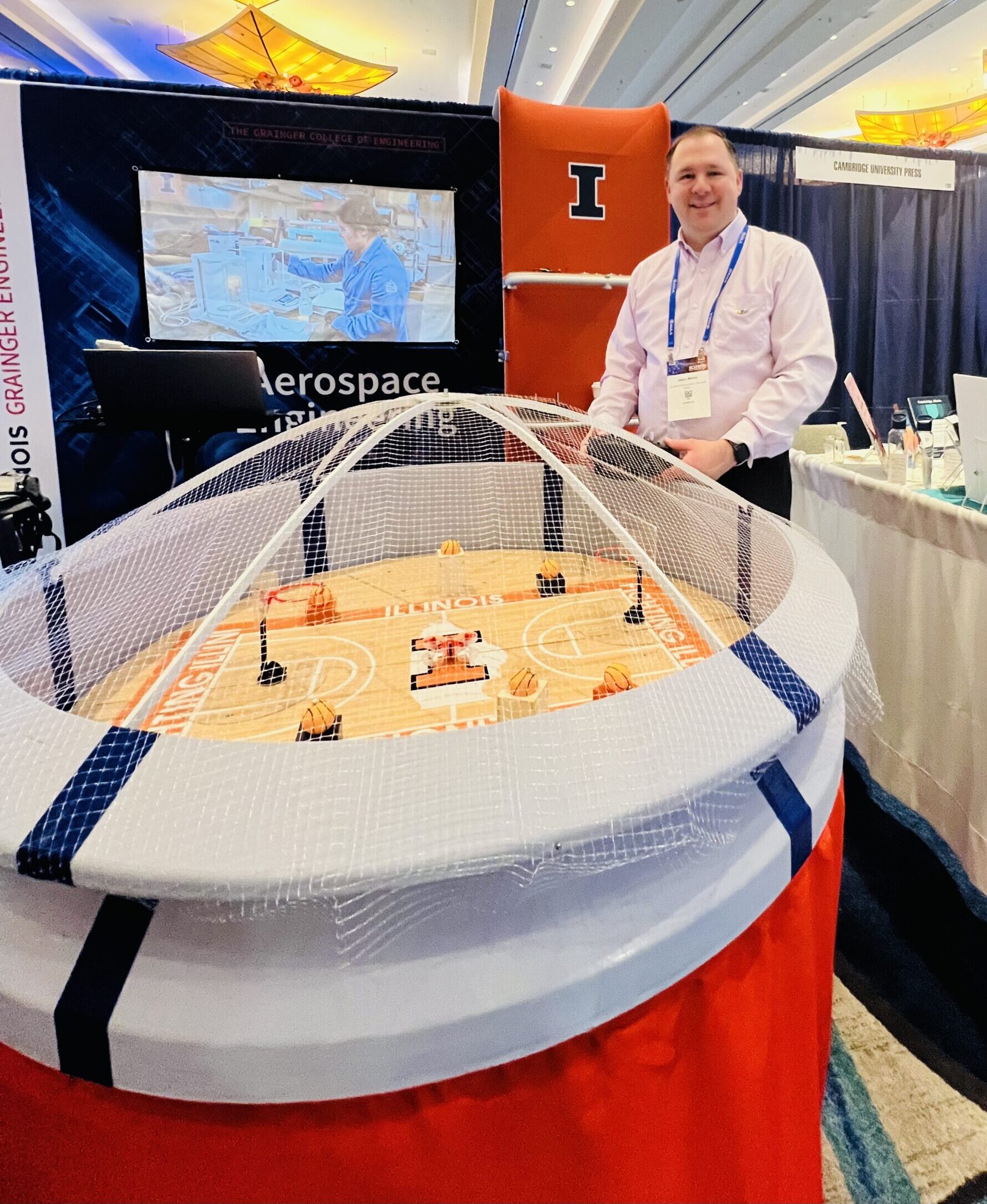
Professor Jason Merret from the University of Illinois Urbana-Champaign at AIAA SciTech Forum 2026. Image courtesy of 3DPrint.com.
Another university booth drew plenty of attention with a hands-on drone setup that felt a lot like a small testing arena. Aerospace Engineering Professor Jason Merret from the University of Illinois Urbana-Champaign explained that their lab operates as a mix of teaching and research, using 3D printed drones and enclosures to let students experiment, test, and iterate. The drone lab has been running for about three years and includes a dedicated flight room equipped with a full motion-capture system. With roughly a dozen high-resolution cameras tracking movement within a 20-by-20-by-10-foot space, the setup allows multiple drones to be tested simultaneously with sub-millimeter accuracy. It might have seemed like a playful booth, but underneath it showed how AM is being used to support serious research, testing, and hands-on education.
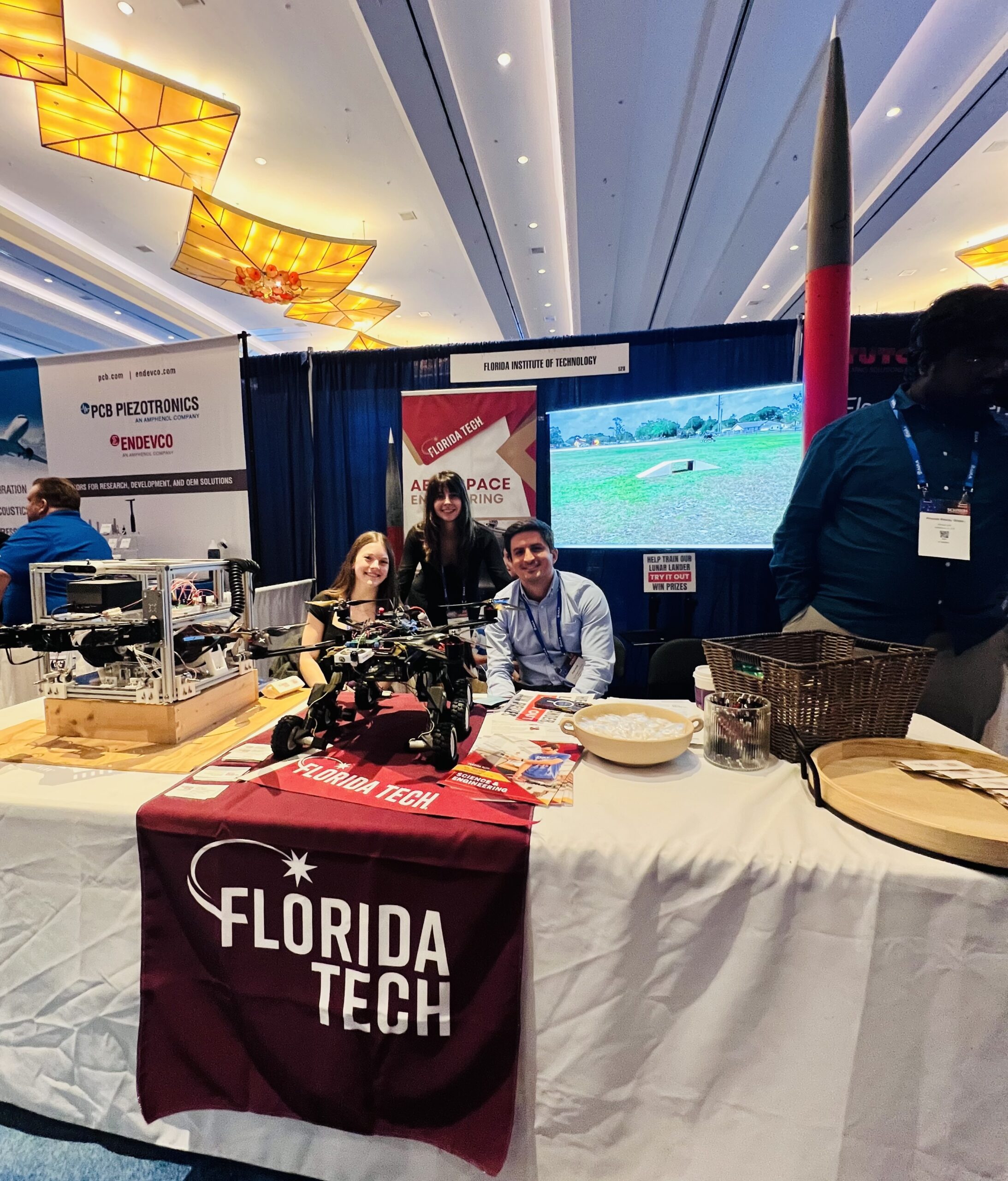
Florida Tech at AIAA SciTech Forum 2026. Image courtesy of 3DPrint.com.
Meanwhile, at the Florida Institute of Technology booth, AM showed up as part of a broader hands-on research environment. Firat Irmak, assistant professor of aerospace, physics, and space sciences, along with his graduate students, walked visitors through a range of 3D printed components integrated into electronics, motion systems, and lab-scale manufacturing tools, showing how printed parts are used in real experiments rather than isolated demos. Some workflows were automated, while others were intentionally hands-on, giving students experience validating designs and understanding how printed parts behave in real systems.
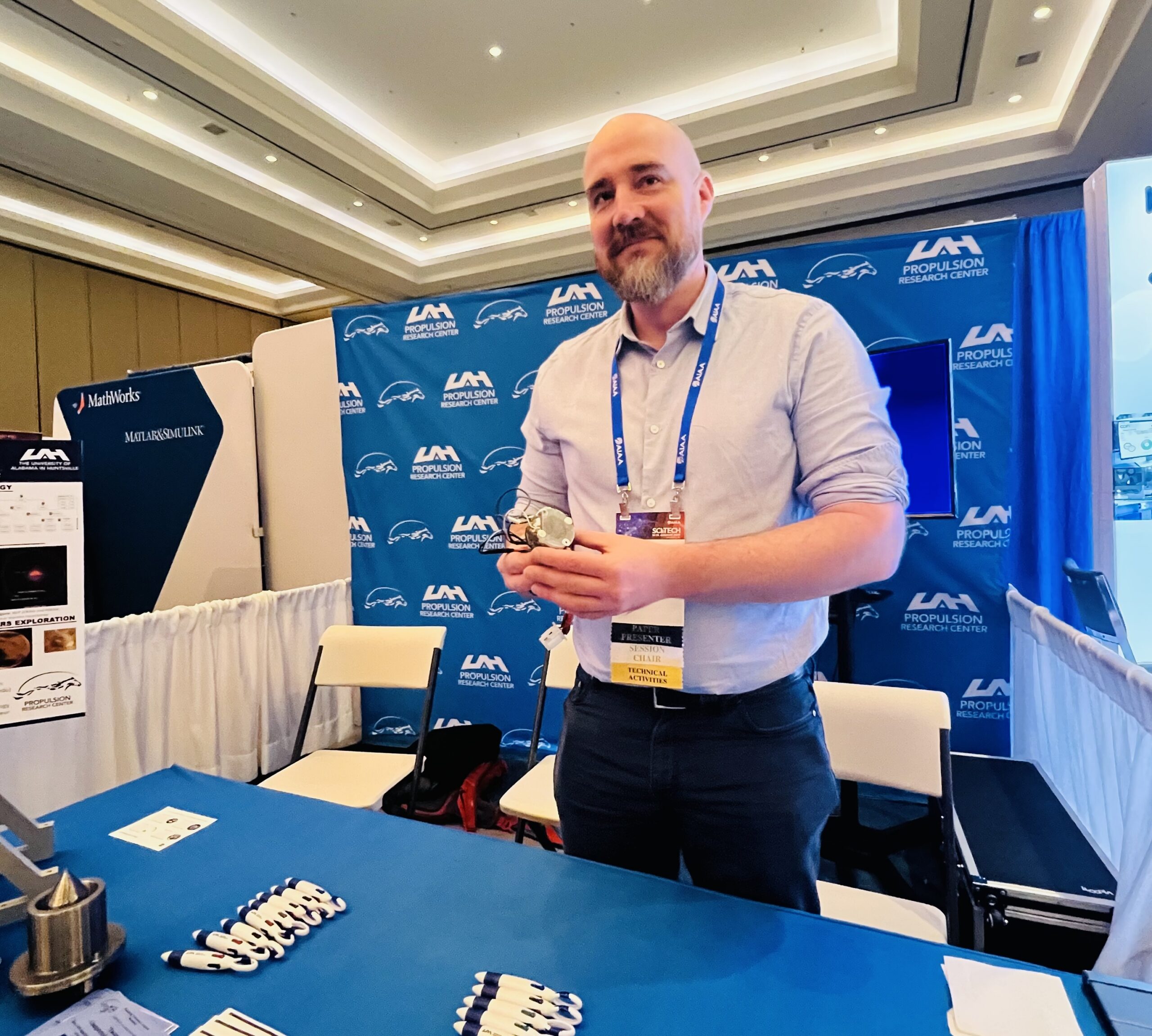
The University of Alabama in Huntsville’s Department of Mechanical and Aerospace Engineering at AIAA SciTech Forum 2026. Image courtesy of 3DPrint.com.
What stood out was how much printed hardware was on display. The Florida Tech booth felt less like a showcase and more like a working lab, showing how 3D printing supports research, testing, and engineering education.
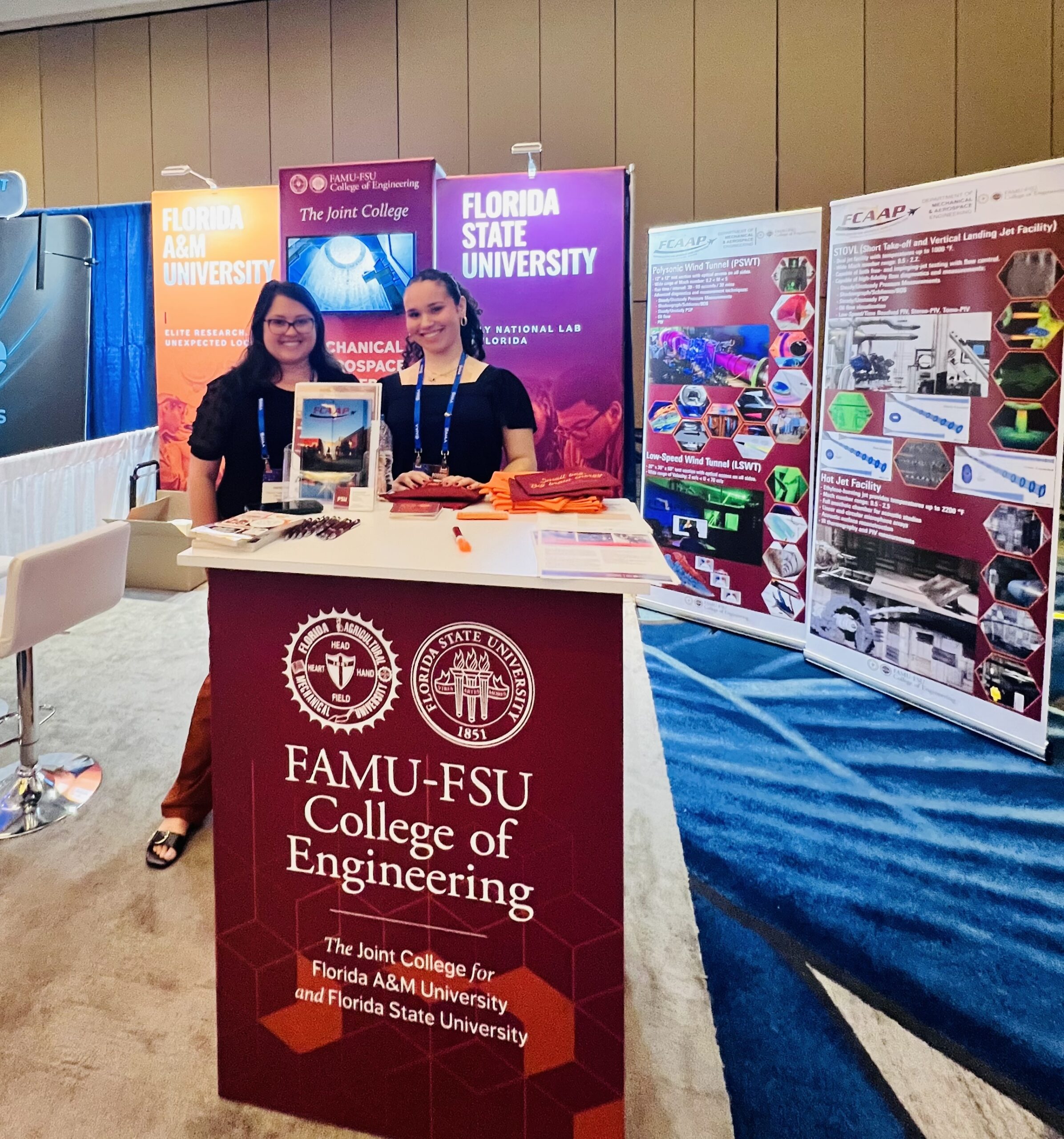
FAMU-FSU College of Engineering at AIAA SciTech Forum 2026. Image courtesy of 3DPrint.com.
Other institutions, such as the University of Alabama in Huntsville‘s Department of Mechanical and Aerospace Engineering, FAMU-FSU College of Engineering, Utah State University’s College of Engineering, California Institute of Technology, and the University of Maryland‘s Department of Aerospace Engineering, showed how 3D printing fits into current research workflows. It is a clear reminder that a significant part of aerospace AM’s future is being shaped in university labs today, often well before those ideas reach industry or production environments.
Subscribe to Our Email Newsletter
Stay up-to-date on all the latest news from the 3D printing industry and receive information and offers from third party vendors.
Print Services
Upload your 3D Models and get them printed quickly and efficiently.











You May Also Like
3D Printing News Briefs, January 17, 2026: Titanium Scrap, Autopsy Analysis, & More
In this weekend’s 3D Printing News Briefs, we’ll start with government funding news from IperionX. Then, a German contract manufacturer has acquired its 6th and 7th Lithoz ceramic 3D printers....
3D Printing News Briefs, January 10, 2026: 3D Printing Innovation on Display at CES
Las Vegas was the place to be last week for those interested in the latest gadgets and innovative technology solutions. This year’s Consumer Electronics Show (CES) welcomed over 4,000 exhibitors to...
Top 10 3DPrint.com Stories of 2025: Kickstarter, Consumer Goods, Bankruptcy, & More
As Vanesa Listek wrote, last year was a major turning point for additive manufacturing (AM), as the industry is working to sort itself out. Customers want proven use cases and...
3DPOD 287: 3DP/AM Market Data and Applications with Scott Dunham, AM Research
Scott Dunham models all the data at Additive Manufacturing Research. He has been predicting the growth of the 3D printing market in segments, materials, and applications for over a decade....