AMEXCI Purchases Two New Solukon Units

Swedish 3D printing service AMEXCI already has three Solukon depowdering systems and now will go to five in total. The company is adding two different models, the SFM-AT350 and the SFM-AT1000-S, in Örebro. AMEXCI has worked with Solukon since 2018, when it bought two SFM-AT300 units.
The company says that it uses one system per material. It says that, “SFM-AT300 depowders components made of stainless steel (316l), the SFM-AT350 those made of titanium (Ti64), and the SFM-AT1000-S components of SLM printers made of aluminum (ALSI10Mg).”
The SFM-AT1000-S can depowder parts up to a meter that could weigh as much as 800 kilos. The 600 x 600 x 1,000 mm chamber behemoth is meant to be paired with NXG. It has been optimized to load the top parts by crane. The system uses the Pathfinder software that, depending on CAD designs, determines an optimal depowdering dance.
It’s notable that the big unit is making aluminum parts. This is definitely a trend we are seeing. A lot of large systems are used for aluminum, and a lot of large industrial and defense parts are being made from the material. The economics of printing these aluminum parts have improved a lot over the past years. Due to thicker layer heights, increased speed in the machine overall, and material cost, aluminum use is really growing. AMEXCI runs both EOS and SLM equipment. The company has two EOS M290‘s as well as a Nikon SLM Solutions 500 and NXG 600. It’s the NXG 600 that is running the aluminum, in this case, ALSI10Mg (stupid aluminum), and is paired with the SFM-AT1000-S.
Increased use of larger systems could lead to big shifts in material usage for inconels, coppers, and aluminum. We see a lot of these systems working on large parts where the nickel superalloys or aluminum make the most sense. For some players, titanium still rules the roost and is the standard material. But for others, their volume in aluminum or 718 could eclipse that of the previously more prevalent materials.
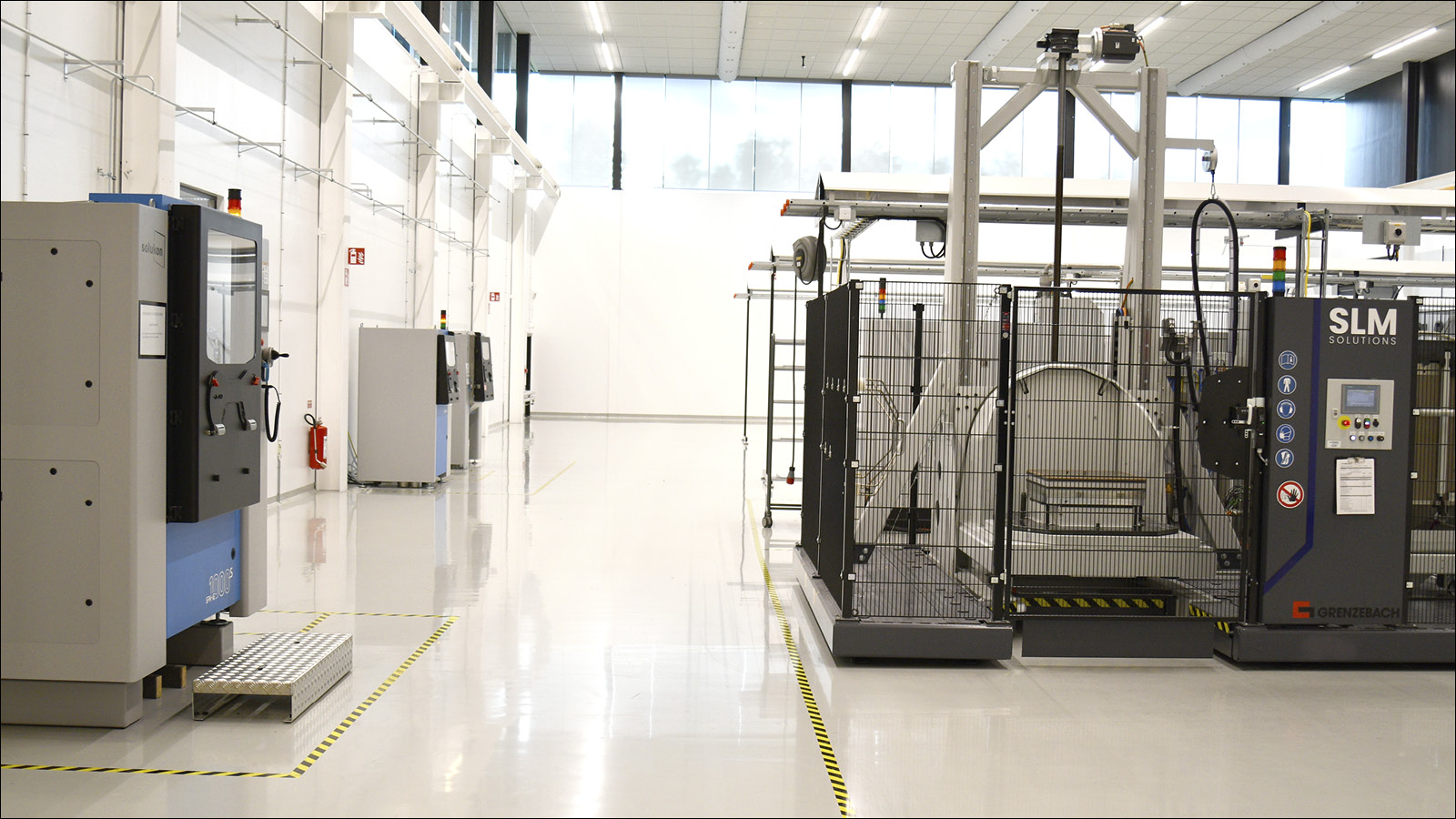
The Solukon systems at the AMEXCI facility. Image courtesy of Solukon.
AMEXCI Head of Production Andreas Petersen,
“The Solukon system has been an essential piece of our AM workflow from the beginning. We chose the Solukon as for us, it was important to work with powder free parts as early as possible in the process. It is an important equipment for us to get parts free of powder for safer handling of parts for both our operators and our customers. It is simple to use, yet efficient. The cooperation with Solukon has been going well for 7 years now, with a team ready to help.”
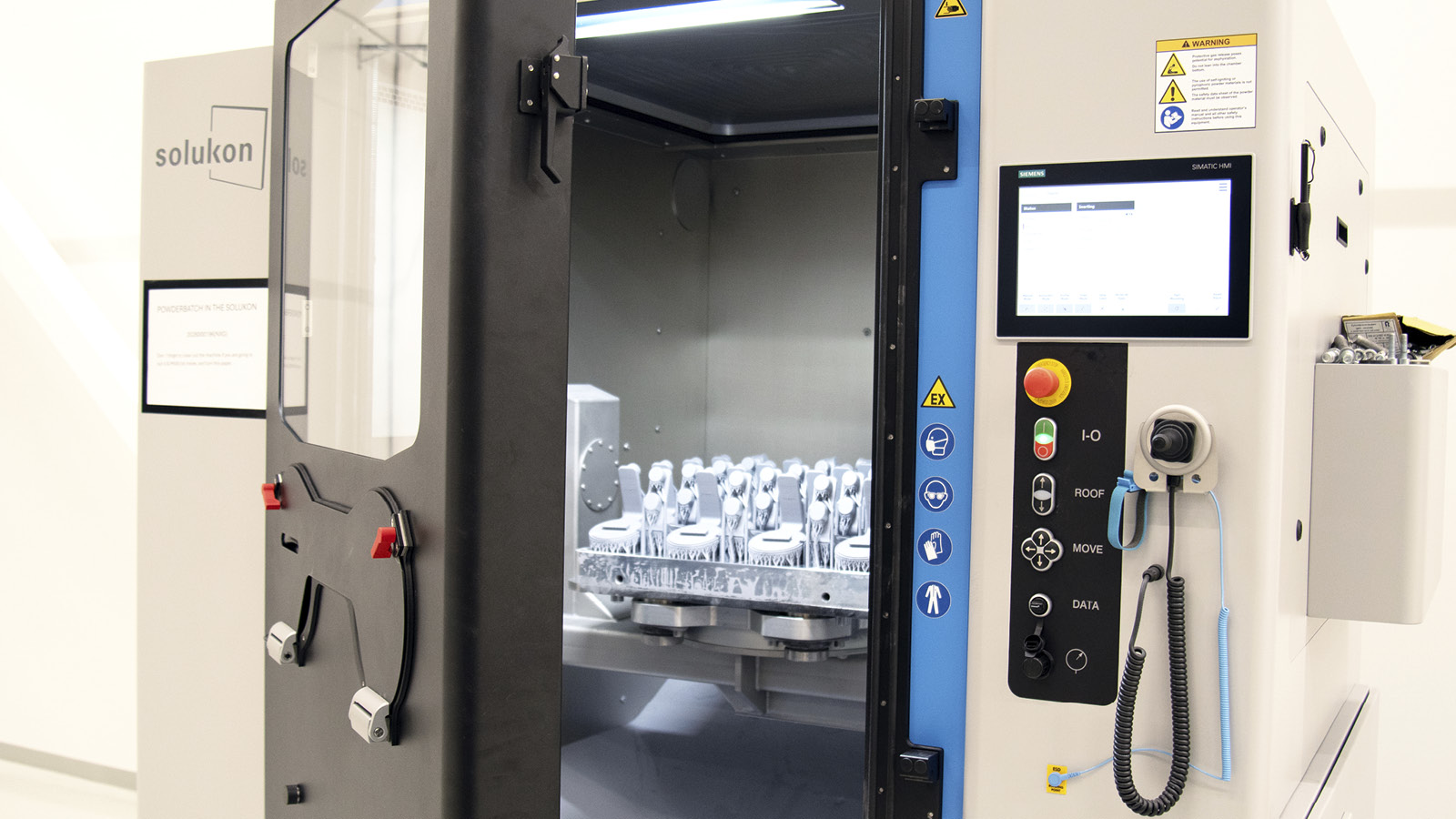
Glimpse insight into the SFM-AT1000-S at AMEXCI. Image courtesy of Solukon.
The company bought the systems because improved software leads to, “optimal part motion based on the part-specific geometry, the company aims to improve depowdering predictability and streamline part-specific depowdering. This will help to remove powder from channels smaller than 1 mm, which currently still pose a major challenge, even more efficiently.”
Smaller channels are a huge issue for parts such as heat exchangers. If the Solukon could use software to get even better at those tricky channels, it would embed and extend its lead in the marketplace. Solukon is doing really well by making a reliable, robust machine that fits right into the business plans and ideas of those defense firms and large manufacturers have. They just want something that works and will work for years. Solukon has excelled at delivering on this for years now. As the initial large-machine market peaks this year, the company will have to shore up growth in other markets. But, subsequently, some NXG customers are inching closer to production, which will lead to even more systems later. Solukon will subsequently therefore do even better in a few years. It’s a great example of a good business solving a well-known problem.
Subscribe to Our Email Newsletter
Stay up-to-date on all the latest news from the 3D printing industry and receive information and offers from third party vendors.
Print Services
Upload your 3D Models and get them printed quickly and efficiently.











You May Also Like
Camp Lejeune’s II Marine Expeditionary Force Innovation Campus: An Existing Model for the U.S.’s Future in Additive Manufacturing
A recent article in Military.com highlights the II Marine Expeditionary Force (MEF) Innovation Campus, located at Marine Corps Base Camp Lejeune in North Carolina. It provides a good touchstone for the...
The AM Adoption Problem No One Models
Through its short history, Additive Manufacturing has been presented to the investment community as a classic high growth technology story. Manufacturing is a multi-trillion-dollar market. Even a small percentage looks...
Polymer Extrusion 3D Printing Market Expected to Reach $6.1B by 2034, According to AM Research
According to a new report by Additive Manufacturing Research (AM Research or AMR), “Polymer Extrusion 3D Printing Markets 2025–2034: Analysis and Forecast in the Age of Low-Cost Upstarts,” the global...
The Business of Customized Sports Equipment: How 3D Printing Is Changing Athletic Gear
For years, 3D printing in sports has been linked mostly with prototypes, concept shoes, and one-off experiments for elite athletes. Helmets, cleats, and footwear midsoles often took over the headlines,...