Korean Brand Breezm Launches 3D Printed Eyewear Nationwide in the US

Korean eyewear brand Breezm is launching nationwide in the US. The 3D scanned and printed custom eyewear company, which we reviewed last year, already had a concept store in New York, but will now be available across the United States through an iPhone app. The Breezm: Eyewear Made for You app lets customers scan and customize glasses from their own home.
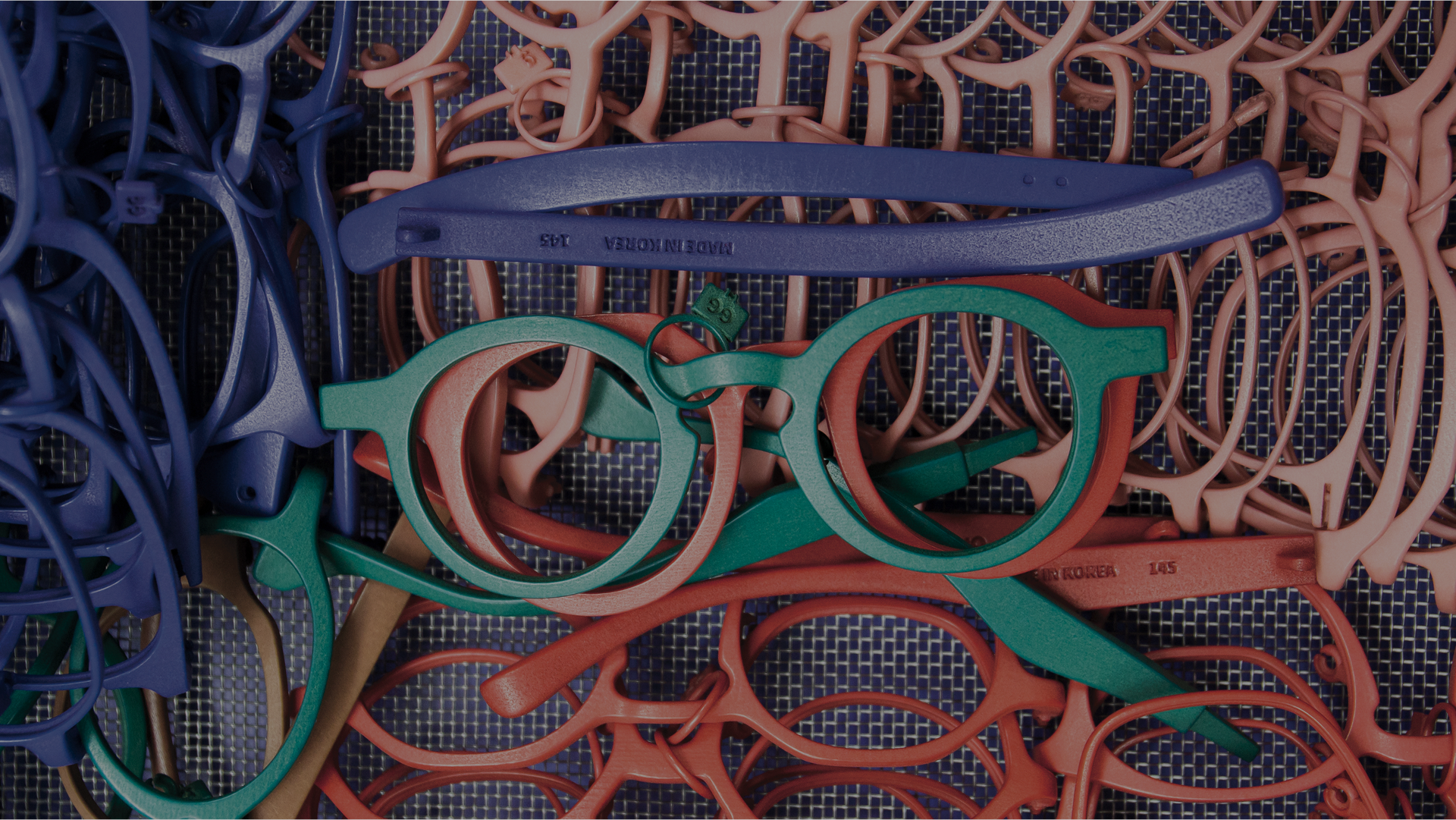
The app scans the face using the iPhone camera and measures distances between key facial points. Breezm’s AI Fit Finder then matches the customer’s face with the best-fitting glasses frame. The frame is then sized to the face. Users can select from 80 different colors and select progressive lenses, reading glasses, standard prescription lenses, or sunglasses. The glasses can then be ordered for delivery.
Breezm Co-CEO Zenma Hyungjin Park says that,
“For decades, people have been told that discomfort is just part of wearing glasses. But faces aren’t symmetrical, and eyewear shouldn’t be built for an ‘average’ face. At Breezm, we design every frame around the individual, so glasses feel lighter, fit better, and disappear into daily life. And now our app allows us to deliver that same experience to customers all over the U.S.”
Chief Business Development Officer Silja Kim Bast stated,
“The U.S. has always been central to Breezm’s vision. Over the past two years in New York City, we’ve seen just how many people struggle with glasses that simply don’t fit—frames that slide, pinch, or feel uncomfortable no matter how stylish they are. Launching nationwide means we can finally meet that demand and serve customers across the country, wherever they are. Because everyone deserves glasses that fit well—and look good.”
Glasses usually start at $198. Breezm was founded in 2017, has 15 stores in Korea, and makes most of its glasses in Seoul. To date, the company has sold over 90,000 glasses. Plus, with its concept store in New York, it’s a perfect fit for Breezm to be a Silver Sponsor at our Additive Manufacturing Strategies (AMS) event in NYC next month.
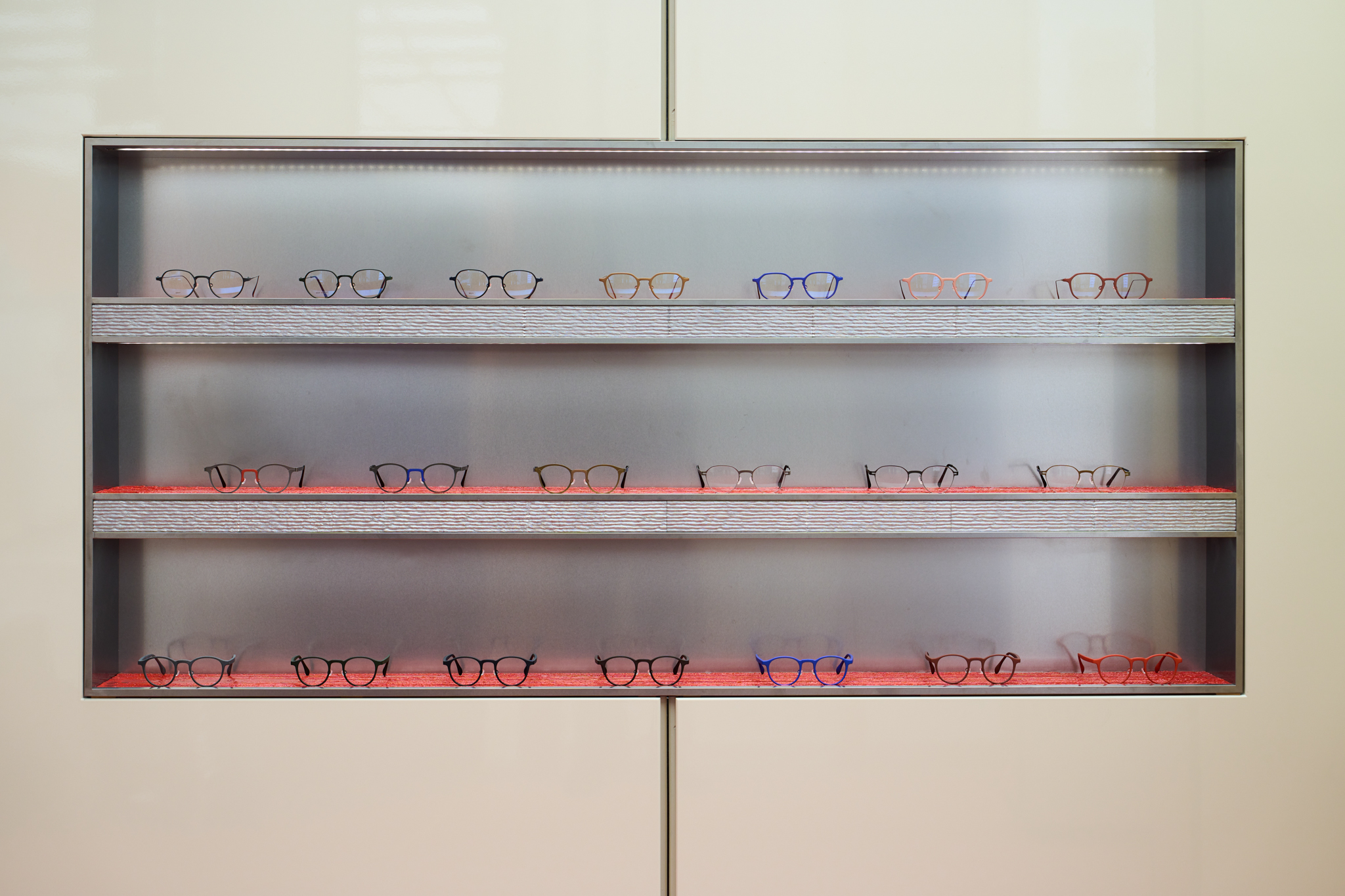
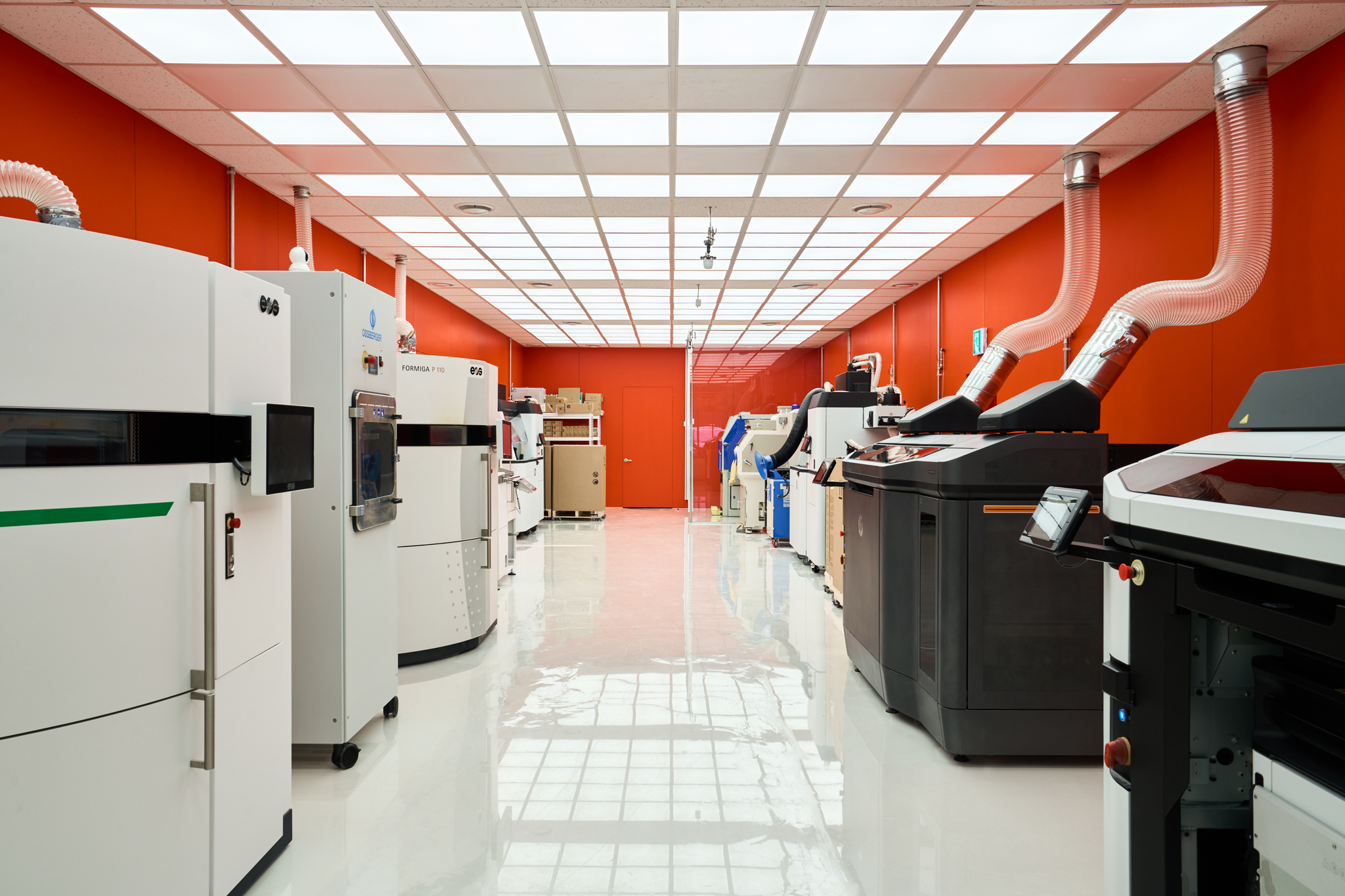
I like how affordable Breezm is. The company also offers you just about any type of glasses that you could want. I wonder how Breezm manages to center the eyes and pupils. Usually, when taking an eye exam or fitting yourself for glasses, you have to align the pupil and center it correctly on the lens, measuring your pupillary distance. If the lens is misaligned, you can get headaches. Companies such as Visages have been chasing methods on how to do this well using iPhone apps for years. In fact, this is the holy grail of online glasses fitting and is keeping back the entire industry from going online. If Breezm has an accurate way to measure pupillary distance and center pupils on each lens and frame, the company could have a distinct advantage. Breezm seems to use Ossenberger for depowdering along with EOS and HP equipment. I can’t see what they use for resurfacing and coloring, maybe DyeMansion and CIPRES?
Mykita, You Mawo, King Children, Fitz. Hoya, Materialise, GENERA Mission Eyewear, and others have been launching initiatives in 3D printed eyewear for many years now. Will Breezm be the ones to crack the problem? So far, the issues have been the pupil measurements, too high scrap rates, durability in some geometries, UV resistance of coatings/dyes/paints, and reach. Perhaps Breezm could make 3D printed glasses easy and commonplace. Custom 3D printed glasses are a solvable problem. The business case is there, and the industry is ripe for disruption. As much as a third of all glasses are unsold each year, with many getting destroyed and many being discounted heavily as well. The industry is dominated by a few big players in retail, production, lenses, and branding as well. A nimble company with the right tooling could really make an impact.
Images courtesy of Breezm
Subscribe to Our Email Newsletter
Stay up-to-date on all the latest news from the 3D printing industry and receive information and offers from third party vendors.
Print Services
Upload your 3D Models and get them printed quickly and efficiently.











You May Also Like
The Business of Customized Sports Equipment: How 3D Printing Is Changing Athletic Gear
For years, 3D printing in sports has been linked mostly with prototypes, concept shoes, and one-off experiments for elite athletes. Helmets, cleats, and footwear midsoles often took over the headlines,...
The Future of Metal Parts for Aerospace and Defense
Aerospace and defense manufacturing is entering a pivotal era. The demands placed on metal parts have never been higher, driven by rising performance expectations, increasing system complexity, and an operating...
US Army Awards Contract to Phillips Federal for Containerized WAAM Factories
Everything that the U.S. Army has been doing with additive manufacturing (AM) over the last year or so suggests that the branch is getting serious about deployable production systems. One...
Cobra Adds Two More 3D Printed Golf Clubs
Cobra has added two new golf clubs to its lineup. The 3DP MB and 3DP X. Both use 3D printing to make the clubs have “look and feel of forged...