Cobra Adds Two More 3D Printed Golf Clubs


Cobra has added two new golf clubs to its lineup. The 3DP MB and 3DP X. Both use 3D printing to make the clubs have “look and feel of forged players’ irons with the forgiveness and enhanced distance of much larger designs.”
Cobra’s Director of Innovation, Ryan Roach, said,
“We’re excited to offer these two new innovative iron models that build on the tremendous success of our 3DP Tour irons. With the addition of the MB and X, we now have a 3D printed model that can fit the vast majority of players, allowing just about any golfer to benefit from the performance advantages of 3D printing technology.”
President of Cobra Puma Golf, Dan Ladd, stated,
“Cobra Golf has always been driven by innovation. The fact that we are the first OEM to offer a full range of 3D printed irons that exceed the performance of comparable, traditionally made irons clearly shows our level of dedication to making the very best performing gear in golf.”

The MB is a so-called “muscleback blade,” a solid, compact club that places the weight at the center of the club. Usually, these clubs can allow for more precision and control, but punish you if you mishit. Contrast this with cavity-back irons, which are hollowed-out clubs that have an evened-out weighted club overall. These play more forgivingly while being perhaps a bit numb. With cavity backs, you may loose less points due to mishits, while better control over a muscleback should help you eke out a win in the end through better precision. The MB is, therefore, a Goldilocks club in essence, giving you a precise club that will punish you less if you mishit. A bigger sweet spot and more precision could just be the type of club a lot of players look for. The club has tungsten inserts to balance it and a 3D-printed lattice core. Meant for players with a handicap of 10 or less, it’s not for everyone, but could be an ideal club for those who take their golf seriously.
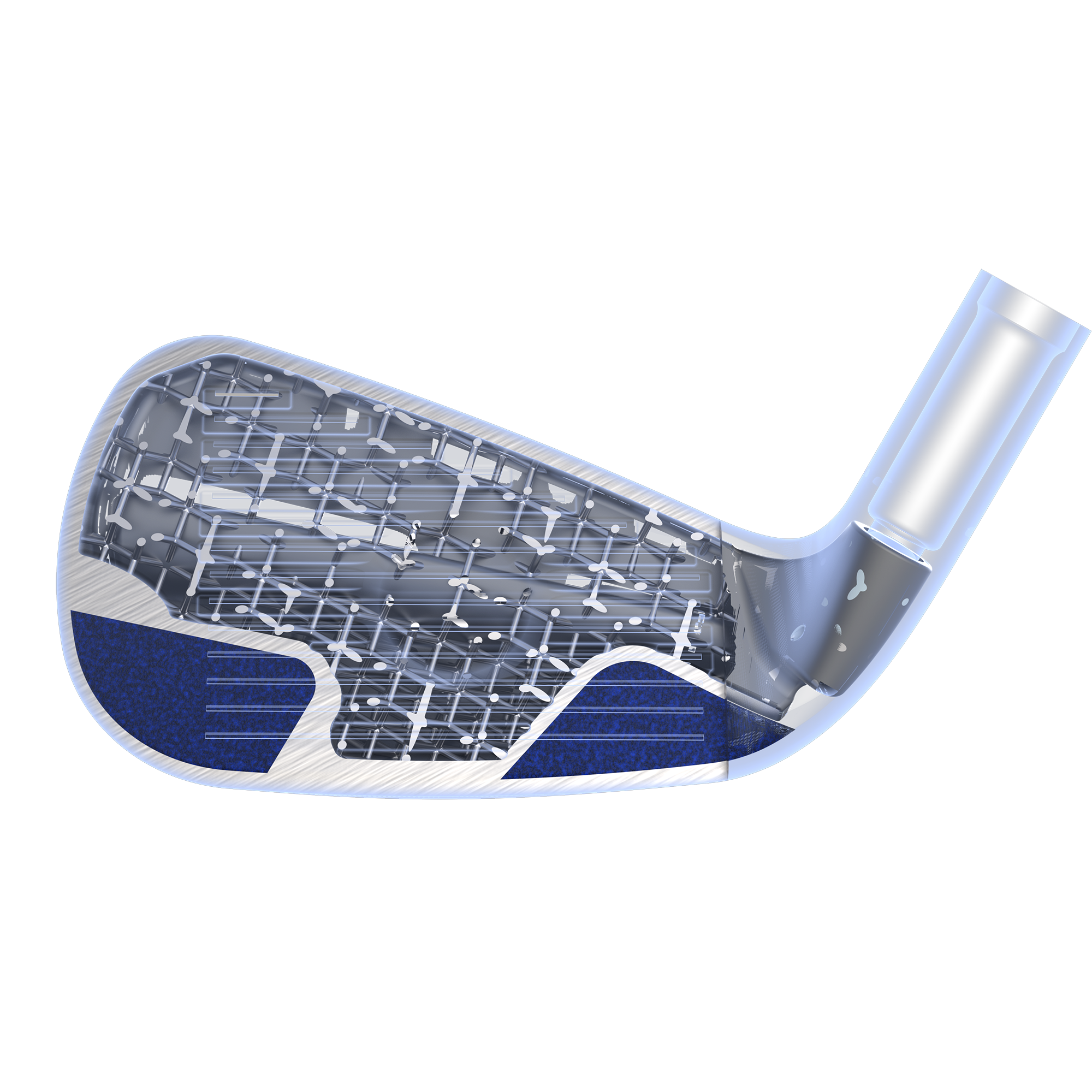
The 3DP X irons are meant for golfers who play handicaps of between 10 and 20. Made with Powder Bed Fusion 316L and has a lattice design as well as tungsten weight balance components. That club is meant to make golf easier as a “game improvement” iron, but the firm hopes that it will have “more feel” than competing designs. Cobra now has a 3D printed optimized iron set for Pros, very experienced golfers, and another for those less confident in their game. That full lineup shows real commitment by the firm. This is not just some halo product for the pros to use; it’s not just something to get tongues wagging and drive footfall. Cobra thinks that lots of golfers can benefit from 3D printed clubs and is trying to roll them out across its whole market.

The clubs are pricey: $1980 for a set. So, at all levels of play, all players will take lower prices. If Cobra gets the balance right, it could really have a sales success on its hands. Through optimizing geometry, they could make a club that could improve your game without giving you the feeling of hitting a ball with a pillow. Ideal club characteristics, a good feel, more precision hits, and less trauma-inducing balls thwacking into a tree line could be what a lot of people need and want. Further tweaking of shapes, weight, and more could give them an even finer balance of qualities.
If the company invests more into dampening, they could make golf swings more comfortable and could let people hit better for longer. More tweaking could expand the sweet spot further. Perhaps different textures could lead to better control as well. But Cobra will have to work harder to reduce costs.
Either a large order with guarantees or investments in capabilities such as powder manufacturing could move the needle on the final price. A move toward binder jetting may also significantly lower costs. For now, Cobra could also take advantage of the rather insane, financial logic-defying LPBF price war going on in China. Prices are so low now that it beggars belief. Perhaps Cobra could take advantage of this for now. But beyond this, the company will have to strategize on its next steps. Will it continue to offer pricey but well-working clubs? Or will it really double down to expand the market?
Subscribe to Our Email Newsletter
Stay up-to-date on all the latest news from the 3D printing industry and receive information and offers from third party vendors.
Print Services
Upload your 3D Models and get them printed quickly and efficiently.













You May Also Like
Mosquito Dreams Part 3: Kelly Johnson & The Starfighters
Chair manufacturer Thonet pioneered bending wood, mass production, and composites. Then a strange wooden airplane takes to the skies and, against all expectations, does well. It takes on many roles and...
Mosquito Dreams Part 1: Thonet, A World History
As a child, I lived in Kenya for a while. When we went to Mombasa, wafting breezes, crunchy white powder that sounds like snow underfoot, beaches bordered by many unseen...
At This 3D Printed Petting Zoo, the Mistakes Are Part of the Fun
Pip the Rabbit has a glowing belly and ears that wiggle when you press his paw. Inchy the Caterpillar crawls when you clap. Plate the Armadillo can curl himself into...
When Data Becomes the Differentiator: Qualified Material Data is Changing the Future of Structural Additive Manufacturing
For years, additive manufacturing has promised engineers greater design freedom. The challenge wasn’t printing the part—it was proving the part belonged on an aircraft. Designing a lightweight bracket or consolidating...