Bioprinting, Organoids, & Organs-on-a-Chip Work Together to Battle Cancer

Researchers at the Oregon Health & Science University (OHSU) Knight Cancer Institute are using a combination of bioprinted organoids, organs-on-a-chip, and computational medicine to battle cancer. The team is specifically looking at cancer detection, and focusing on organoids-on-a-chip that simulate bone tumors. The researchers will then use these more accurate models, instead of animal testing. As well as a step forward in ethics, this may also lead to faster and more accurate development of effective cancer medications.
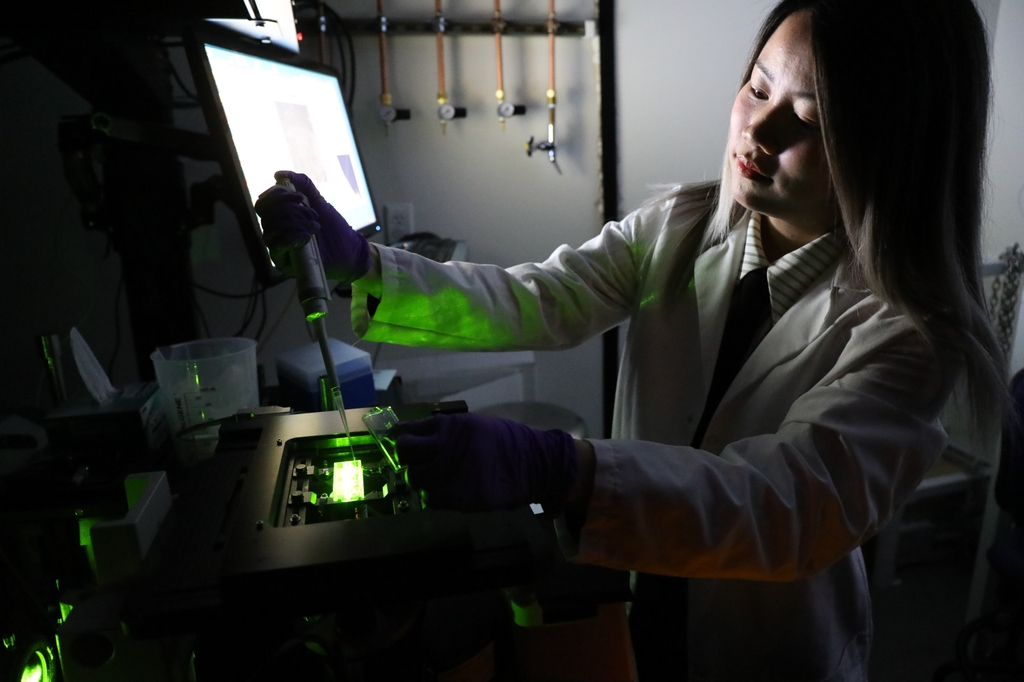
The director of the Knight Cancer Precision Biofabrication Hub, Luiz Bertassoni, said,
“Early detection is one of the most important factors in surviving cancer. These new technologies give us a window into how cancer forms and progresses, which opens the door to understanding early cancer, paving the way for earlier diagnosis and even predict cancer initiation….This is a really exciting time in cancer research. There is momentum in bringing together cancer biology, engineering and clinical treatment. There are so many avenues that didn’t exist before.”
Researcher Haylie Helms stated,
“We can first build a healthy tissue and use different tools to turn it into cancer. We can also take live cancer cells from a patient biopsy and add them into the model. In the lab, we can watch and see, ‘Why does a precancerous lesion in one person stay that way and never turn into cancer and in another person, it becomes a malignant tumor?’ A lot of the field is about late-stage cancer. We aim to understand and treat at the earliest possible moment.”
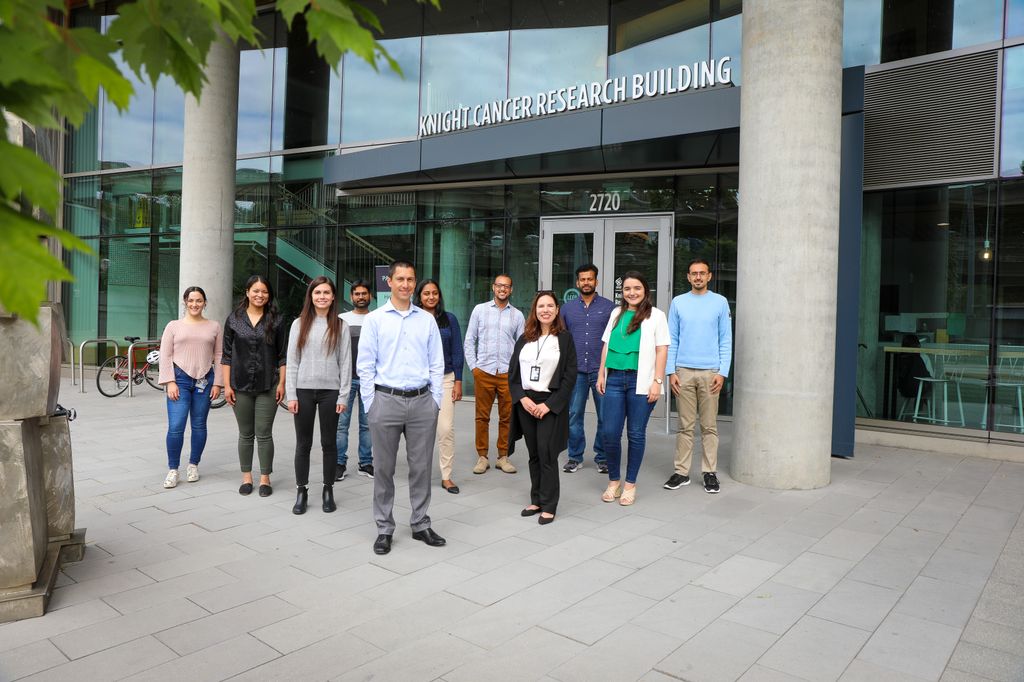
Early stage research could save a lot of lives. Often, there is a lack of samples from these early stages, so the team’s research could be extra valuable if it makes these available. With more accurate models, the researchers can get these early samples and do more extensive testing on them as well. This is especially important with “extracellular matrix composition and cell organization and tumor microenviornments,” which help to optimize personalized or more effective treatments. The research team also wants to find new biomarkers that could help them catch more cancers even earlier still.
The review paper was published in Nature Reviews Bioengineering, and points to emerging combined approaches that can become much more effective. A lot of the gains in recent cancer treatments have not been through new mystery molecules, but through more effective treatments. A lot of lives have been saved by looking at when to operate, when not to operate, what doses to use when, when to opt for chemo, how long to continue chemo, and at what doses. The current cancer armory has become more effective. What researchers have been doing is sharpening existing blades and coordinating how they work together.
Through the “mimicking early disease stages,” the team points to other similar refinement being undertaken. They also think that, “Artificial intelligence and machine learning applied to patient-specific biofabricated models can provide predictive insights into disease progression and support the development of dynamic tumour digital twins.”
We would like to think that cancer treatment is one mythical drop of Amazonian tree sap away, and that would be lovely. But, much progress has been made through improving treatments, looking at statistics, and gradually making cancer treatments more effective. Bioprinting and organoids-on-a-chip fit into this picture well. And, if we see these as tools to digitize cancer treatment even more, the role they have to play is clear. Low cost organoids or organs-on-a-chip could make cancer testing massively more economical. Tens of thousands of experiments could be run to determine all manner of tests, influences, and outcomes.
At the same time, lower-cost organs-on-a-chip would enable many personalized tests to be run as well. This could mean less trial and error with actual patients, and more actionable data in advance. Bioprinting hearts is surely a very important thing, in some far-off future. But bioprinting organs-on-a-chip today could have a massive impact in cancer and beyond. With drug discovery or making treatments better, the impact of bioprinting and 3D printing for medicine could be felt much sooner than the first 3D printed organs to be successfully implanted will be.
Subscribe to Our Email Newsletter
Stay up-to-date on all the latest news from the 3D printing industry and receive information and offers from third party vendors.
Print Services
Upload your 3D Models and get them printed quickly and efficiently.













You May Also Like
10 Years of Multi Jet Fusion: Onsite at HP’s Vancouver, Washington Facility
At this year’s RAPID event in Boston, HP Additive Manufacturing Solutions celebrated ten years in the additive manufacturing (AM) market. The company ushered in the milestone with several innovations, including...
These 3D Printed Lattices Can Sense Damage Before Failure
A new paper, “Full-Field Damage Monitoring in Architected Lattices Using In situ Electrical Impedance Tomography,” points to lattices being able to detect damage. This could really help composites in critical...
3D Printing News Briefs, October 3, 2026: Hypersonics, Hotends, & More
We’re starting off with defense in this weekend’s 3D Printing News Briefs, as Titomic was awarded a $5 million U.S. defense contract, and VulcanForms announced a partnership with Specter Aerospace...
3D Printing News Briefs, October 1, 2026: Defense, Enclosures, & More
In today’s 3D Printing News Briefs, we’re starting with defense news, first from Massivit and then from AML3D. Then we’ll move on to U.S. manufacturing of a new large-format LPBF...