Nikon Advanced Manufacturing Partners with the US Navy for the Maritime Industrial Base


Following the recent announcement that Velo3D has partnered with the US Navy for the Maritime Industrial Base (MIB), now Nikon Advanced Manufacturing is doing the same. One Nikon SLM Solutions NXG 600E at the Nikon AM Technology Center in Long Beach will be made available to the MIB program.
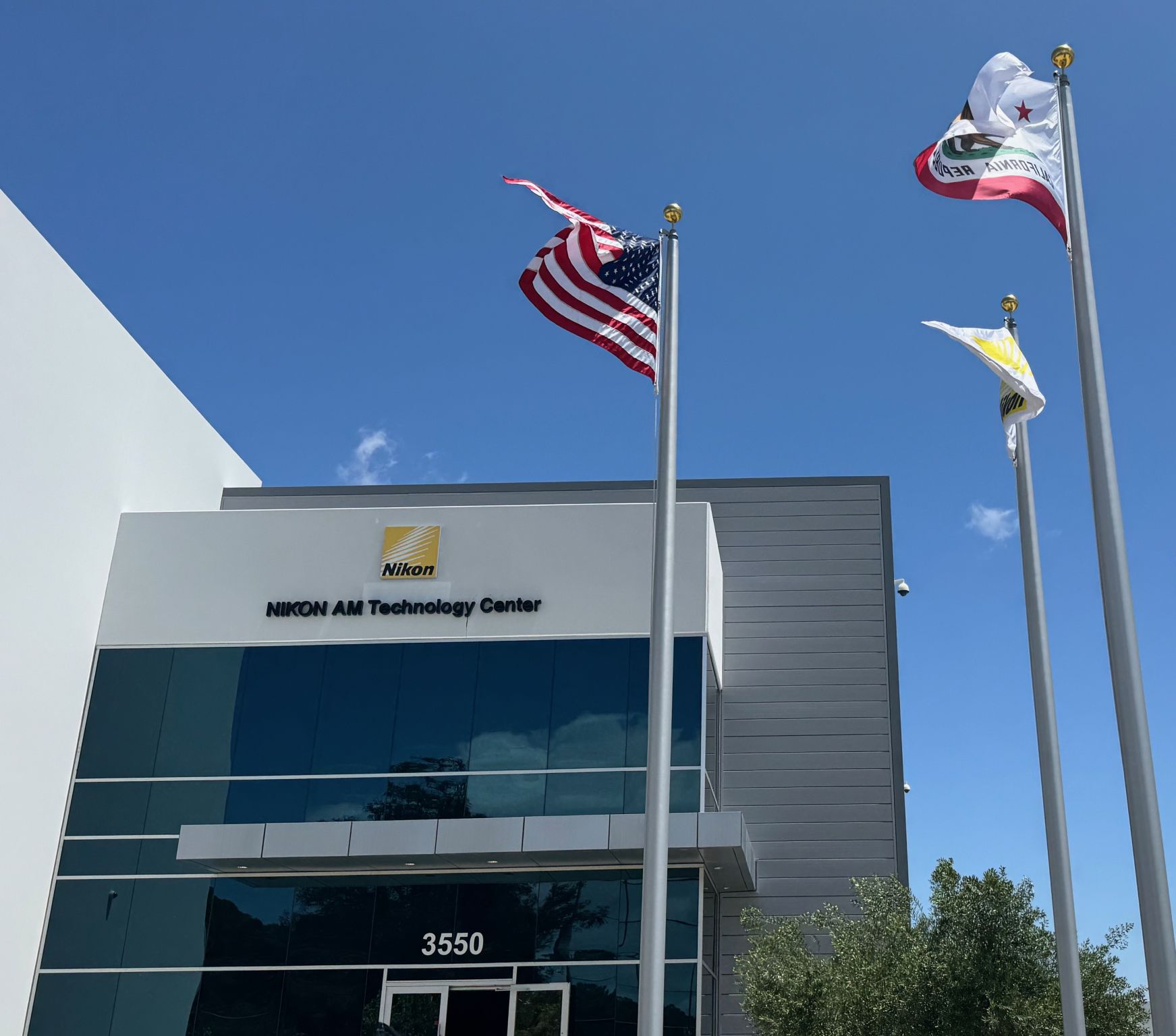
Nikon AM Technology Center.
The NXG 600E is a beast, with twelve 1,000 watt lasers and a 600x600x1500 mm³ build volume. It’s meant to make large parts for aerospace, new space, and hypersonics, but I’m sure suppliers to the Navy have a lot of large propulsion parts, manifolds, heat management parts, and valves as well.
Nikon AM CEO Hamid Zarringhalam, whom we recently had on the 3DPod here, said that,
“Nikon AM is proud of its partnership supporting the U.S. Navy’s Maritime Industrial Base at our AM Technology Center in Long Beach. We are building upon Nikon’s long enduring reputation and advanced manufacturing expertise and have invested heavily to enable and scale the Defense Industrial Base on U.S. shores. We will continue to execute our holistic approach to deliver the advanced manufacturing capabilities that are crucial to the United States and allied partners.”
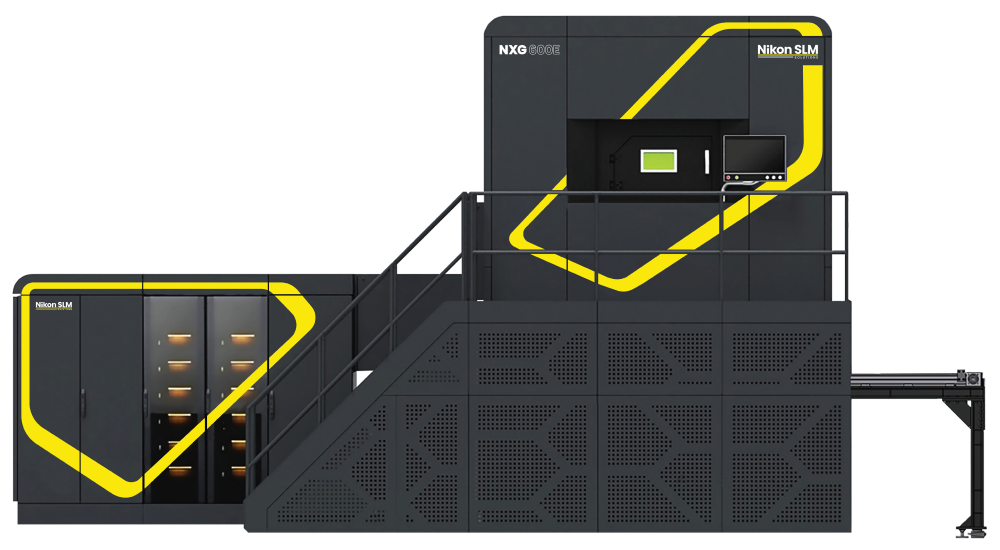
NXG 600E. Image courtesy of Nikon SLM Solutions.
Shipbuilding is the achilles heel of the US military generally, and of the US nuclear threat in particular. At any given moment, around half of all Navy ships are in port, being refurbished or undergoing some kind of repairs. Repairs after accidents cost months, almost always take much longer than planned, and come with almost standard cost overruns. But, a further crunch could destabilize things even more. According to the MIB, “By 2028, the Navy must deliver one Columbia-class ballistic missile submarine and two Virginia-class fast attack submarines annually while simultaneously constructing over 10 different classes of new surface ships like aircraft carriers, destroyers, amphibious warships, and may others.”
Now, the industry is struggling with much lower demand, and no one is shooting at US Navy ships at the moment. Imagine a scenario where the US was in a near peer conflict where anti-ship missiles could take out vessels. The US, even given all of its industrial might, could not keep up. Also in the Second World War, a lot of companies were welding, stamping, and riveting things out of steel. It was much easier then for Ford to switch to making a B-24 Liberator bomber; Ford today couldn’t make a B1 or B2. Not only have these now old bombers gotten much more complex, they’re also used with much more embedded skill and different materials. Meanwhile, Ford assembles a lot of injection molded polymer parts, stamped parts, and forged parts, often preassembled into big components by tiers of suppliers. Replicating Lockheed or other Prime’s efforts would be much more complex for them now.
The central builders of America’s fleet are few. People are scarce, and skilled welders and the like even scarcer. A look towards automation and more versatile smaller businesses seems like the logical thing to do. Institutional change and change management is difficult, however. In large organizations, risk is something best avoided by the ambitious. Naval parts are also often massive and made out of copper or Nickel-Aluminum-Bronze, which are relatively new or unknown materials to most of the Additive market. On a missile, we could print a lot of the components well. Generally, the faster things travel, the more sense additive makes. In the Navy, the speed and weight of vehicles is important but what we’re really looking for is faster speed to market than forging and casting. If we can be of any use there for parts that matter to the MIB, then we will flourish. But, this space will have very particular demands and project management challenges. Success here is by no means assured, but it is important.
Subscribe to Our Email Newsletter
Stay up-to-date on all the latest news from the 3D printing industry and receive information and offers from third party vendors.
Print Services
Upload your 3D Models and get them printed quickly and efficiently.













You May Also Like
Inside Decibel’s Collaboration with SKYLRK at Coachella 2026
There’s a version of Coachella most people never see. Not the stage. Not the crowd. Not even the music. It’s everything built around it: the spaces where artists host, brands...
Caracol to Build Large-Format 3D Printing Hub in Milan With Designtech & LAMÁQUINA
In the 1990 classic in economic strategy, The Competitive Advantage of Nations, business theorist Michael Porter wrote, “Most commentators on the Italian economy have persistently underestimated Italy, because they have...
Why Kyle Bass Is Betting on Divergent, and What It Says About the Future of Manufacturing
Kyle Bass has spent much of his career looking at big economic trends before everyone else does. The founder of Hayman Capital Management became famous for betting against the U.S....
Beyond Thermoplastics: Why JuggerBot Is Betting on Hybrid AM
For years, thermoplastics have been the workhorse of additive manufacturing (AM). They are pretty easy to process, available, and compatible with many of today’s industrial 3D printers. From prototypes to...