Another One in the Books! Stratolaunch Awards Ursa Major a $32.9M Contract for 16 3D Printed Engines


Last week, I published an interview with Ursa Major’s COO, Nick Doucette, and its Head of Marketing and Strategic Communications, Savanah Bray, in which they detailed the internal sentiment at Ursa Major amidst one of the most successful quarters in the history of the propulsion specialist. One of the most critical achievements that Doucette and Bray discussed was the news, announced by the Pentagon in early May, that Ursa Major’s Hadley engine had powered two successful hypersonic flights, in December 2024 and March 2025 — the first successful hypersonic flights in the U.S. since the 1960s, and the first-ever such flights achieved by a fully autonomous aircraft.
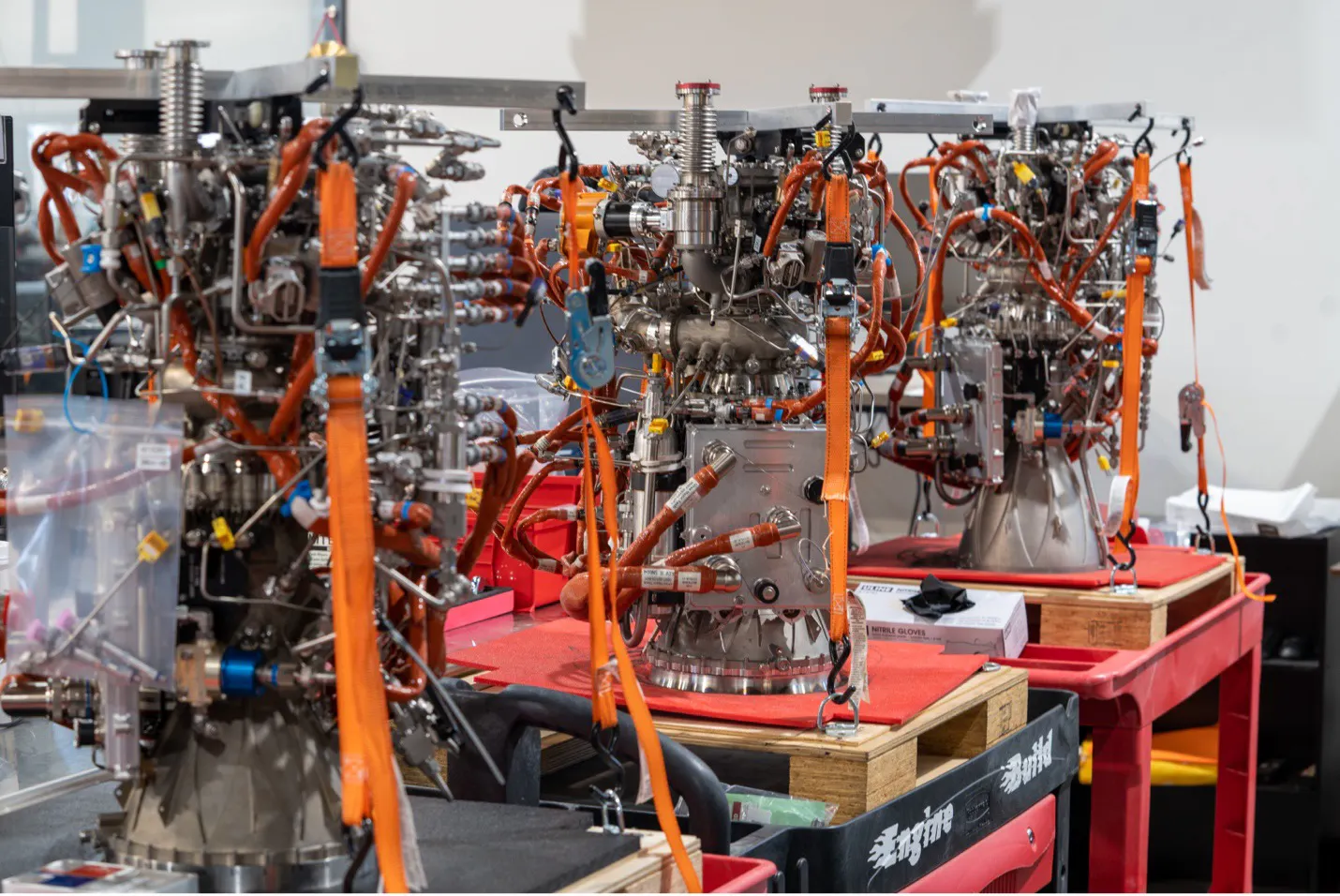
Now, as if to emphasize that Q2 2025 still isn’t over just yet, Ursa Major is announcing that the company responsible for conducting the hypersonic demonstrations, flight test provider Stratolaunch, has awarded Ursa Major a $32.9 million, multi-year contract to develop and deliver 16 Hadley H13 engines. Prior to the two hypersonic flights, in March 2024, the Hadley achieved its first successful test flight on a Stratolaunch Talon-A1 testbed that approached Mach 5 over the Pacific Ocean.
According to Ursa Major, the version of the Hadley that the company will now be developing for Stratolaunch, the H13, is a model upgraded to support exploration of additional mission capabilities, as well as to enhance the engine’s reusability. The latter modification, among other advantages, will decrease cost per flight.
In a press release about Stratolaunch’s award of a $32.9 million contract to Ursa Major for 16 Hadley engines, Ursa Major’s CEO, Dan Jablonsky, said, “This contract directly supports U.S. hypersonic test infrastructure and the broader imperative to accelerate high-speed flight programs that deliver for national security. As the proud partner and hypersonic propulsion provider to Stratolaunch, we’re focused on getting real capability into the field — faster, at scale, and without compromising performance.”
As I mentioned in the interview with Doucette and Bray, I think one of the most noteworthy aspects of Ursa Major, and certainly the most noteworthy aspect for the additive manufacturing (AM) industry, is the extent to which Ursa Major views itself as an AM company, and not just a manufacturing company that happens to use AM:
In a portion of the interview I didn’t include in the original article, Doucette explained, “All the products that we’ve developed to date over the last decade have sort of hinged on additive, offering rapid development and now rapid scale. Ursa has evolved along this long arc stemming from very early strategic decisions to use AM, which have paid massive dividends, and now we’re leveraging those dividends into very unique applications and products.
“I think AM is an essential part of the ethos of our company, not just a tool in the toolbox. In many ways, it is the toolbox.”
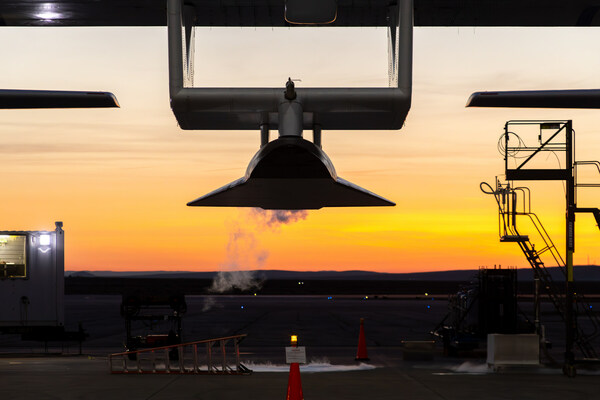
Stratolaunch’s Talon-A1 prepares for flight powered by Ursa Major’s Hadley engine.
Now, that precise approach won’t be right for every product or every company. But it is impressive enough that the approach is right for even one product and one company, and especially one that is emerging as a paradigm for how economies that have grown long in the tooth can realistically revitalize their industrial bases.
Once rapid iteration becomes a primary operational necessity for an enterprise, as opposed to simply one asset among many, AM becomes indispensable to the enterprise, in a manner that goes beyond all quantifiable metrics. Currently, the development of next-generation flight vehicles is perhaps the area where this dynamic is most pronounced. But there is no reason why the underlying principles can’t be extrapolated and applied to all the other industries that are in desperate need of innovation.
Images courtesy of Ursa Major
Subscribe to Our Email Newsletter
Stay up-to-date on all the latest news from the 3D printing industry and receive information and offers from third party vendors.
Print Services
Upload your 3D Models and get them printed quickly and efficiently.













You May Also Like
Excellent Desktop Injection Molding, Made in Italy by Robot Factory
I was captivated when I saw my first Robot Factory 3D printer. The robust, precise machine was built to last. And this was in an era of very flimsy, disposable,...
Pogačar & Fairlight Cycles Show Us Low Cost 3D Printed Components for Bikes
There has been a lot going on in 3D printing for bicycles over the years. The most successful implementation so far is in bicycle seats. Carbon 3D printed seats are...
3D Printing News Briefs, June 18, 2026: Reseller, Relocation, Metal Space Powder, & More
We’ll start with business news in today’s 3D Printing News Briefs, as XJet appointed a value-added reseller in Germany, BIO INX is expanding its presence in the Italian market, and...
Researchers Combine AI and Bioprinting to Create Tiny Blood Vessel Networks
If 2026 has a theme in bioprinting, it may be blood vessels. Researchers can already print incredibly sophisticated tissues. The harder part is keeping those tissues alive. Without a network...