Robotics Company Comau Forms Partnership with 3D Printing OEM Roboze


Recently, the Italian robotics original equipment manufacturer (OEM) Comau announced the multifaceted approach it has taken to penetrating the additive manufacturing (AM) market. Comau, jointly owned by One Equity Partners and automaker Stellantis, has partnered with AM firms representing a range of different processes, touching both polymers and metals, and affecting a multitude of verticals, including strategic sectors like aerospace and maritime.
Now, Comau has announced a partnership with another Italian company, polymer and composite AM OEM Roboze — which also has a U.S. headquarters in Texas — aiming to combine Comau’s automation capabilities with Roboze’s high-speed printers. According to the two companies, one major catalyst behind the partnership is the potential to capitalize on demand for solutions supporting the reshoring efforts that are currently accelerating in regions all over the world.
In addition to the rapid throughput rate of its 3D printers, the niche that Roboze has carved out for itself is defined by the strength of its materials, with the company targeting applications where polymers and composites can feasibly replace metal parts. That advantage has enabled Roboze to enter highly regulated, highly demanding industries, such as oil and gas and motorsports.
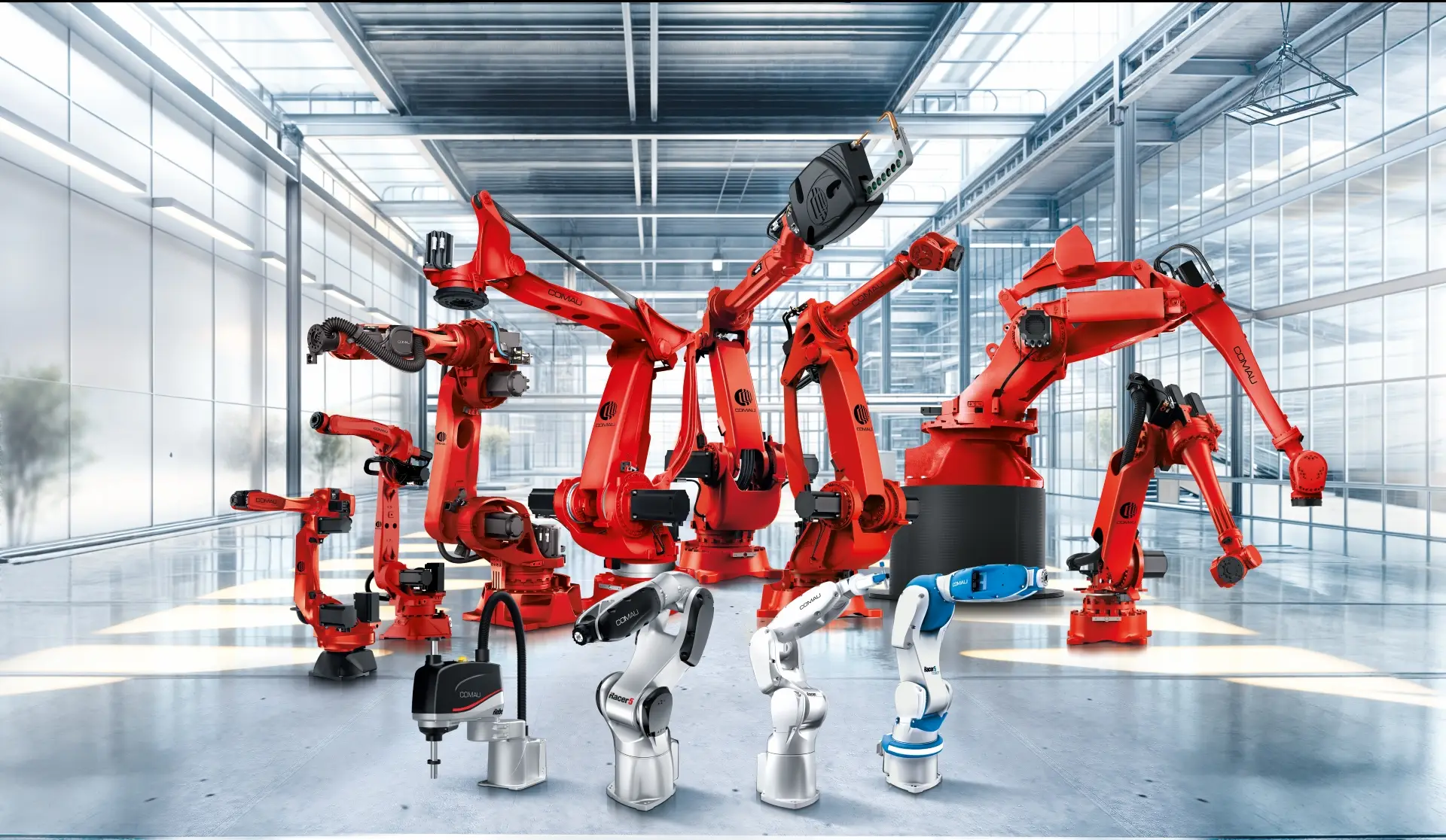
Image courtesy of Comau
In a press release about Roboze’s partnership with robotics OEM Comau, Giacomo Del Panta, the Chief Customer Management Officer at Comau, said, “The combined expertise and technologies of Comau and Roboze, two Italian companies capable of delivering cutting-edge solutions to international markets, allow us to offer customers innovative solutions that integrate automation, robotics, and [AM]. We are confident this collaboration can bring tangible benefits to manufacturing processes across numerous industrial sectors. Fully aligned with our growth and diversification strategy, it marks another concrete solution that will contribute to our global growth trajectory.”
The CEO of Roboze, Alessio Lorusso, said, “We could not have asked for a better counterpart than Comau, a leading company in the world of robotics and automation. Integrating our advanced 3D printing technologies with Comau’s robotic solutions presents a unique value proposition for global industry. Through this partnership, we’re poised to drive a meaningful transformation in our clients’ manufacturing capabilities, enabling them to be more innovative, agile, and sustainable.”
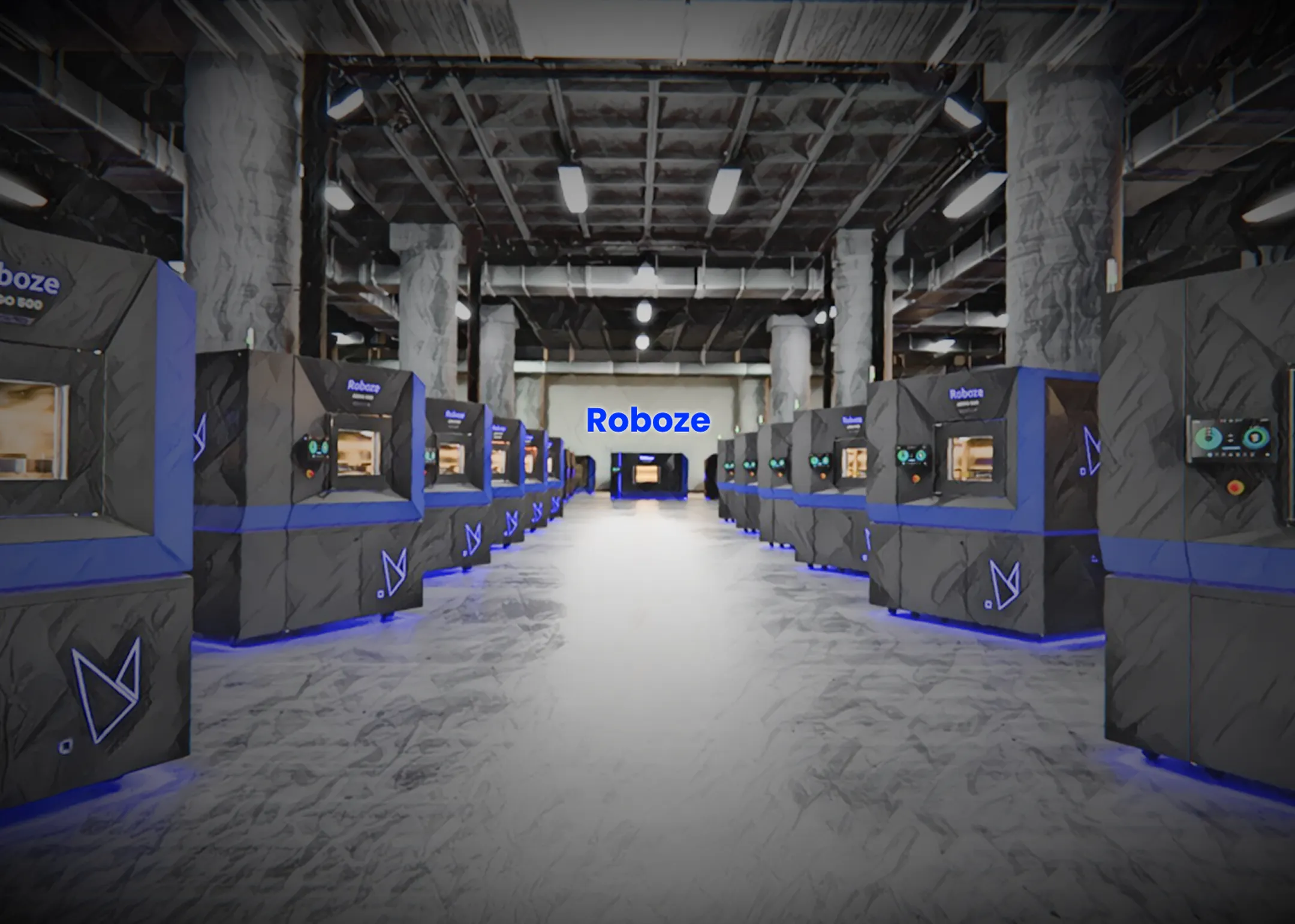
Image courtesy of Roboze
I love that the two companies are emphasizing their shared Italian roots in the announcement, especially considering the reshoring context behind the partnership. Italy has been no exception to the reshoring trend that Western nations have become more preoccupied with over the course of this decade, and a partnership between two companies based in Italy should prove to be an appealing selling point to Western economies in general, not just the Italian economy.
While the ability to produce parts without tooling is obviously one of the most attractive value propositions of AM, the ability to quickly produce tooling close to the point-of-need and on-demand may be just as attractive. It is also likely to be in more urgent demand in the near-term future, as factories look to do anything possible to minimize operational costs amidst their struggles to respond to higher tariff rates.
Along those lines, Comau’s ability to now tap into — and, in turn, bolster — the Roboze 3D Parts Network gives the company an ideal solution for providing customers with a reliable source of relatively low-cost tooling. Similarly, the potential for printing replacement parts for robotic systems means that Comau will be benefitting from the partnership in more ways than one.
Featured image courtesy of Roboze
Subscribe to Our Email Newsletter
Stay up-to-date on all the latest news from the 3D printing industry and receive information and offers from third party vendors.
Print Services
Upload your 3D Models and get them printed quickly and efficiently.













You May Also Like
Push Button Metal: SnowX
In addition to MetalBase and ScrapLabs, we now have a new competitor in the low-cost LPBF space. Chinese firm SnowX aims to release its SnowPod through Kickstarter. The 80 ×...
AM Investment Strategies 2026 Sets the Stage for AMS 2027
AM Investment Strategies 2026 Nov. 5 · 12 p.m. ET · Free online event RESERVE YOUR SPOT ↗ A one-hour online discussion featuring some of the biggest names in 3D...
Bambu Lab Is Building More Than 3D Printers. Now Comes the S1 Scanner
Bambu Lab is moving into 3D scanning. The company has teased its upcoming Bambu Lab S1, its first 3D scanner, marking another step in its expansion beyond desktop 3D printers....
The Science Lab You Can 3D Print
Researchers at Sweden’s Umeå University have shown how desktop 3D printers can be used to make lab equipment, giving scientists a cheaper way to build tools for their research. The...