From the Ocean Floor to the Factory Floor: How Framework Robotics is Rethinking Underwater Vehicle Design


Deep beneath the ocean’s surface lies a world that’s unpredictable, pressurized, and profoundly unexplored. It’s a realm where conventional engineering is often pushed to its breaking point — and where companies like Framework Robotics are rewriting the rules of design and manufacturing.
Headquartered in Germany, Framework Robotics builds rugged unmanned underwater vehicles (UUVs) for tasks like marine research, offshore inspection, and environmental monitoring. These machines face conditions that are downright punishing: freezing temperatures, crushing pressures, saltwater corrosion, and the need to perform with near-perfect reliability.
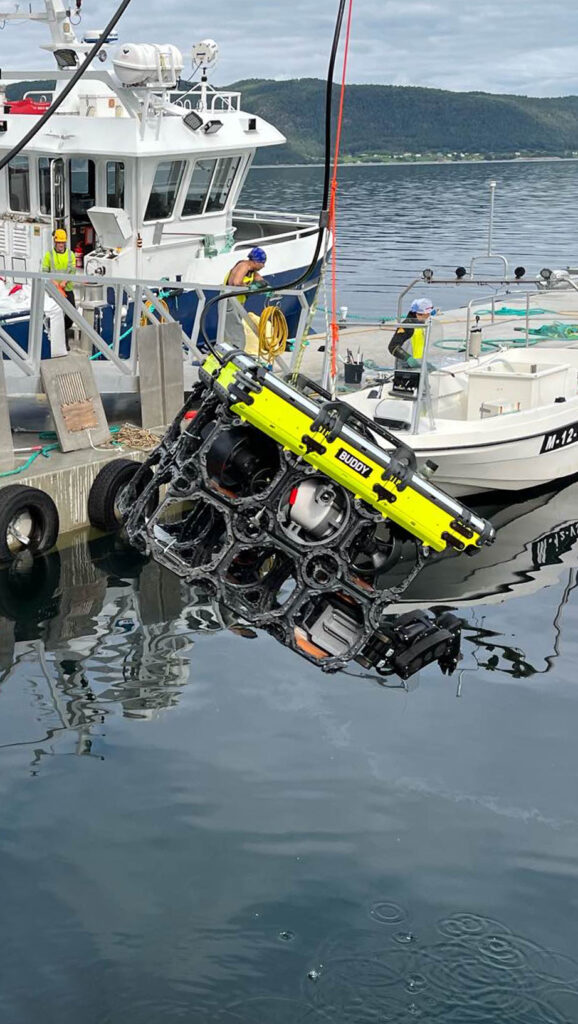
Unmanned underwater vehicle. Image courtesy of Framework Robotics.
Traditionally, building UUVs has meant relying on machined aluminum and other materials that, while durable, come with tradeoffs: long lead times, complex assembly processes, and design limitations that hinder innovation. But Framework Robotics saw a different path — one that involved moving beyond subtractive manufacturing and into the world of additive.
Designing for the Deep, Printing for the Future
Framework Robotics began incorporating industrial 3D printing into their development process — not just for prototyping, but for producing final, mission-critical parts. The shift opened new doors.
They chose HP’s Multi Jet Fusion (MJF) technology for its ability to deliver lightweight, highly durable plastic parts with precision. The materials used with MJF not only stood up to the intense demands of ocean deployment — including resistance to water and pressure — but also enabled more complex geometries that would have been difficult or impossible to machine.
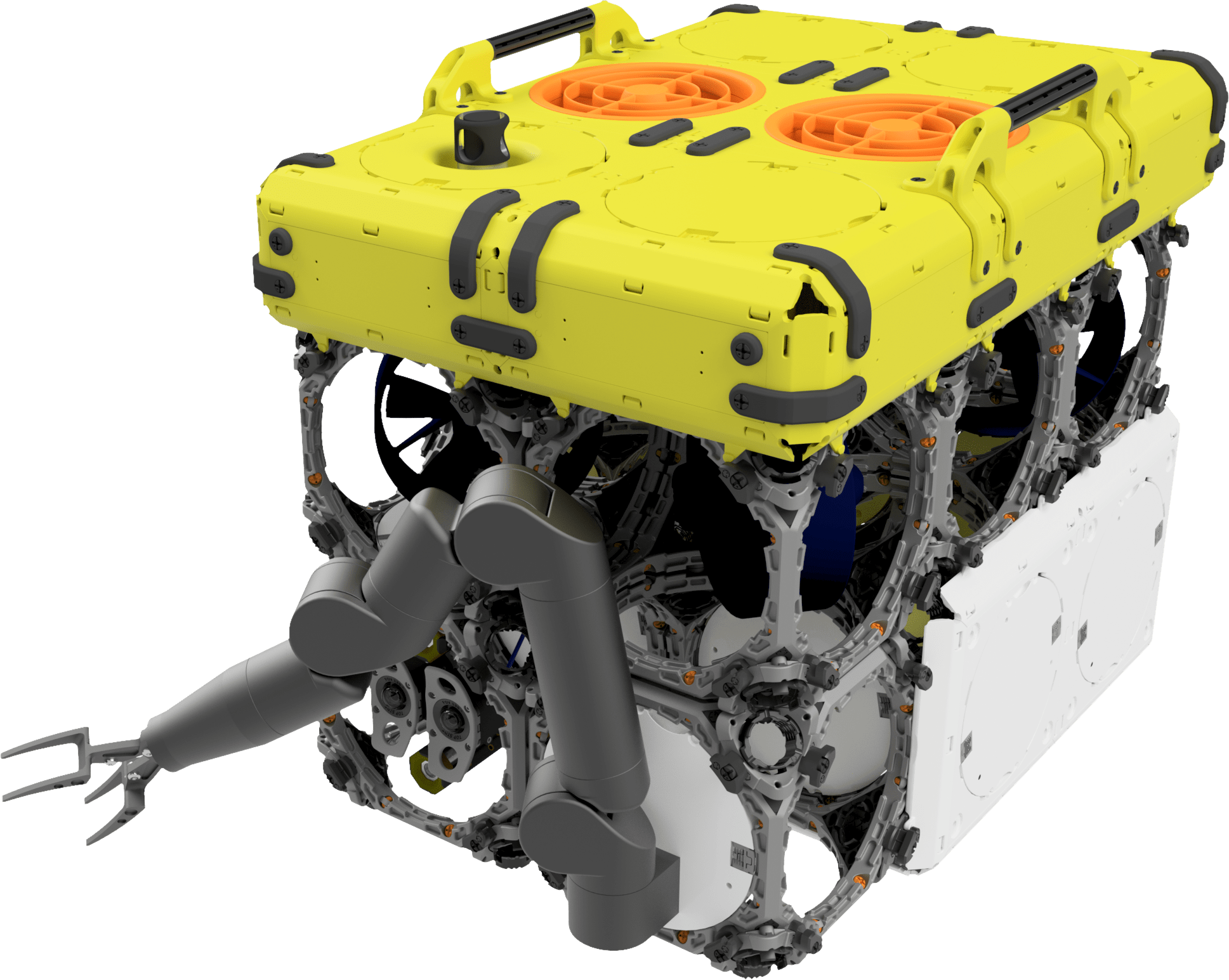
Buddy ROV for underwater maintenance. Image courtesy of Framework Robotics.
This new flexibility gave the team at Framework Robotics a chance to rethink how UUVs could be constructed. Instead of designing around the limitations of traditional manufacturing, they could now design around function. Enclosures, mounts, and cable routing features could be integrated into single, seamless parts. This meant fewer fasteners, less room for mechanical failure, and a faster build time.
Speed, Efficiency, and Freedom to Iterate
One of the most powerful shifts came in the prototyping phase. With Multi Jet Fusion, Framework Robotics could design, print, test, and redesign — sometimes in the same week. That kind of agility was unheard of with metal machining, where a single iteration could take weeks and cost thousands.
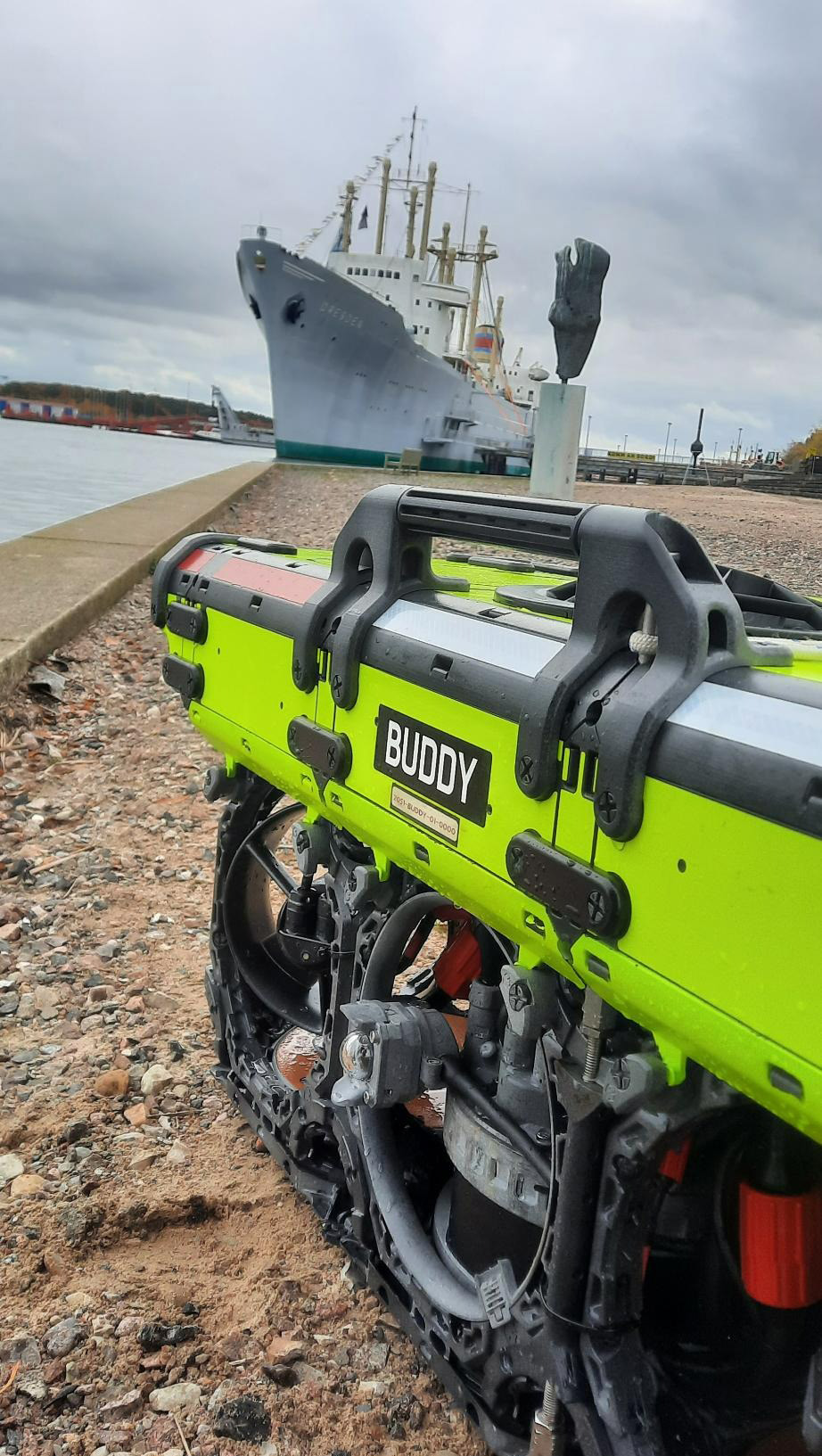
Unmanned underwater vehicle. Image courtesy of Framework Robotics.
For a small company with a big mission, speed matters. It allowed them to get functional prototypes in front of researchers and field testers faster, and it brought them closer to their goal: delivering a platform that could be customized quickly for different underwater missions, from inspecting submerged infrastructure to collecting biological data.
It also made scaling easier. With 3D printing, there’s no need for expensive tooling or minimum order quantities. Framework Robotics can print the exact number of parts they need — whether it’s five units or fifty — with no penalty for changes or updates.
Navigating What’s Next
As ocean research and exploration evolve, the need for adaptable, high-performance robotic systems will only grow. Framework Robotics is already looking ahead to more autonomous systems, smarter sensors, and deeper dives into the future.
And while they’re navigating uncharted territory underwater, their manufacturing process is becoming more streamlined, more efficient, and more innovative above the surface — thanks in part to HP’s Multi Jet Fusion technology.

Companion ROTV for pipeline and submarine cable observation. Image courtesy of Framework Robotics.
What started as an engineering experiment has turned into a production advantage. Framework Robotics isn’t just building robots that go deeper — they’re proving that additive manufacturing can be a competitive edge, even in the most extreme environments on Earth.
Read more about their journey on hp.com.
Subscribe to Our Email Newsletter
Stay up-to-date on all the latest news from the 3D printing industry and receive information and offers from third party vendors.
Print Services
Upload your 3D Models and get them printed quickly and efficiently.













You May Also Like
EOS Joins the MAT‑H2 Consortium
EOS is joining the MAT‑H2 consortium. MAT is an EU-funded group that aims to do research into a hydrogen-led economy. The thinking is that hydrogen will be a clean energy...
Where the Money is Going, Part Two: Why All Roads Lead to AI
In Part One of this article, Vanesa Listek expertly described the major themes driving infrastructure investment so far this decade, illustrating how the same concerns are driving both public and...
DTU 3D Prints New Fuel Cell Design With 5x Power Boost
Technical University of Denmark (DTU) researchers have used Lithoz ceramics 3D printing to make more efficient hydrogen fuel cells. With a part made from Lithoz Yttria Fully Stabilized Zirconia (8YSZ),...
Fraunhofer ILT Tests 3D Printed Titanium Reactors to Generate Hydrogen Onboard Heavy Vehicles
The Aachen-based Fraunhofer Institute for Laser Technology (Fraunhofer ILT) is to research titanium aluminide hydrogen reactors and heat exchangers. The hope is that lightweight, better-performing 3D printed components will make...