3D Printing for Data Centers: New Report Sees “Exponential” Growth for AM Through 2033

The latest market study from Additive Manufacturing (AM) Research, in partnership with energize.am, entitled “AM for Data Centers: a 3D Printing Market Opportunity,” paints the picture of a generational opportunity for the 3D printing industry. By now, virtually everyone who pays attention to business/financial news has realized that the boom in data center construction is poised to be one of the global economy’s most significant growth drivers for the foreseeable future.
In light of such monumental market expansion — some of the latest estimates forecast that the global data center industry may grow by as much as 400 percent through 2035 — AM companies must ask themselves what role they can play in the data center boom. “AM for Data Centers” answers that question, highlighting the ways that 3D printing firms are already delivering solutions for data center infrastructure, while also concisely breaking down the landscape of the market from a top-down perspective.
Combining a thoroughly macro-qualitative analysis with an intricate breakdown of the best current estimates of potential AM penetration rates into the data center market over the next decade, “AM for Data Centers” presents a uniquely compelling case concerning why 3D printing service providers, OEMs, material suppliers, and all other stakeholders in the AM industry should consider making the data center market a central component of their long-term business strategies.

As the report notes, “Some 2,000 PBF machines could be needed to produce cold plates and other data center parts by 2033 even at a relatively conservative penetration rate, and even assuming PBF will share some of the production with other relevant AM processes. For reference, this is already more machines than are sold each year in the total AM market today.”
As that quote aptly emphasizes, the most conservative estimates for the AM industry’s potential in the data center market still imply an exponential growth opportunity. Despite the fact that relatively little is publicly known about the extent to which 3D printing companies have penetrated the data center market thus far, the facts that have already emerged illustrate that it may be one of the most compelling sources of new business for the AM industry through at least the middle of the next decade.
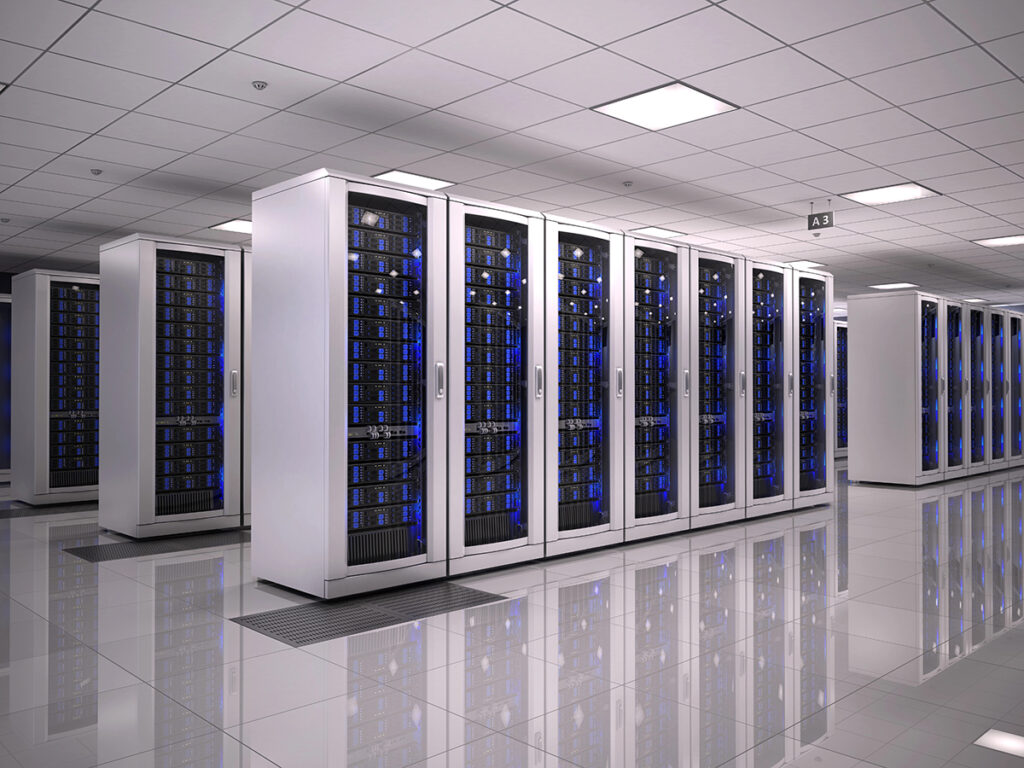
In fact, for the AM industry, the most exciting angle to the data center market right now may be precisely that it is still going relatively unnoticed compared to some of the more talked-about verticals in the current business environment. To make an analogy that is explored in the report, getting in on the data center market right now may be akin to having gotten in on the defense market several years ago.
From geographical location, to applications, to opportunities for branching off, “AM for Data Centers: a 3D Printing Market Opportunity” is an ideal starting point for any AM company interested in the data center market, and a worthwhile supplement to any company that has already started to target data center operators and their suppliers. The report is a characteristic reminder of why AM Research is known for being at the forefront of what’s driving real-time growth in the AM industry.
Image courtesy of AM Research
Subscribe to Our Email Newsletter
Stay up-to-date on all the latest news from the 3D printing industry and receive information and offers from third party vendors.
Print Services
Upload your 3D Models and get them printed quickly and efficiently.












You May Also Like
3D Printing News Briefs, August 22, 2026: Polymers for CubeSats, Animal Mobility Devices, & More
We’re starting with defense news in this weekend’s 3D Printing News Briefs, before moving on to polymers for CubeSats and 3D printed prosthetics. We’ll end with a story about engineering...
Pusan National University & ORNL Develop Elastomeric Liquid Crystal Actuators
Researchers from Korea’s Pusan National University and Oak Ridge National Laboratory (ORNL) have developed 3D printed elastomeric actuators. In a paper published in Nature, the team used elastomeric liquid crystal...
Scientists Use BMF to 3D Print Seal Whiskers That Track Prey Long After It’s Gone
Seals use their whiskers to hunt. Not Navy Seals, although they may in some way also, but this article is about lowercase seals. Not Seal the musician either; as far...
Harvard’s Jennifer Lewis Lab Is 3D Printing Artificial Muscles That Twist and Bend on Demand
Researchers at Harvard John A. Paulson School of Engineering and Applied Sciences (SEAS) have developed a new way to 3D print materials that can move on their own, bending, twisting,...