China Uses 3D Printing And Scanning To Restore 800 Year Old Buddhist Goddess Sculpture

The 3D printing of ancient artifacts and sculptures seems to be a growing trend, especially for those seeking to preserve our past. As time continues to pass, the wear and tear of environmental forces, can take its toll on those 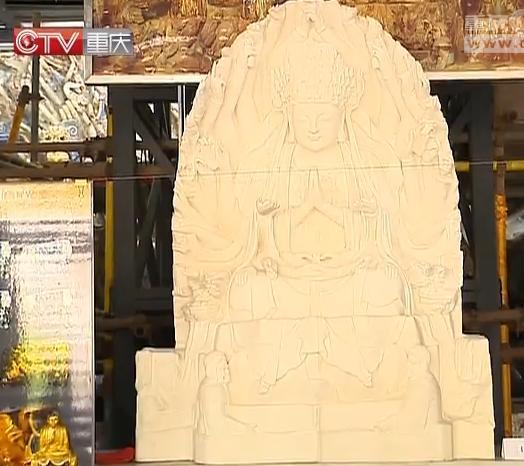 things we cherish most from our history. The wonderful thing is that we do not have to rely on 2D pictures as our window into the past any longer. 3D printing is enabling museums, governments, and everyday people to preserve the works of our ancestors, with a process that involves 3D scanning and printing.
Last week we saw how the Museum of Egyptian Archaeology, as well as a company called Threeding, were utilizing 3D printing in order to preserve our past. It turns out that the Chinese government is also using this amazing technology in two unique ways; to preserve as well as replicate the Qianshou Guanyin sculpture, which is carved into Mount Boading in the Dazu District of China.
Engineers have 3D scanned the 12.5 X 7.7 meter statue, which was carved into a cliff during the reign of the Southern Song Dynasty from 1127–1279. From the 3D scans they have printed out a replica of the famous sculpture, which is about 33% the size of the real thing. This has been a great way to preserve the sculpture digitally, so that generation after generation can appreciate the work, even as the original continues to corrode. In addition to the printing of a replica, the Chinese are also engaging in a 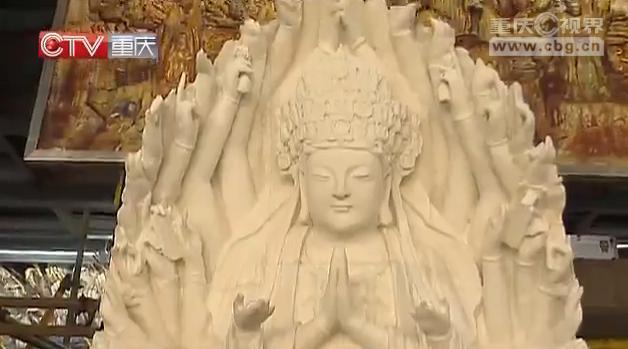 major project to restore the beautiful piece, which over the centuries has been the victim of nature. The replica gives engineers a wonderful model to use as a reference during the restoration process. Many of the fingers on the hands, making up this large piece of art are missing. Traditionally, restoration specialists would use molding and casting to reproduce the missing pieces. However, with the help of 3D printing, they can now save time and money, while restoring the sculpture in a much more accurate way.
This is the first of many restoration projects that the Chinese government has planned on using this technology for. There may become a time, in the not too distant future, where all the major cultural relics in the world are backed up on a hard drive via 3D scans, insuring that other nature, human ignorance, and or accidental catastrophes will never wipe out the amazing work done by those from our past. To discuss this restoration project, head over to the Qianshou Guanyin forum thread on 3DPB.com.
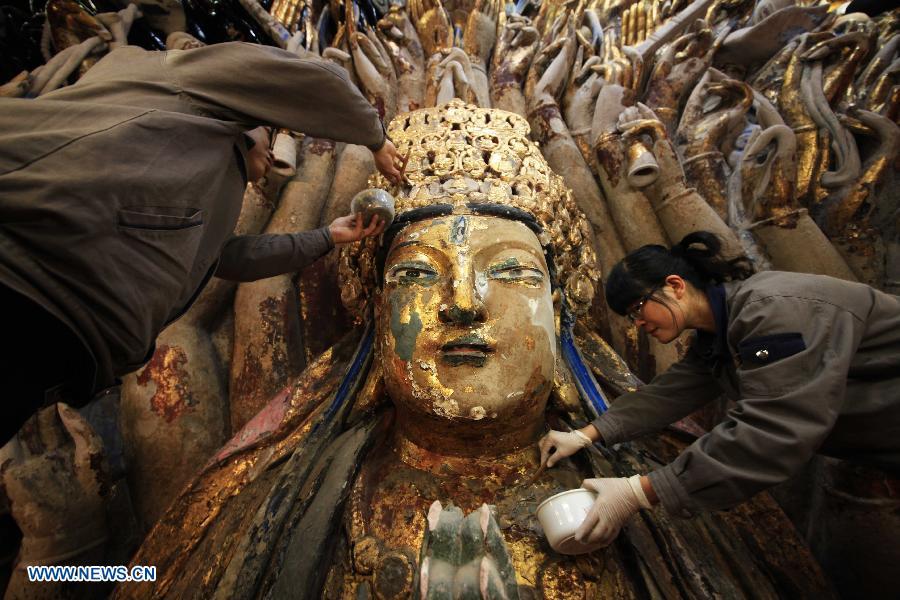
(Source: CBG.cn)
Subscribe to Our Email Newsletter
Stay up-to-date on all the latest news from the 3D printing industry and receive information and offers from third party vendors.
Print Services
Upload your 3D Models and get them printed quickly and efficiently.











You May Also Like
The Great AM Reset: Why Applications Will Decide Who Survives
For decades, the AM industry has been powered by an exciting narrative of endless growth and disruptive potential. We celebrated every new technology, every injection of capital, and every bold...
3D Printing Financials: Materialise Reports Strong Finish to 2025, Led by Medical Growth
Materialise (Nasdaq: MTLS) closed out 2025 with a solid fourth quarter, showing stronger profitability, steady revenue growth, and continued momentum in its medical business. While some parts of the company...
The 3D Printing Pioneers’ Journey from HZG Group: From Bavaria to the World
In Lichtenfels, two hours’ drive north of Munich, there is a globally recognized 3D printing center with a modern infrastructure and many companies focusing on this future technology. At the...
Additive Manufacturing’s Next Chapter: From Prototype Tool to Operating Model
Additive manufacturing is shedding its legacy reputation. While it remains the go-to for prototyping, its potential now extends beyond. Today, it’s increasingly used to support real production requirements, helping teams...