Finite Space & nano3Dprint Forge New Frontier in Space Manufacturing

California-based electronics printing company nano3Dprint announced a partnership with Finite Space, an ambitious German startup with a vision to utilize on-site resources for the production of vehicles, construction machinery, and everyday equipment required by Moon and Mars crews. This collaborative venture aims to push the boundaries of extraterrestrial sustainability to new heights.
By leveraging nano3Dprint’s cutting-edge technology and expertise in electronics printing, in collaboration with Finite Space’s goal of establishing a self-sufficient lunar economy, the partnership aims to revolutionize practices in outer space. In the initial phase of the project, nano3Dprint’s multi-material A2200 electronics printer will be utilized along with locally sourced materials from the moon, including metals, silicon, and recycled plastics. These resources will be employed to manufacture a three-foot-long lunar rover for exploration purposes. Moreover, the duo has plans to progressively produce additional rover components and tools throughout the project.
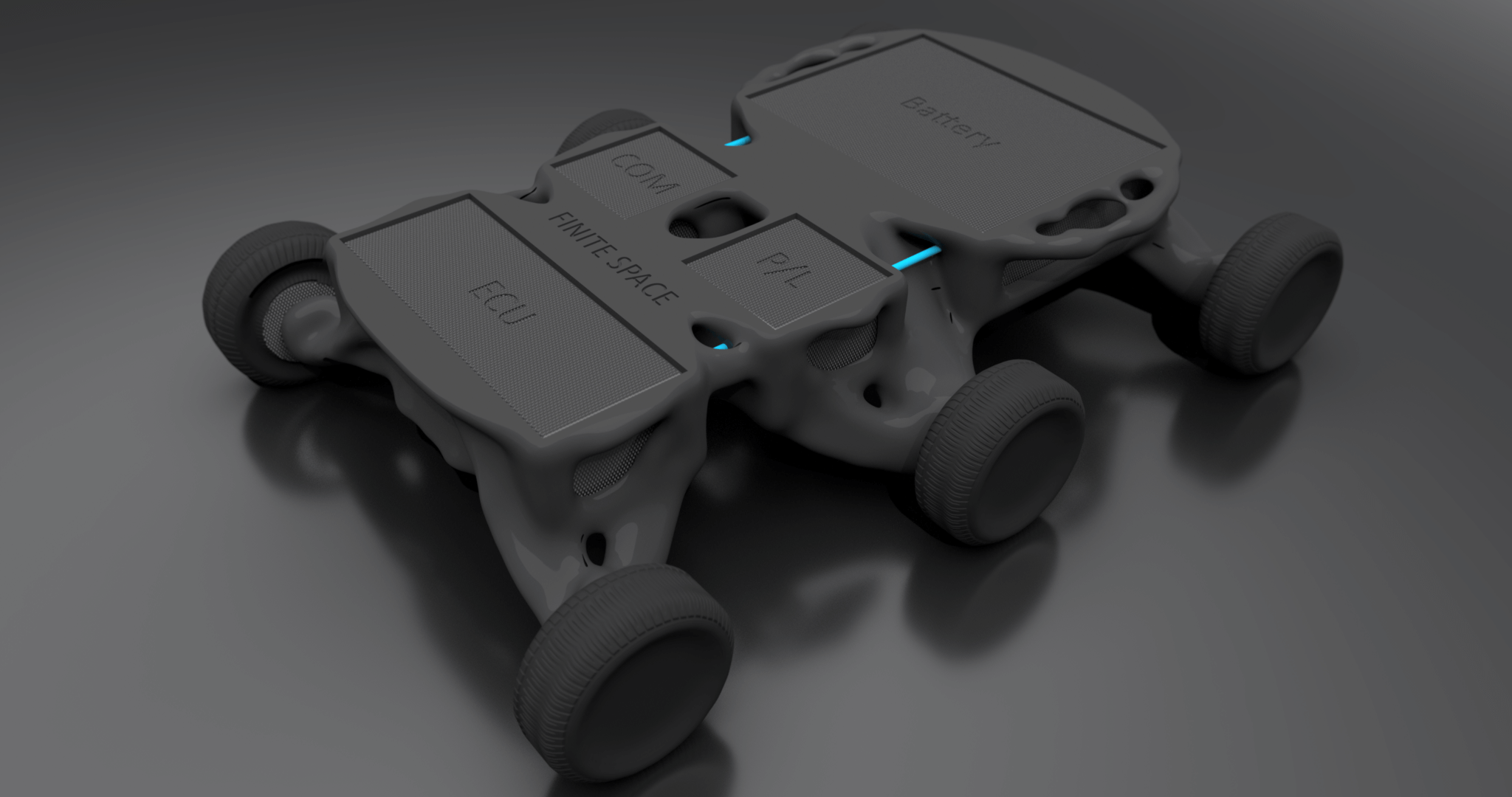 Rendering of 3D printed lunar rover for moon-based exploration. Images courtesy of Finite Space.
Tobias Patzer, Finite Space’s Design Lead, mentioned that the decision to collaborate with nano3Dprint was influenced by NASA‘s research highlighting the advancements achieved with their printers. The flexibility of material choice and quality provided by the A2200 is a key capability that caught their attention. For instance, the demo design includes a cargo bay and tool slot that can be integrated with a plow, drill, or robotic manipulator. Patzer claims that additional capabilities will be added as the project evolves.
By using conductive inks with a fused deposition modeling (FDM) extruder, the A2200 can 3D print electronic objects as a continuous part, reducing the need for assembly. This technology enables the fabrication of complex parts and tools using multiple materials (such as PCB circuits, interconnects, and wiring harnesses) with the added benefit of printing electronics and circuitry directly into the components. Such capabilities mark a significant breakthrough for space exploration and colonization, as it facilitates the on-site production of essential tools and parts, ultimately contributing to the development of a self-sustainable lunar economy.
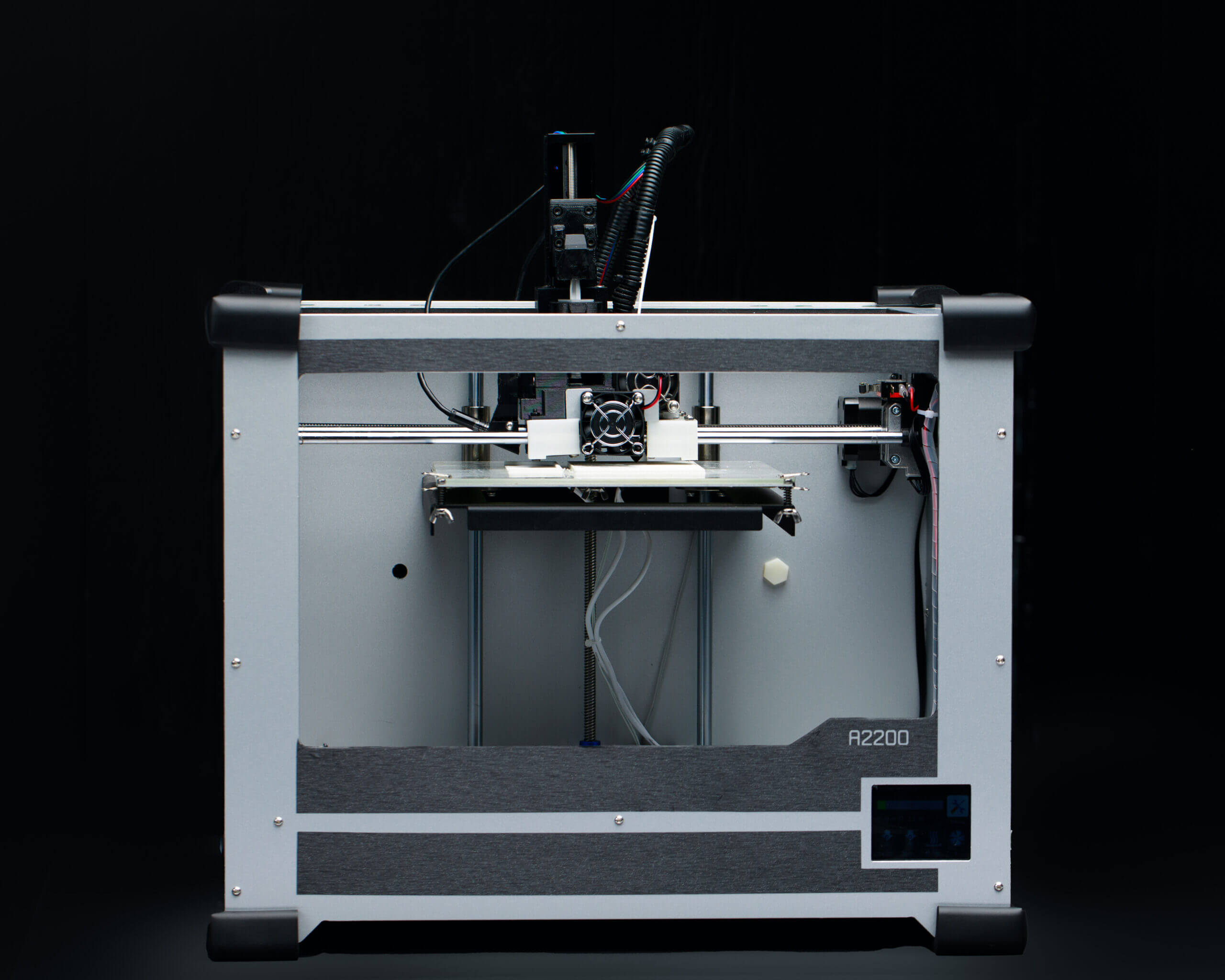 A2200 3D printer. Image courtesy of nano3Dprint.
Compact in size and similar to a microwave oven, the A2200 can be transported to space and rapidly produce tools and parts on demand. By deploying a space-based printer, both the frequency of resupply missions and the quantity of supplies astronauts need to carry can be significantly reduced.
Ramsey Stevens, CEO of nano3Dprint, expressed enthusiasm, emphasizing the importance of space for daily life and the various applications it supports, such as GPS, weather forecasting, and satellite imagery. He anticipates that Finite Space’s utilization of the new rover will further advance space exploration.
Finite Space’s in-space manufactured (ISM) modular rover will play a crucial role in supporting extraterrestrial bases. By utilizing in-situ resource utilization (ISRU) and on-site additive manufacturing, the startup aims to minimize the costly delivery of spare parts. Having 3D printing systems in space allows for the production and installation of spare parts on-site, eliminating the need for redundancy and enabling Finite Space to equip its rovers with heavier loads.
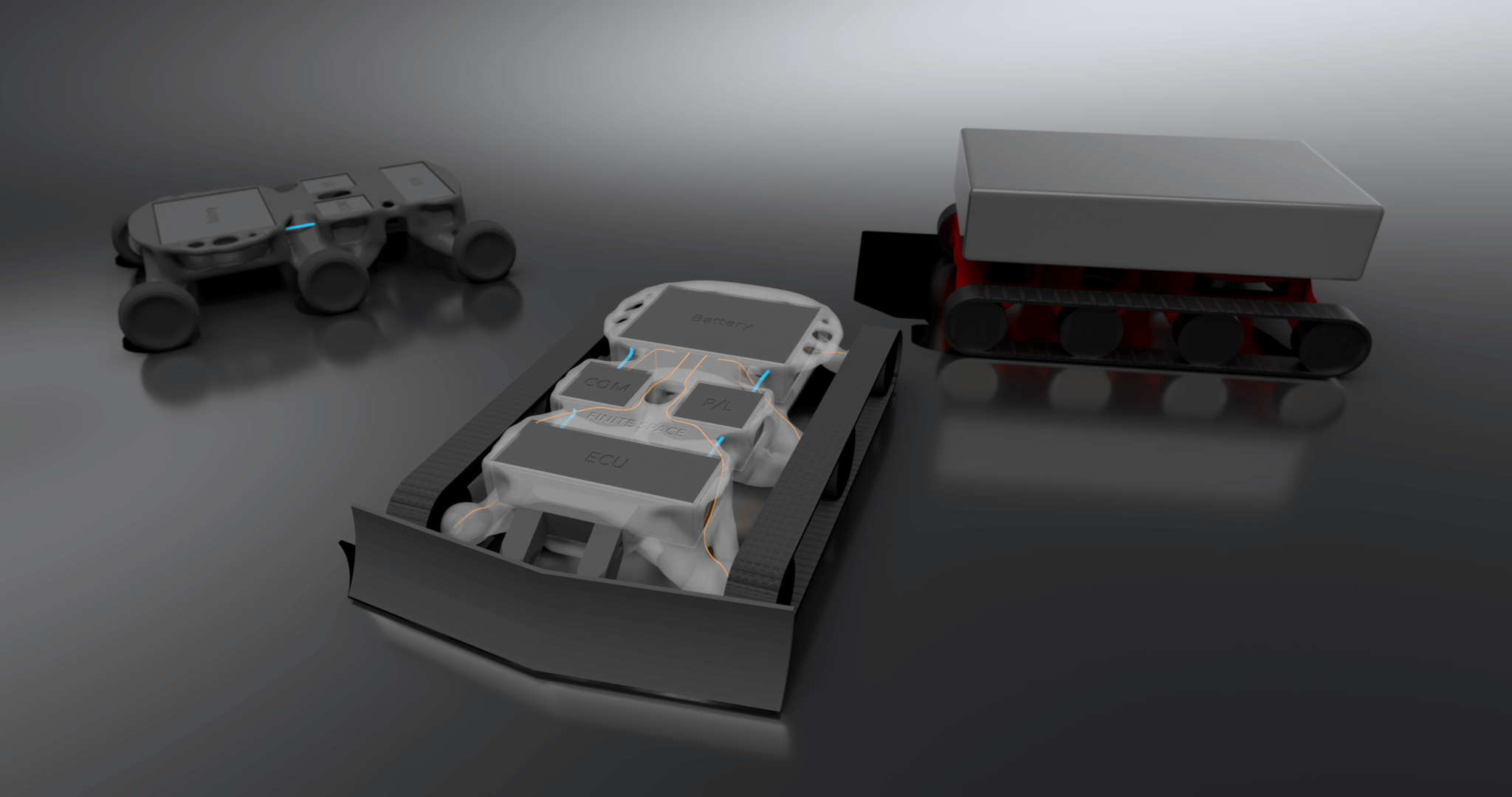 Rendering of 3D printed lunar rovers for moon-based exploration. Images courtesy of Finite Space.
This strategic alliance between nano3Dprint and Finite Space holds tremendous promise, paving the way for innovative solutions that enhance the efficiency, durability, and environmental friendliness of technologies deployed beyond Earth’s atmosphere. Although the project is still quite ambitious, especially since there is no specific timeline on when additive manufacturing will be deployed to the moon, they aspire to make significant contributions to the future of space exploration and the establishment of sustainable practices in the cosmos.
Subscribe to Our Email Newsletter
Stay up-to-date on all the latest news from the 3D printing industry and receive information and offers from third party vendors.
Print Services
Upload your 3D Models and get them printed quickly and efficiently.











You May Also Like
Controlled Powder Production for Advanced Research Applications
Modern physics experiments and high-value industrial applications increasingly depend on custom, high-performance materials. These often require strict constraints such as radiopurity, controlled microstructure, and repeatable powder behavior in metal additive...
Creative Destruction in AM: What the Nobel Prize Winners Got Right
When the Nobel Prize in Economic Sciences was awarded in 2025 for work explaining innovation-driven economic growth, many readers outside economics likely skimmed past it. Inside manufacturing and technology circles,...
Titomic Lands First Order for 3D Printed Semiconductor Capital Equipment Components
One of the markets that should be a reliable source of growth well into the future for the additive manufacturing (AM) industry is semiconductor capital equipment (semicap). When Additive Manufacturing...
Applied Acoustics Uses Additive for Subsea Gear
Subsea equipment has to be rugged, temperature-resistant, and able to cope with the long-term effects of saltwater. Extreme pressure and pressure changes are also problems endemic to this industry. Subsea...