Ricoh Power 3D Prints Power Generators for Sewage Plants

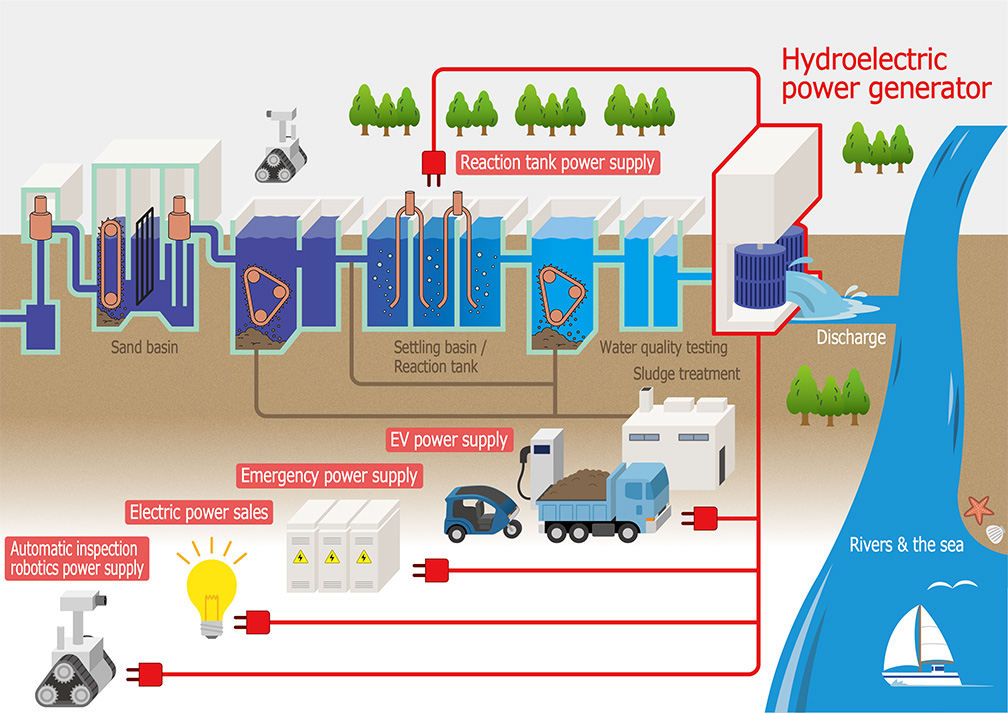
In an exciting development for energy decarbonization, Japanese imaging and electronics company Ricoh has used 3D printing to make compact, light, and efficient power generators. Made in conjunction with Japan’s Ministry of Land, Infrastructure, Transport and Tourism (MLIT) along with Seabell Incorporated and Masashi YAMABE – Masahiro SETO Laboratory at Department of Mechanical Engineering, Kanazawa Institute of Technology, these hydroelectric power units were successfully deployed at sewage treatment facilities, where they were able to make waste treatment more efficient.
By using less energy and fewer materials, with an overall lighter design, these kinds of mini hydroelectric pumps could be used across the world in sewage treatment. Although this may seem like a small project there are currently estimated to be over 109,000 water treatment facilities worldwide. This indicates that these generators may yet find a significant market and account for a lot of power made and saved. By producing energy close to where it is used, they are also very efficient and provide for another path to power apart from photovoltaics and wind.
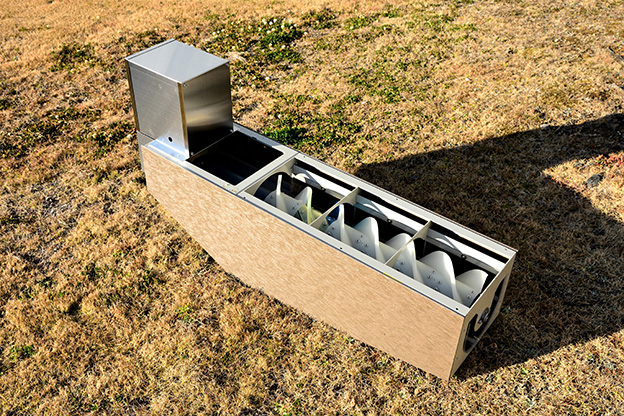
To make the generators, Ricoh relied on its internal 3D printing capacity and printers. The unit chassis was 15% lighter than conventionally manufactured metal units while blades weighed a quarter less. The blades themselves were made from biomass derived materials, while also demonstrating twice the strength of traditional counterparts one 3D printed with standard polymers. Relatedly, the company previously released its Life Parts biomass-based resins. The blades were tested for an extended period and acquitted themselves well. There was also a considerable lead time improvement with the 3D printed variants taking just three days to produce, rather than the month that hydroelectric power units usually take to make.

The researchers are looking for the generators to fulfill a niche in emergency power supply and in powering all manner of small robotics at the plants. The market opportunity is focused on Japan but also Europe, the US and beyond. Previously in 2022 Ricoh has launched Life Parts a rental service for 3D printed pico hydroelectric power generators. This initiative allows customers to use these water power generators at events or seasonally. The Life Parts service could also be used to generate efficient, local power or electricity in deprived areas. Ricoh also saw it as a way to generate power for IoT (Internet of Things) sensors and lights, as well as security cameras, mobile phones and lighting.
This may seem like a niche product but I believe that Ricoh is really on to something here. For remote communities, remote sensors and remote houses, industrial installations, camp grounds, islands, inner-city slums, austere areas and more new power generation concepts would be very sorely needed. Photovoltaics are of course amazing but we need complimentary technologies. In fast running streams or in sewer drains continuous power could be on the offing even when the sun doesn’t shine. I also love the idea of renting out this kind of device. This would make it available to poorer communities and for those who have seasonal requirements. The potential in this technology is considerable. If we look broader at power generation, hydroelectric power generation, wind powder generation and generators generally I believe that this is one of the biggest opportunities for 3D printing. There are multiple billions to be had in making cost effective, light, optimized power generation devices.
Subscribe to Our Email Newsletter
Stay up-to-date on all the latest news from the 3D printing industry and receive information and offers from third party vendors.
Print Services
Upload your 3D Models and get them printed quickly and efficiently.











You May Also Like
Asia AM Watch: China’s 5 Million-Printer Export Year Signals Desktop AM at Scale
For years, a lot of the discussion around China and additive manufacturing has focused on industrial competition. Can Chinese companies move into higher-end markets? Can they challenge Western machine makers...
Creality Launches Filament Maker M1 & Shredder R1, Letting Makers Reuse Waste, Cut Costs, and Create Their Own Filament
From Printing Objects to Shaping Materials Desktop 3D printing has made on-demand creation more accessible than ever. Yet one critical part of the process remains fixed: the material itself. Most...
Bambu Lab 3D Prints Miniature Playground City for Kids in China
Bambu Lab has partnered with meland to open what they describe as China’s first 3D printing creativity center for children. The new space, officially named “meland x Bambu Lab,” launched...
Bambu Lab Says 2025 Was a Breakout Year: 10 Million Monthly Users and Real Business Growth
Chinese 3D printer maker Bambu Lab reported strong results for 2025, showing that the company’s push into community and small-business 3D printing is working. The numbers suggest consumer 3D printing...