US Patent Office Eliminates Continuous Composites Patents from Markforged Suit


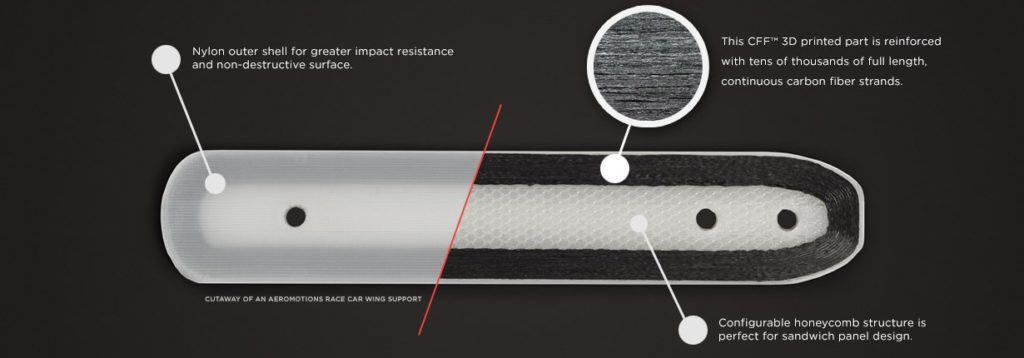
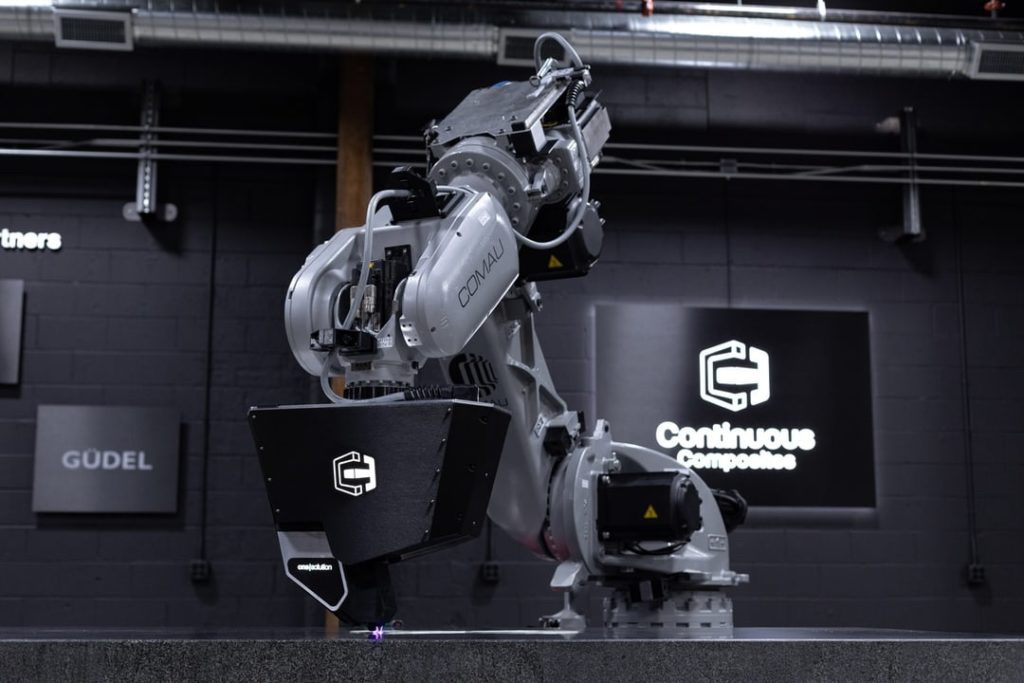
(See update at end of article) In July, 2021, 3D printing materials manufacturer Continuous Composites filed a lawsuit against original equipment manufacturer (OEM) Markforged, a Massachusetts based company that specializes in 3D printing hardware. The lawsuit alleged that Markforged committed copyright infringement on five patents owned by Continuous Composites, for the latter company’s continuous fiber 3D (CF3D) printing materials.
Continuous Composites is seeking monetary damages for what it alleges to be past instances of copyright infringement, in addition to an injunction requiring Markforged to stop using the IP in question. That lawsuit is still ongoing, though it may have just hit a major inflection point. The Patent Trial & Appeal Board (PTAB) of the US Patent & Trademark Office (USPTO) has denied six petitions against Continuous Composites’ claims, which were filed by Markforged shortly after the company was initially hit with Continuous Composites’ lawsuit.
This announcement comes about six weeks after Markforged announced it had made an 8-K filing with the SEC. In his post about the filing, 3DPrint.com editor-in-chief, Michael Molitch-Hou, pointed out that an 8K filing is may be followed by a merger involving the company that made the filing.
It is still unknown, whether or not Markforged will merge with another company. Nevertheless, the present development seems bound to impact that question, if only in terms of creating unwarranted negative perception, but especially, of course, if it leads to Continuous Composites ultimately winning its lawsuit against Markforged.
On the other hand, the ruling against Markforged in this case doesn’t necessarily indicate that the company will lose in Continuous Composites’ case against it, either. Moreover, it’s worth considering what the IP’s actual value is, in this instance. Even if Continuous Composites does rightly prove infringement on the materials patent, Markforged would still have been one of the parties responsible for making the materials valuable, by having created the successful scalable model for using them. Along those lines, Continuous Composites could be trying to use the lawsuit as a gateway towards forcing a merger with Markforged.
Whatever the outcome, one thing is clear: other companies like to sue Markforged. That alone makes the company intriguing, albeit potentially fatal for its ability to grow.
Finally, this case is a harbinger of a trend that’s going to shape the future of AM, which is precisely the question of how much IP will matter for the industry’s growth, in general. From a philosophical perspective, the last booming decade of 3D printing were essentially founded on the principles of open source. But that’s increasingly coming into conflict with the fact that AM’s biggest stakeholders have both a profit and a national security concern in protecting the trade secrets of all the technologies involved.
Update 4/4/2023: The United States District Court for the District of Delaware has since eliminated the four patents, accounting for 20 claims, from the lawsuit, confirming that Markforged did not infringe on the patents. This leaves a single, recently-issued patent that was added to the case by Continuous Composites.
“We are very pleased with this ruling, which largely validates Markforged’s position that we do not infringe any of Continuous Composites’ patents,” said Shai Terem, President and CEO of Markforged. “From the start, we believed the Continuous Composite lawsuit to be meritless, and it is gratifying to see this bear out as the case progresses. After this ruling any potential exposure related to the matter is limited to the one remaining patent. We plan to continue to mount an aggressive defense of the couple remaining claims against us in this final patent.”
Subscribe to Our Email Newsletter
Stay up-to-date on all the latest news from the 3D printing industry and receive information and offers from third party vendors.
Print Services
Upload your 3D Models and get them printed quickly and efficiently.













You May Also Like
Metal 3D Printers for the Desktop Are Finally Starting to Feel Like Desktop Products
FDM 3D printing is becoming increasingly accessible, yet metal 3D printers designed for everyday desktop use remain rare on an ordinary workbench. The real challenge is not making a metal...
What 3D2GO Says About 3D Printing’s Growth in Southeast Asia
The Philippines offers an interesting case study in how 3D printing can develop in Southeast Asia, and Manila-based 3D2GO helps illustrate it. 3D printing in Southeast Asia doesn’t have to...
The Frankenservice Part 2: Have Your Cake and Eat it Too
This series of articles delves into a thought experiment. What if we let go of using a few machines very optimally, but instead use lots of different machines to meet...
Silencer Market Set to Test Metal Additive’s Readiness for Production Prime Time With Enormous Market Expansion
Throughout the history of additive manufacturing (AM) technologies, there are only a couple of really interesting case studies in which we see a market significantly disrupted and revolutionized by AM....