Boom Supersonic Unveils Symphony 3D Printed Engine for Overture Jet, Announces Partners


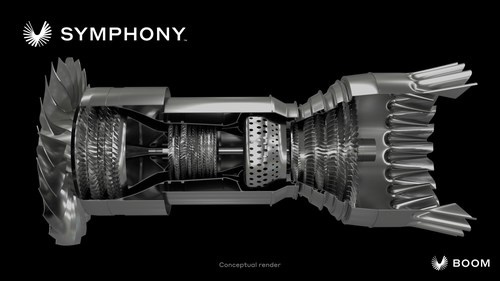
Boom Supersonic, a Denver-based aerospace startup, has announced that it is using additive manufacturing (AM) to develop its own engine for the company’s currently-in-progress Overture supersonic passenger airliner. Boom is working on the engine, called Symphony, with GE Additive, Kratos Defense’s Florida Turbine Technologies (FTT) unit, and StandardAero, a maintenance, repair and overhaul (MRO) company owned by the Carlyle Group.
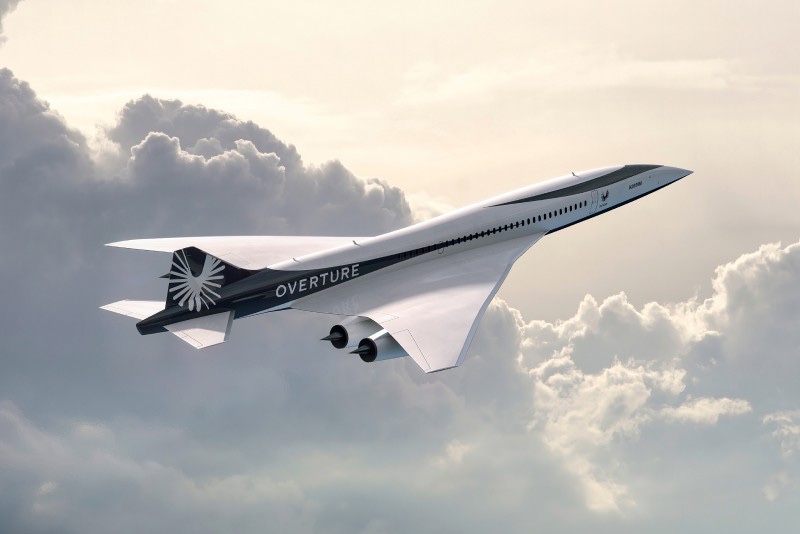
The Overture was originally announced some time in 2016, and in the early days, Boom planned to have the jet ready for rollout by 2023. In 2019, the company pushed the deadline back to 2025-2027, which is more or less where it stands now, although decidedly towards the latter end of that range. Boom now plans the public rollout for the Overture in 2026, the first flight is set for 2027, and the company is aiming for type certification by 2029.
Boom’s main problem so far has been in finalizing the engine design, thus explaining the particular significance of this latest announcement. It’s all the more significant considering the fact that its original partner on the engine, Rolls-Royce, dropped out of the project this past September.
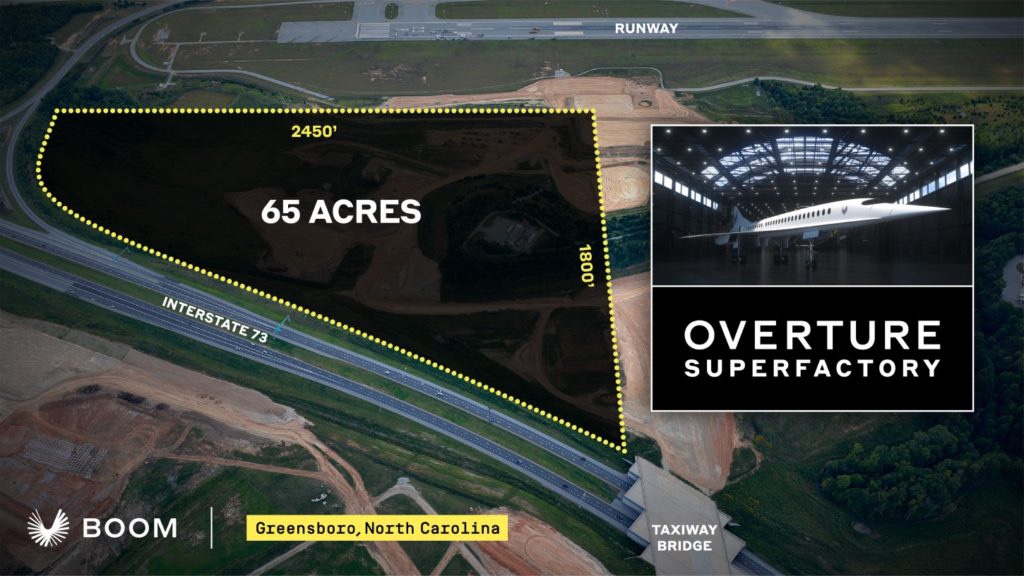
The issue with the Overture’s engine even made it to a “60 Minutes” segment about Boom in July, 2022. That segment included aviation journalist Jon Ostrower, who has expressed skepticism of the company based on what he considers to be its unrealistic deadlines. That seems like a fair point, given that the company has not only pushed back the deadline for the Overture multiple times, but also still hasn’t broken ground on its planned “superfactory” in Greensboro, NC.
On the other hand, Boom’s announcement of its development of the Symphony alongside three seasoned partners could allow the company to finally find its rhythm. In any case, there are certainly many eyes watching and waiting to see how the Symphony affects the pace of the Overture’s development. Given that Boom has dozens of orders to fulfill for some of the world’s largest airlines, the question of whether Boom will succeed or fail carries economic implications far beyond the question of whether or not supersonic air travel will finally catch on.
In a press release announcing the Symphony engine design, the founder and CEO of Boom Supersonic, Blake Scholl, commented, “Developing a supersonic engine specifically for Overture offers by far the best value proposition for our customers. Through the Symphony program, we can provide our customers with an economically and environmentally sustainable supersonic airplane — a combination unattainable with the current [industry] constraints…” The president of United Airline Ventures, Mike Leskinen, added, “The team at Boom understands what we need to create a compelling experience for our passengers, and we are looking forward to a United supersonic fleet powered by Symphony.”
Moreover, the presence of GE Additive, a founding member of the Biden administration’s AM Forward initiative, on the project, means that the Overture will now be a key symbol of the initiative’s impact. Boom also counts AM Forward member Northrop Grumman amongst its corporate partners.
In that sense, at least, Boom has already taken a step in the right direction by doubling down on its AM-centered approach. It is impossible to imagine the company using conventional manufacturing techniques and rebounding with a new design this quickly after its partnership with Rolls-Royce dissolved. Whether that will also translate to acceleration of production remains to be seen, but it does feels likelier following the announcement of the Symphony, than it did prior to that announcement.
3DPrint.com and SmarTech Analysis are hosting Additive Manufacturing Strategies in New York City on February 7-9, 2023. Register for the event here to learn from and network with the most exciting companies and individuals in AM.
Subscribe to Our Email Newsletter
Stay up-to-date on all the latest news from the 3D printing industry and receive information and offers from third party vendors.
Print Services
Upload your 3D Models and get them printed quickly and efficiently.













You May Also Like
50,000 Orders and Counting: EPlus3D & Chinese AM Services Provider Are Scaling Liquid Cooling Solutions for AI Servers
An under-appreciated story driving the additive manufacturing (AM) industry this year has been the divergence between what’s driving the market in China and what’s driving it everywhere else. Let’s start...
Additive Manufacturing Has a Major Growth Opportunity; Trust Will Decide Who Captures It
After years of overpromising, the next phase of AM growth will be won by companies that consistently deliver what they say. When I entered additive manufacturing in 2014, after 15...
Seven Trends Reveal What’s Next for 3D Printing at TCT Shenzhen 2026
TCT Shenzhen 2026 opened on October 14 in Hall 15 of the Shenzhen World Exhibition & Convention Center in Bao’an, and ran through October 16. The event brought together equipment...
AM Investment Strategies 2026 Sets the Stage for AMS 2027
AM Investment Strategies 2026 Nov. 5 · 12 p.m. ET · Free online event RESERVE YOUR SPOT ↗ A one-hour online discussion featuring some of the biggest names in 3D...