US Department of Energy Announces Results of 3D Printed Geothermal Application Competition

The US Department of Energy (DOE) recently announced the results of the American-Made Geothermal Manufacturing Award’s final stage, involving a preliminary test of the advanced 3D printing prototypes that participants began designing more than two years ago, in January, 2020. Over the course of four stages, in which a total of $4.65 million in prize money was awarded, a group of 20 teams was winnowed down to the two winners: Team Downhole Emerging Technologies, and Team Ultra-High Temperature Logging Tool, both based in Houston, Texas.
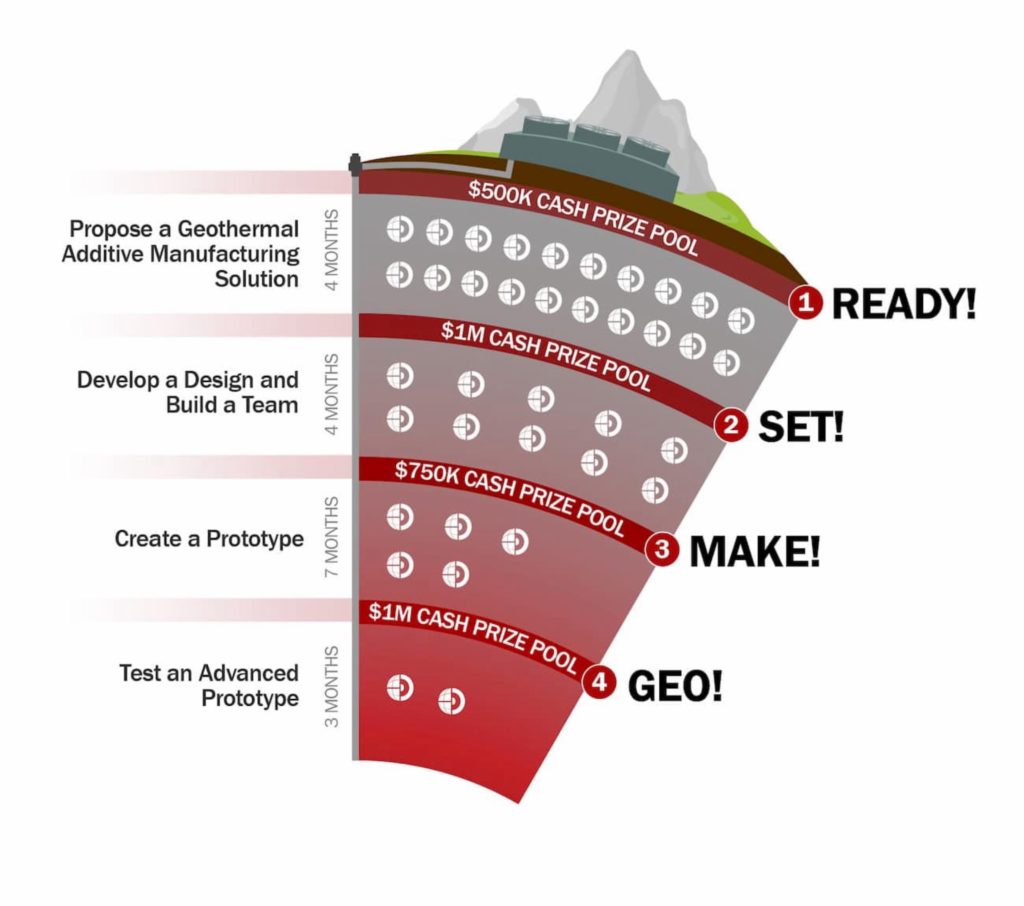
The contest targeted technology for tapping geothermal wells, where liquid or vapor heat can be harnessed to generate electricity. Each winning team was awarded $500,000 in cash, and will receive up to $200,000 in additional funds to test its design in the field. As its name suggests, Team Ultra-High Temperature Logging Tool developed technology for well logging in geothermal exploration, a process indispensable to understanding a given well’s geological record.
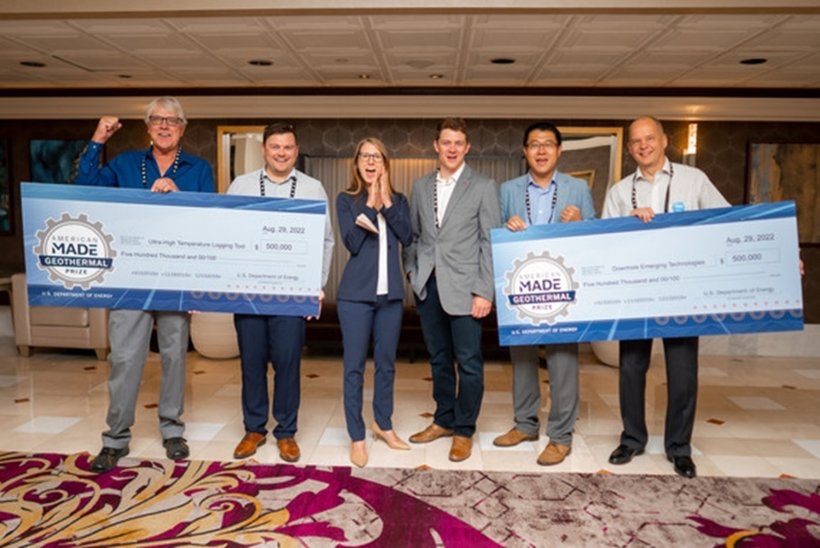
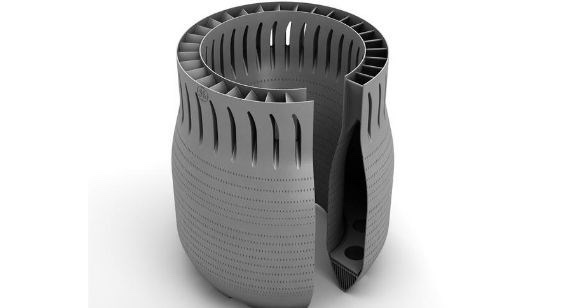
Team Downhole Emerging Technologies (DET) developed an all-metal alternative to conventional packer systems for well drilling. Packer systems are used in drilling operations, to force liquids being drilled from the well-bores, into the completion tubing. Team DET developed a system made from the nickel-chromium superalloy Inconel, specifically designed to stand up to the high temperatures faced in geothermal drilling.
In a DOE press release, the deputy assistant secretary for renewable power, Alejandro Moreno, said, “This DOE competition harnesses breakthroughs in additive manufacturing [AM] to help overcome barriers to widespread deployment of geothermal energy. The rapid prototype development supported by this prize is spurring advancements in the geothermal industry to help power the nation from the heat beneath our feet.”
The DOE’s Office of Energy Efficiency & Renewable Energy (EERE) has been awarding funds for a variety of domestically-produced clean energy projects since January, 2018, via a series of contests — including the Geothermal Manufacturing Award — called American-Made Challenges. Aside from the participants, the main beneficiaries of the contests are the institutions comprising the American-Made Network.
The latter is an alliance of over 100 different associations, investors, and research centers in the renewables sector. Teams participating in the challenges typically turn to organizations from the American-Made Network for assistance with their projects. For instance, concerning the winners of the Geothermal Manufacturing Award, Team DET sought the services of Minnesota’s Proto Labs, while Team Ultra-High Temperature Logging Tool worked with Sandia National Laboratories.
Thus, programs like the American-Made Challenges, or like the AM Forward initiative, bolster the AM sector from multiple directions. New ideas from startups and small manufacturers are catalyzed, at the same time as activity is stimulated at more established institutions and enterprises. Interestingly, similar things can be said about the renewables sector. Among other reasons, then, the consistent flow of government funding and strong connection to public policy are factors that should continue to push the AM and renewable energy sectors closer together.
Subscribe to Our Email Newsletter
Stay up-to-date on all the latest news from the 3D printing industry and receive information and offers from third party vendors.
Print Services
Upload your 3D Models and get them printed quickly and efficiently.











You May Also Like
Why Additive Manufacturing Adoption Looks the Way It Does — Part II
As additive manufacturing moved beyond prototyping, its first sustained production relevance emerged in applications where performance considerations outweighed cost efficiency and throughput. The driving factor in these cases was not...
Velo3D Becomes First Qualified AM Vendor for US Army’s Ground Vehicles Program
One indicator that I’ve used to help me track the additive manufacturing (AM) industry’s progress in terms of its technical maturity is the relative progress that each U.S. military branch...
Roboze Opens U.S. Aerospace & Defense Headquarters in El Segundo
The manufacturing sector is made up of clusters: “geographic concentrations of interconnected companies” that both cooperate and compete with each other. Of course, this is true about any sector in...
At AIAA SciTech 2026, 3D Printing Was Part of the Workflow — Part I
The AIAA SciTech Forum 2026 brought much of the aerospace community together in one place. With roughly 6,000 attendees, 115 exhibitors, 21 sponsors, and nearly 3,000 technical paper presentations, the...