Raytheon Subsidiary to Perform $14M 3D Printing Center Expansion in Iowa


When Raytheon Company and United Technologies merged in 2020, it became the $64-billion Raytheon Technologies, one of the world’s largest aerospace, intelligence services providers, and military manufacturers by revenue and market capitalization. Benefitting from the combined heft of the two heavyweight defense contractors was United’s 2018 acquisition, Rockwell Collins. The subsidiary, now dubbed Collins Aerospace, has all the more cash with which to grow its 3D printing operations. This includes a $14 million expansion to its additive manufacturing (AM) center in West Des Moines, Iowa.
Adding More Metal 3D Printers for Aerospace
Collins is adding 9,000 square feet to its 41,000-square-foot site, giving it enough space to add new metal 3D printers to its fleet. The first will be an NXG XII from SLM Solutions, which has eight times the build volume of Collins’ existing three metal 3D printers. The new 12-laser machine, pioneered in part by Divergent Technologies for its 3D printed car manufacturing, is expected to be fully operational in late 2023.
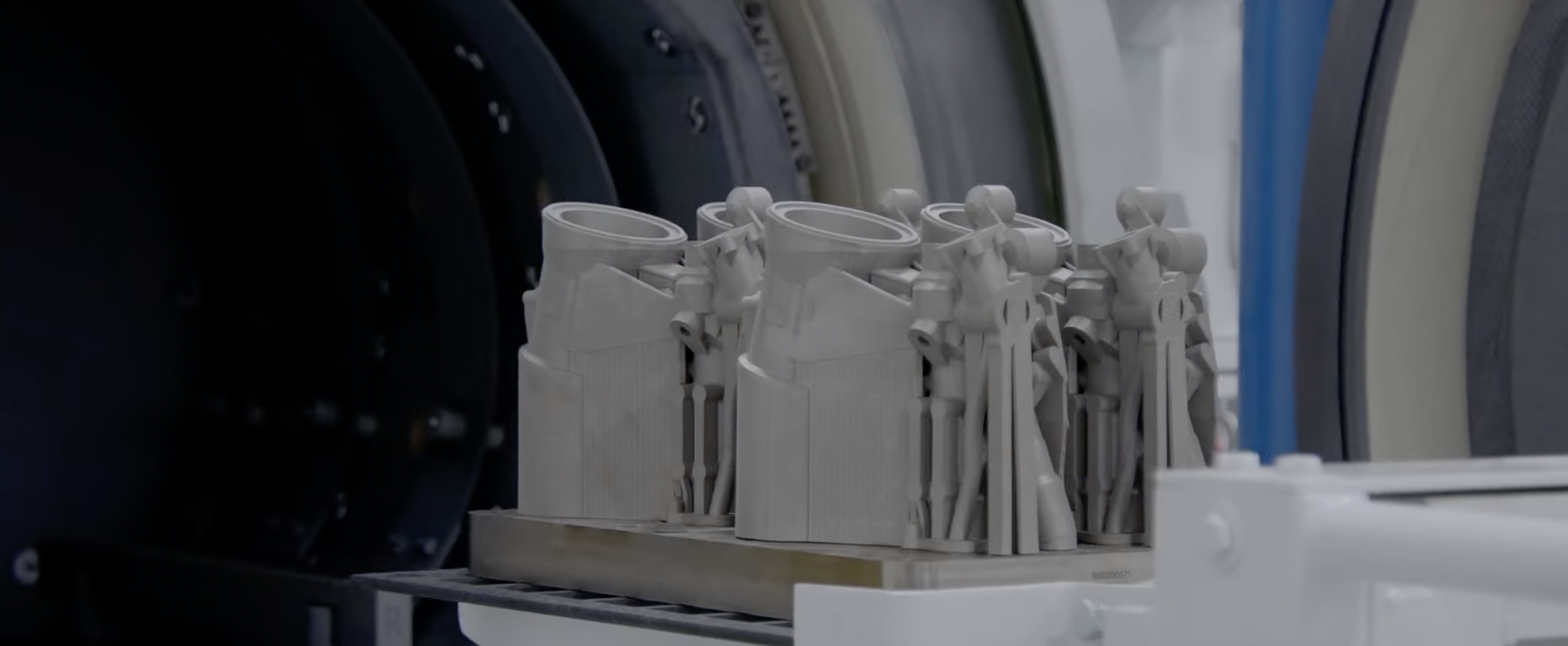
Collins Aerospace relies on additive manufacturing for part manufacturing. Image courtesy of Collins Aerospace.
“With this expansion, we will significantly increase our additive manufacturing capacity and enhance our ability to produce more parts faster for our airframe and engine customers,” said Renee Begley, West Des Moines site lead for Collins Aerospace.
The West Des Moines facility is used by the defense giant to design and produce fuel nozzles for commercial and military aircraft. The new suite of printers will allow Collins to not only improve on its existing production capabilities but allow the company to broaden its metals portfolio.
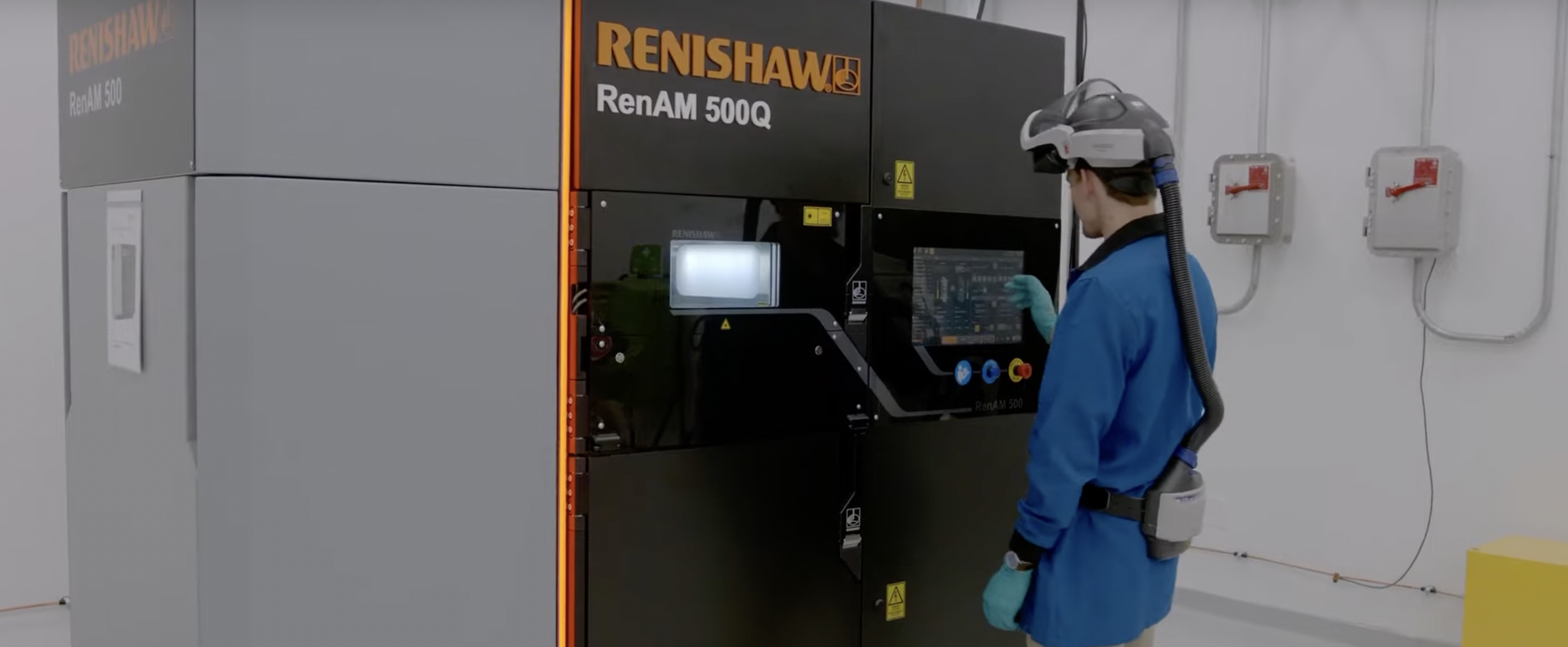
Engineers at Collins Aerospace rely on Renishaw machines for manufacturing aerospace parts. Image courtesy of Collins Aerospace.
3D Printed Aerospace Parts
When it comes to manufacturing with metal 3D printers, the machines have to be qualified for specific materials and parts. For this reason, the machines have parameters set for a given component or series of components made from a particular metal. Now, Collins will have more machines to set up for each material set and part in its AM operations. What these components will be is not known, besides the fact that they will likely be related to fuel nozzles.
Parent company Raytheon is collaborating with 3D Systems and the Air Force Research Laboratory on 3D printing for heat management and has researched heat exchangers and heat sinks since at least 2015. It has explored 3D printing for the optimization of cooling and heating, as well as reducing part count for missiles. It’s possible, then, that there could be some cross-pollination in those areas.
The new expansion is just one piece of a larger, increasingly aggressive AM strategy. In addition to working with 3D printing bureaus like Nikon’s Morf3D and Sintavia, Collins opened a new additive manufacturing center at its campus in Monroe, N.C. in June 2022. Also in its global network of additive production centers are sites in Minnesota and Singapore. These are complemented by an additive research center in Connecticut.
Subscribe to Our Email Newsletter
Stay up-to-date on all the latest news from the 3D printing industry and receive information and offers from third party vendors.
Print Services
Upload your 3D Models and get them printed quickly and efficiently.













You May Also Like
3D Printing Financials: 3D Systems, Prodways, and Align Build on Positive Momentum
The latest earnings from 3D Systems (NYSE: DDD), Prodways (EPA: ALPWG), and Align Technology (Nasdaq: ALGN) show that the 3D printing market continues to move forward. Some businesses are growing...
3D Printing News Briefs, August 8, 2026: Seawall Funding, Defense Capabilities, Supports, & More
We’re starting with business in this weekend’s 3D Printing News Briefs, then moving on to defense. We’ll move on to young 3D printing entrepreneurs, and finish with some research out...
Walter Reed Gets Premarket Clearance to Make 3D Printed Point-of-Care Medical Devices
The Walter Reed National Military Medical Center’s 3-D Medical Application Center (3-D MAC) has received premarket clearance to make 3D printed medical devices. This is the first time that a...
Jeff Graves Seeks New 3D Systems CEO, The Company at a Crossroads
Jeff Graves is to step down as 3D Systems‘ CEO once a replacement has been found, the company has announced. He will then retire as CEO and as Director of...