House 3D Printing, Bacterial Materials, and More Awarded by 3D Pioneers Challenge

The 3D Pioneers Challenge awards the best and most innovative breakthrough projects in 3D printing. This year, the jury selected projects from around the world across several categories, including medtech, design, architecture, mobility, sustainability, and more.
Hyperloop Brake
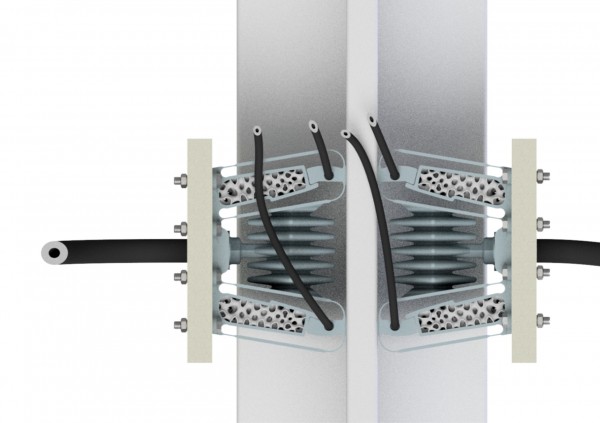
Of course, the hyperloop is a bit of a marketing dream/scam at the moment, but who knows if it will become a reality. If it does, it will need brakes. A team made up of members from ETH Zürich and inspire AG have come up with a compact, 3D printed brake that still works in case of a power failure.
The project describes the brake operating such that “by pressurizing a bellow, a compliant system is forced apart. This generates a gap between the guide rail and the brake. When pressure is released, immediate braking is initiated by contracting the bellow. The integrated gyroid structure absorbs the braking forces and air channels assist in releasing the brake.” And all of that intricacy is done inside of one single component, showing off 3D printing’s ability to make a complex integrated part.
WASP’s Additive Construction

WASP won in the sustainability and architecture categories with its TECLA habitat and its concept store for Dior. The company made the TECLA with natural materials and its huge Crane WASP 3D printer. Combining earth, clay and modern techniques points to a digital clay future. The jury noted, “WASP, pioneer of the 3D-printed house, is convincing in its use of local clay and with the archaic principle of building a house from the ground. It’s good to see global brands like Dior putting a focus on this sustainable principle and making it a reality for everyone to grasp.”
Living Products

3D Printed Motors
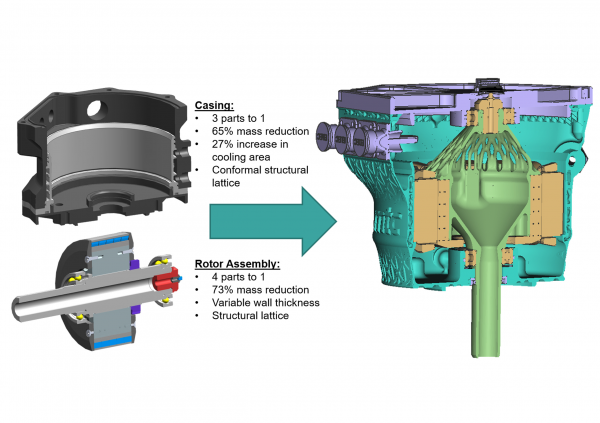
“Leveraging the advantages of additive manufacturing to design and manufacture a bespoke element of a complex product and thus system integration at such a high level is very impressive. Weight reduction of a functional electric motor – sustainability in the overall concept. Motors consume a huge portion of energy in industry. Ideas to improve electric motors by additive manufacturing is a great lever towards higher performance and thus improved sustainability,” the jury noted.
Multi-Axis Bioprinting Robot
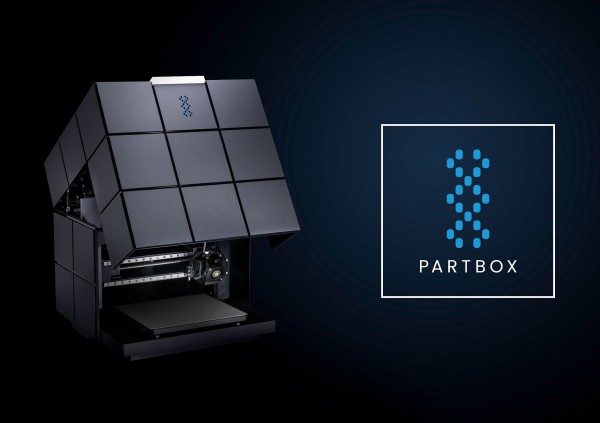
PARTBOX
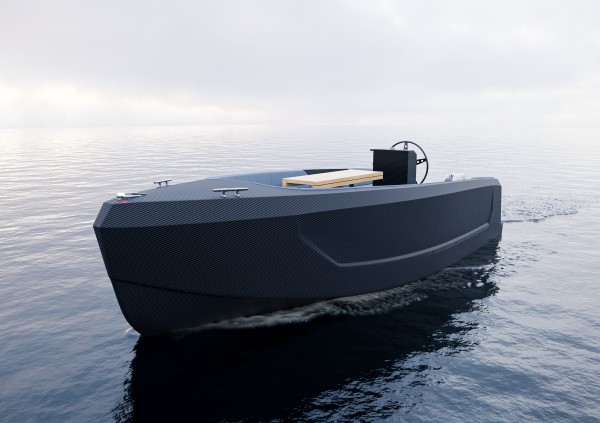
A 3D Printed Boat
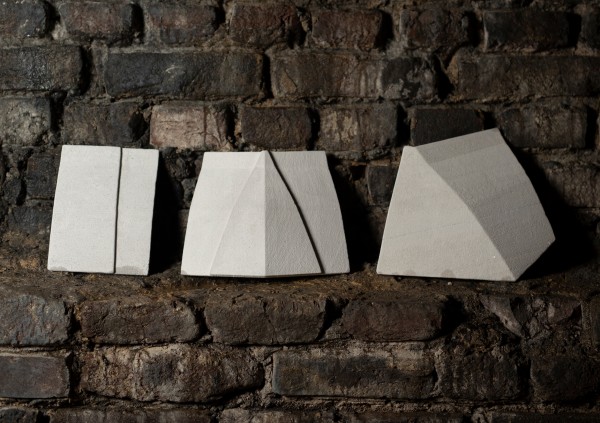
Geo Slate
The 3D Printed SETAE Jacket

Subscribe to Our Email Newsletter
Stay up-to-date on all the latest news from the 3D printing industry and receive information and offers from third party vendors.
Print Services
Upload your 3D Models and get them printed quickly and efficiently.













You May Also Like
Solukon Goes Big with New SFM-AT850 Depowdering System
Solukon has released the SFM-AT850 depowdering system. The German depowdering specialist has updated its product line, and this machine replaces the SFM-AT800-S and SFM-AT1000-S. Rather than many small parts, this...
The Hidden Economics of Powder Bed 3D Printing: Closing the Loop in Powder Management
Automation is a very topical thing in additive manufacturing at the moment. With renewed scale, some clients are fervently looking to automate production. Other business cases only make sense with...
Oerlikon Adds ATLIX’s xBUILD 5000, Plans More for 2027
Oerlikon has installed a new ATLIX xBUILD 5000 metal 3D printer at its facility in Huntersville, North Carolina, marking the first production deployment of the system worldwide. The machine will...
The Science Lab You Can 3D Print
Researchers at Sweden’s Umeå University have shown how desktop 3D printers can be used to make lab equipment, giving scientists a cheaper way to build tools for their research. The...