Bound Metal 3D Printing to Make $54B in Metal Parts through 2030

SmarTech Analysis has released the latest edition of its report on bound metal 3D printing. Dubbed “Bound Metal & Metal Binder Jetting AM 2022,” the report projects that metal binder jetting and bound metal extrusion technologies will produce $54 billion in parts through 2030.
The report tracks a segment that SmarTech describes as “evolving at a pace faster than any other technical 3D printing segment, even exceeding that of the incumbent and more widely adopted metal powder bed fusion sector.” This is reflected in the numerous companies that have entered the space, ranging from established industrial firms, like ExOne/Desktop Metal, to low-cost extrusion manufacturers, such as 3DGence.
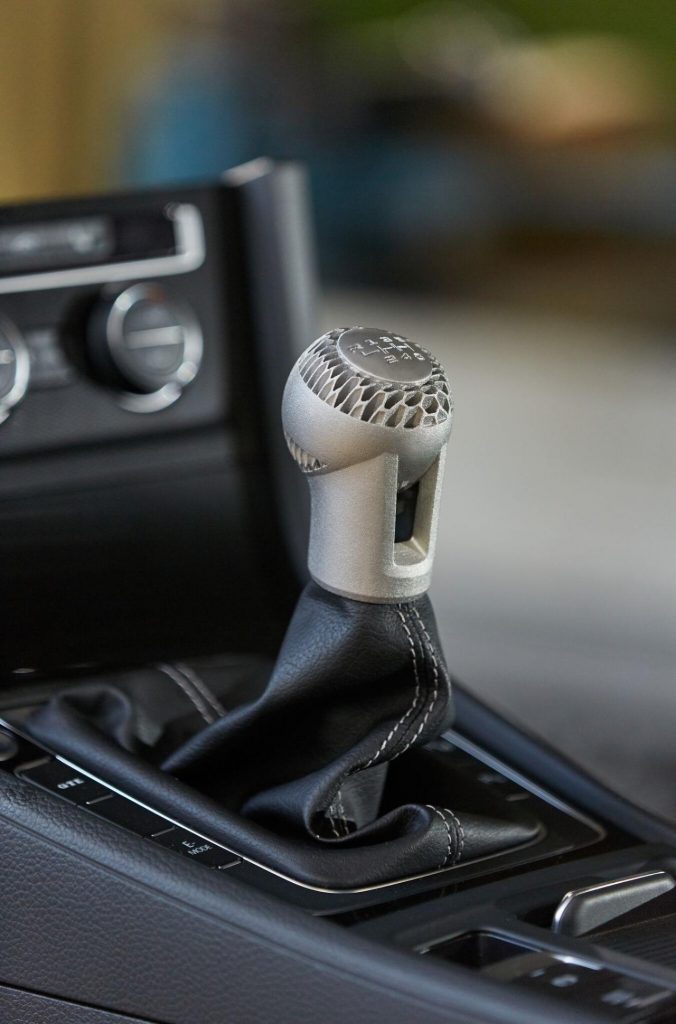
A 3D printed gearshift knob that VW revealed with the unveiling of MetalJet in 2018. Image courtesy of HP.
SmarTech looks at the sector from its roots, with the invention of metal binder jetting by ExOne, and continues to present day, projecting into the future. While ExOne previously required the secondary infiltration of metal binder jet parts, typically one-off components or short runs. As a result, binder jetting suffered from less market adoption and growth. More recently, however, the technology has received renewed interest as a result of new players, like HP, Desktop Metal, and GE.

The study analyzes the roles of the most important companies in the segment as they attempt to confront the casting industry. This is a significant development, as these technologies were previously targeted toward metal injection molding (MIM) suppliers. Names discussed in the report include: Desktop Metal, MarkForged, GE Additive, ExOne, HP Inc., Xerion, Smith Metal Products, IndoMIM, Digital Metal, Hoganas, GKN Powder Metallurgy, Triditive, Ipsen USA, Elnik Systems, Abbot, SECO Warwick, FreeFORM Technologies, Riven, Hexagon, MSC, and more.
The market research company notes that metal 3D printing is sold for the unique value it can provide a specific application. This includes bound metal AM. SmarTech suggests that much of what is holding back binder jetting in particular is the perception of its capabilities. To do away with those preconceptions, power users could advertise their use cases for production parts. This is one major take away from the report and we’ve already seen that the public teasing of mass binder jet usage by Volkswagen and Ford have generated a great deal of press.
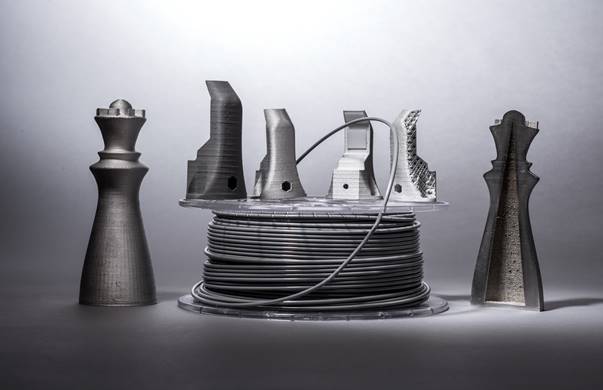
BASF’s Ultrafuse 316L – Metal filament for 3D printing stainless steel parts
Meanwhile, bound metal extrusion is also extremely promising. Still new, it hasn’t picked up the steam that it will. So far, Desktop Metal and Markforged make equipment dedicated to this process, while BASF and The Virtual Foundry produce bound metal filaments for use with standard desktop 3D printers. In general, these may be used to prototype metal parts, but there could be strong potential to manufacture end parts in large batches with printer farms.
The entire bound metal segment is an exciting one, due to its low cost and we have yet to see its full potential. SmarTech describes this as “the first full featured market study specific to bound metal additive manufacturing processes.” It combines both a broad database of market forecast data and an extensive analysis of the current innovators, strategic considerations, and the key applications and adopters of the technology. To learn more or to purchase the study, visit the SmarTech report page here.
Subscribe to Our Email Newsletter
Stay up-to-date on all the latest news from the 3D printing industry and receive information and offers from third party vendors.
Print Services
Upload your 3D Models and get them printed quickly and efficiently.











You May Also Like
Cybersecurity: A Necessity in a Maturing Additive Manufacturing Industry
Additive Manufacturing is no longer an experimental technology operating on the margins of industrial production. Over the past decade, it has become an integral part of how OEMs design, produce,...
How Metal Additive Manufacturing Is Reshaping the Future of Aerospace and Defense Engineering
Additive manufacturing (AM) is steadily changing the way we think about producing metal parts for aircraft. Whilst aerospace and defense companies have been using metal AM for over twenty years,...
The AM Adoption Problem No One Models
Through its short history, Additive Manufacturing has been presented to the investment community as a classic high growth technology story. Manufacturing is a multi-trillion-dollar market. Even a small percentage looks...
The Business of Customized Sports Equipment: How 3D Printing Is Changing Athletic Gear
For years, 3D printing in sports has been linked mostly with prototypes, concept shoes, and one-off experiments for elite athletes. Helmets, cleats, and footwear midsoles often took over the headlines,...