IBM and Ricoh Partner for 3D Printed Anatomical Models

IBM (NYSE: IBM) has announced a platform update that will become a part of a larger strategy for smart healthcare solutions that include 3D printed anatomical models. The newest release of IBM Watson Health’s iConnect Access allows users to create digital anatomical models. Through a partnership with Ricoh USA, the two firms will build upon this to release an end-to-end solution for 3D printing anatomical models, as well.
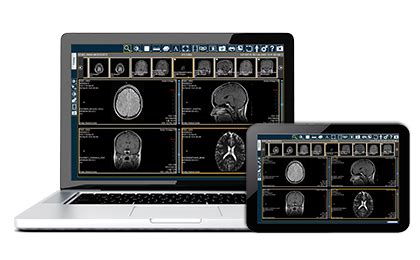
IBM Watson Health iConnect Access. Image courtesy of IBM.
Launched in 2008, iConnect Access is a platform for collecting, storing and exchanging medical imaging data through a web browser. The latest update includes a number of features approved by the U.S. Food and Drug Administration (FDA), such as an interactive segmentation tool that can be used to build digital 3D models from a patient’s medical imaging data. This is complemented with such editing tools as freehand sculpt, 3D eraser, polygon sculpt, hole-filling, “cut and discard”, “cut and keep”, and smoothing.
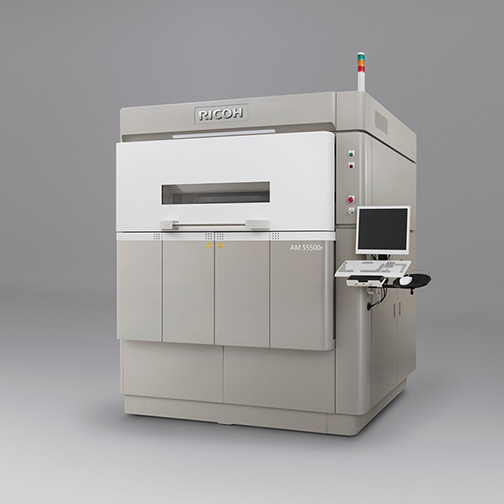
The Ricoh AM S5500P SLS 3D printer. Image courtesy of Ricoh.
In addition to the new release, it was announced that IBM Watson Health had teamed with Ricoh USA to release “a turnkey, end-to-end solution for creating 3D printed anatomic models.” IBM will be offering its expertise in data utilization, while Ricoh will be offering its experience with industrial 3D printing. Together, the firms hope to make 3D technology more accessible to healthcare providers, streamlining and simplifying the ability to 3D print patient-specific anatomic models in the process.
“Today’s healthcare providers are handling more clinical data, from more devices, across a growing number of care settings, for larger populations,” said Alok Gupta, General Manager, IBM Watson Health Imaging. “IBM iConnect Access was developed as an interoperable, scalable platform designed to not only enable better management of and more access to clinical data, but to also serve as a robust foundation for new clinical and operational decision-making tools. The latest release of the platform exemplifies this vision.”
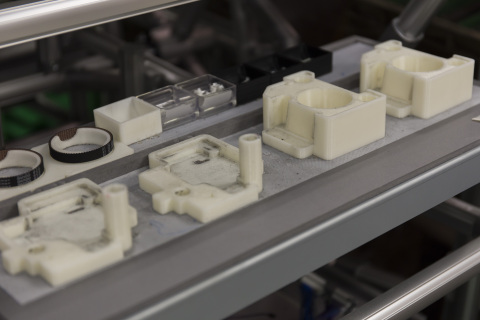
SLS parts 3D printed by Ricoh. Image courtesy of Ricoh.
Ricoh has been steadily increasing its presence in 3D printing since it began distributing products from Stratasys and 3D Systems in 2014. Since then, the firm has developed a selective laser sintering (SLS) line, bioprinting technology, and offered 3D printing services, which has included Impossible Objects’ unique composite additive manufacturing technology. If this deal with IBM goes well, this should help cement the Japanese printer maker in additive healthcare segment, which is one of the fastest growing of all verticals. According to Scott Dunham, Vice President of Research at SmarTech Analysis, the market for medical 3D printing is set to grow to $6.08 billion by 2027.
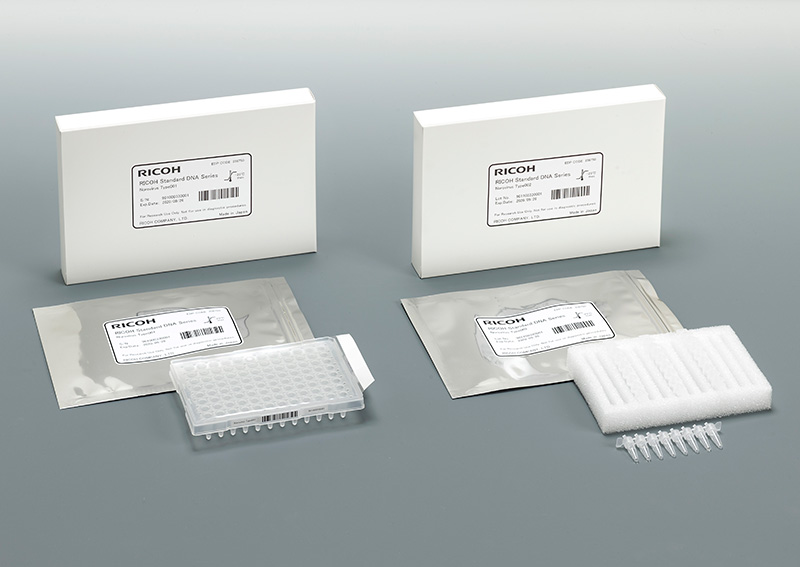
Ricoh Standard DNA Series for Noroviruses (Credit: Ricoh)
Though the research for how patient-specific 3D printed anatomical models can aid in presurgical planning has made the benefits quite clear, few large firms outside of the AM space have pursued it. 3D Systems, Stratasys, and Materialise are among the largest within that space. With IBM and Ricoh in the mix, the technology is likely to spread much more quickly. And as patient-specific models grow in adoption, the bioprinting technologies of Ricoh, 3D Systems, and the like will continue to improve so that, once they’re ready to produce organs, there will already be a substantial infrastructure in place used for anatomical models, surgical guides, and non-bioprinted implants.
Subscribe to Our Email Newsletter
Stay up-to-date on all the latest news from the 3D printing industry and receive information and offers from third party vendors.
Print Services
Upload your 3D Models and get them printed quickly and efficiently.











You May Also Like
Printing Money Episode 38: Additive Manufacturing Deal Analysis with Rajeev Kulkarni
Welcome to Printing Money Episode 38. Rajeev Kulkarni returns for this episode, and we find it hard to believe it’s been nearly two years since his first appearance. In the interim,...
3D Printing News Briefs, May 14, 2026: Project Calls, Reseller, Reconstructive Surgery, & More
We’re starting off today’s 3D Printing News Briefs with two new Project Calls from America Makes. We’ll move on to some more business, with Axtra3D expanding its presence in North...
Fabric8Labs & University of Illinois Collaborate on 3D Printed Copper Cold Plates for Data Centers
Collaboration between emerging technology enterprises and research universities is one of the most consistently winning tactics for any nation building (or rebuilding) an industrial ecosystem. It’s an especially constructive approach...
3D Printing News Briefs: May 7, 2026: Metal Powder Bed Fusion, Surgical Plates, & More
In today’s 3D Printing News Briefs, we’ll start with a strategic collaboration to advance next-generation metal additive manufacturing (AM), before moving on to funding for surgical research. We’ll end with...