Physna Aims to Be Google of 3D Search with Geometry-Based AI


Physna, a midwestern U.S. startup founded in 2015, is trying to do for physical object (3D model) search what Google did for text and image search. Using geometric deep-learning technology and proprietary algorithms, Physna is able to understand, map and compare 3D models and index them based on their geometry. While it has been possible to search for 3D models using text, images, tags and more, this is the first time that searching for physical objects based on their fundamental geometry, their physical ‘DNA’ (hence the name PHYSNA according to its founder Paul Powers), has been made possible and available, with the launch of Thangs.com.
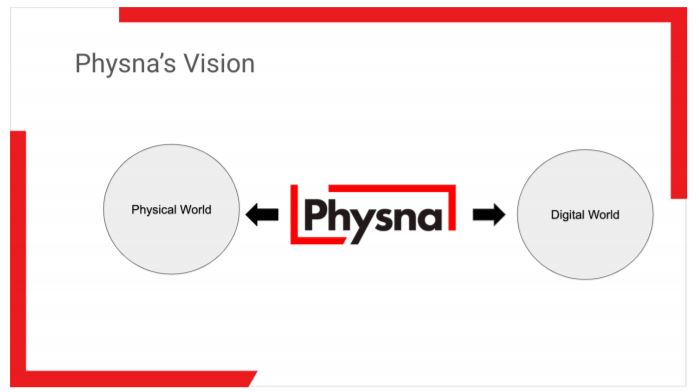
Image Courtesy of Physna and CIMdata Report, March 2020
“We live in a 3D world, but digital technology is two-dimensional,” said Paul Powers, CEO of Physna. “Over 70% of the economy is centered around physical goods, but less than 1% of software is capable of handling 3D data. Physna was founded on the principle that computers should be taught to “think” in 3D, and accurately describe the real, 3D world around us. By enabling 3D models to be treated and analyzed like other code, Physna’s technology bridges the gap between the physical world and digital world of software. By democratizing the ability to design, interact with and analyze 3D models of the world around them, more people will have the ability to create and drive innovation in product design, 3D printing, augmented and virtual reality, gaming, healthcare and beyond.”
By identifying specific geometry ‘clusters’, the proprietary algorithms characterize and categorize 3D models in a unique way – and directly use this to search for other models that may be similar, different, or exact matches. With this approach of decomposing and linking 3D models by their geometry, Physna is able to capture 10,000 times more data points than a traditional scanned model, by codifying 3D model data for use in software applications. It essentially provides a platform for 3D designers and engineers similar to what software engineers have.
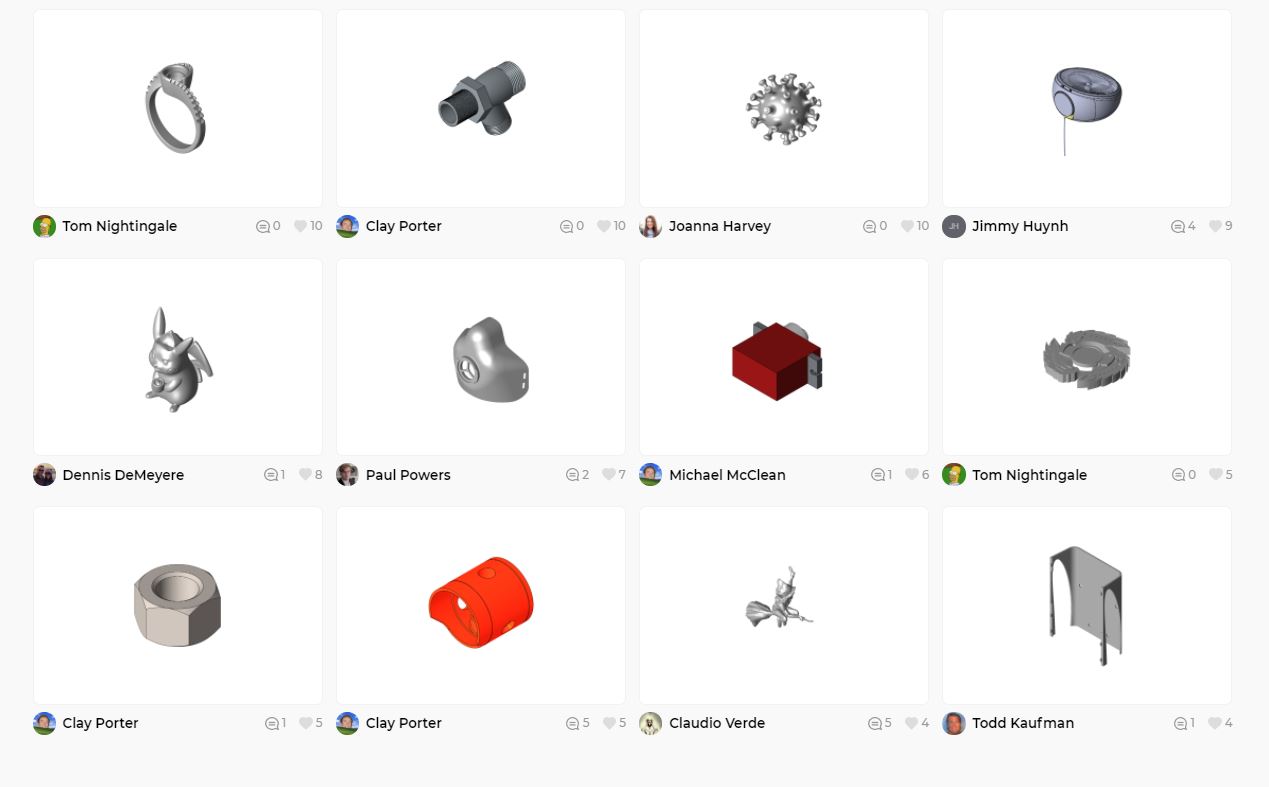
Any CAD geometry can be captured as a volumetric model in Physna, and these figures can be searched for and compared using any defined criteria, including geometric properties, such as thread or hole sizes, industry standards such as ANSI/ISO, company or project, custom standards or machine specifications, among others. What this also enables is capturing model history at the geometry-level, to inform and facilitate user collaboration. With the newly-launched public search engine, Thangs.com, users can access, store, modify or comment on 3D models, just as is possible with GitHub and GoogleDocs.
 Images Courtesy of Physna and Thangs.com
Where the platform technology really makes an impact is in its business offering: an enterprise SaaS solution that already has Fortune 50 companies on its client list. Companies integrate the 3D model metadata with the product lifecycle management, product data management) or enterprise resource planning solutions in-house (similar to what is being done with HOOPS and Proplanner). In turn, these businesses can directly rely on 3D geometry, a universal language, rather than user input or software formats that can vary and increase complexity and traceability in a supply chain.
Components can be identified within assemblies, and so can duplicate or alternate parts that can replace the component in the assembly. The AI-powered deep learning technology’s ability to process, identify and compare 3D metadata also has tremendous potential benefits for cybersecurity—say for protecting IP in design and manufacturing, or tracking and securing modifications across model versions.
Physna would allow companies to streamline and optimize part management; avoiding costs and errors due to duplication of parts or designs, as well as duplication in purchasing, sourcing (same part from multiple suppliers); automate quality control and inspection; and protect product IP while enabling secure collaboration. As one example relevant today,
“If you manufacture products for use during coronavirus and your vendor shuts down, this search engine can show you different vendors from which to procure your parts in place of the other,” said Powers.
In addition, Physna can make predictions, as it grows and informs its knowledge of 3D models, regarding part performance, production, costs, compliance, replacement or identification of spares, supplier selection and more. The level of similarity or difference can be adjusted to any percentage by the user. On Physna’s platform, 3D models are uploaded onto a server using Physna Uploader, and then processed to deconstruct its ‘physical’ DNA by a software module, dubbed Holefinder.
https://www.youtube.com/watch?v=xuAZeto-j-4
So far, Physna has received close to $9 million in funding. The company is headed by Dr Paul Powers, an astrophysicist and lawyer who is CEO of Physna (also named in Forbes 30 under 30 for Manufacturing & Industry in 2018) and has Dennis DeMeyere, previously CTO at Google Cloud, as CTO, with Jason Warner, previously CTO at GitHub, as a board member. The company’s public offering, Thangs.com, is free and the enterprise SaaS offering is a paid subscription service.
By 2021, the company is looking to launch advertising akin to GoogleAds for brands to promote their parts and designs, and in the near future, a geometric cloud for volumetric data. If one is to go by their vision, the applications for such technology are incredible, and providing a next-generation physical object search platform could potentially transform search on the internet just as Google did.
Subscribe to Our Email Newsletter
Stay up-to-date on all the latest news from the 3D printing industry and receive information and offers from third party vendors.
Print Services
Upload your 3D Models and get them printed quickly and efficiently.













You May Also Like
3D Printing Markets Totaled $4.35 Billion in Q1 2026, AM Research Report Shows
According to the latest data from Additive Manufacturing Research (AM Research or AMR), the 3D printing markets totaled $4.35 billion in the first quarter of 2026. The leading industry analyst...
The Next Phase of EB-PBF Will Be Defined by Beam Control
The bar for metal additive manufacturing has moved. Early on, the question was often simple: Can the machine print the material and produce a dense part? That still matters, but...
UAS Additive Strategies Shows How Fast Drone Manufacturing Is Changing
The recent UAS Additive Strategies online event, hosted by 3DPrint.com and Additive Manufacturing Research (AM Research), brought together leaders from across the additive manufacturing (AM) and drone industries to discuss...
The Drone Industry is Showing Where 3D Printing Delivers Real Value, AM Research Report Finds
The rapid rise of drones is creating one of the biggest opportunities for additive manufacturing (AM). Whether they’re used on battlefields, inspecting bridges or crops, or delivering supplies, drones need...