LiDar and its Applications Part 1 – The Rabbit Hole of Applications

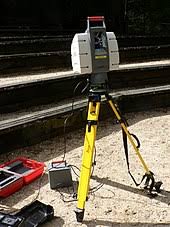
Truly I get too excited talking about technology, and I hope it shows. Although technology is awesome, there always lies a need for it to have a function or application. In a previous article, I briefly discussed cultural heritage and laser scanning. In this follow-up, I will be giving a quick overview of a particular laser scanning technology and some of the various fields it can be used for in.
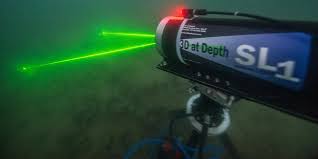
LiDar technology is a surveying method that measures the distance from a target through illumination. Illuminating the target with a laser allows for measurement by reflected light interacting with a sensor. Variations in the time for reflection showcase the distance from the target. Wavelength variations also help determine the size of an object. This data can be used to make a digital 3D representation of an object. LiDar is an acronym for light imaging detection and ranging.

This technology is readily applicable to various fields and here is a large list of its applications:
- Digital Elevation Modelling
- Micro-Topography
- Agriculture
- Forest Planning and Management
- Forest Fire Management
- Precision Forestry
- Tourism and Parks Management
- Environmental Assessment
- Biodiversity for Birds
- Flood Model
- Watershed and Stream Delineation
- Ecology & Land Classification.
- River Survey
- Modelling of the Pollution
- Mapping
- Management of Coastlines
- Transport Planning
- Oil and Gas Exploration
- Mining
- Archeology
- Exploring Quarries and Mineral Areas
- Viewshed Analysis
- Solar Energy Planning
- Right to Light
- Glacier Volume Changes
- Gaming
- Cultural Heritage
- Architecture
- Cellular Network Planning
- Vehicle Automation
- Sewer and Manhole Survey
- Meteorology
- Geology
- Astronomy
- Atmospheric Physics
- Oceanography
- Military
- Police Department Investigation
- Forensic Analysis
- Imaging
- Wind Farming
- Dune Monitoring
- Urban Municipality Tracking
- Railway Infrastructure
- Airport Infrastructure
- Tunnel Surveying
- Tsunami Inundation Modeling
- Integrated Storm Management Planning
LiDar and Metrology
Thanks to LiDar, we are using lasers, optics, and metrology to see our world. I personally love optics as I am a physicist through education, and I reconsider going back to school to learn more optics with the way I have written about metrology and lasers so much on 3DPrint.com. I really do believe that showcasing all of the vast ways we are able to interact with the physical world through sight is fascinating. Even with my own glasses, I have a slightly better perception visually. Using LiDar, allows us to leverage a larger and more robust framework through a visual means of interaction with the environment. I will do my best to go into detail with the most in-depth series I have written to date with 3DPrint.com. I’ll go into each of these particular industries, and show the ways that LiDar technology and 3D digitization are helping to solve problems within these industries. I will also briefly showcase some of complications within LiDar and the industries we have listed above. So sit back and enjoy a new perspective.
Subscribe to Our Email Newsletter
Stay up-to-date on all the latest news from the 3D printing industry and receive information and offers from third party vendors.
Print Services
Upload your 3D Models and get them printed quickly and efficiently.











You May Also Like
Hardware is Dead. Here’s What Actually Wins in Additive Manufacturing.
Hardware is rapidly commoditizing across additive manufacturing. Specifications have converged. Price competition has intensified. Margins have compressed. For companies attempting to scale additive manufacturing beyond prototyping, this shift has profound...
The Real ROI of Personalized 3D Printed Medtech in Oncology
Discover how patient-customized 3D printed devices like Stentra™ significantly reduce high toxicity-related treatment costs and improve workflow efficiencies to handle more cases more effectively overtime. Introduction: The Economic Paradox in...
Why SiC-Dedicated Additive Manufacturing Is Gaining Industrial Relevance
Silicon carbide is not a material problem—it’s a manufacturing one. Silicon carbide (SiC) has become a critical material across semiconductors, aerospace, energy, and defense. Its exceptional thermal stability, chemical resistance,...
Championing a Made-in-America Future for Additive Manufacturing
As the additive manufacturing industry continues its rapid global evolution, one theme has risen to the top of strategic conversations: the importance of strengthening domestic production to support national competitiveness...