APWORKS & Additive Industries Take Metal 3D Printing Collaboration to Next Phase


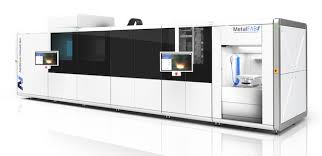
As APWORKS has continued to evolve with their use of 3D printing and additive manufacturing processes, they have the distinction of being the first customer for Additive Industries. APWORKS has also tested the MetalFAB1 Beta system extensively since installing it in March 2016.
 Unveiled in 2015, the MetalFAB1 was created to function as the world’s ‘first truly industrial’ 3D metal printing system featuring an open, scalable system allowing up to 11 modules. Customers engaged in AM production processes are able to print large parts using multiple materials, whether in small or larger-batch production and with the potential to increase capacity as needed—also with the ability to optimize parameters.
 Now, these two dynamic industry partners have announced plans to forge ahead into the next phase of AM through certification and series production. APWORKS is owned solely by Premium Aerotec and is a part of Airbus. Their specialty is 3D printing with metal, with a special focus on design and performance, materials, and production.
“We believe metal additive manufacturing will continue to evolve into a mature fabrication technology and prove to be able to compete with conventional processes like casting, machining and powder metallurgy,” said APWORKS’ CEO, Joachim Zettler. “In the next years we expect this market to continuously and rapidly grow and especially in the aerospace industry, new airplanes and aero-engines will contain a substantial number of parts that are additively manufactured.”
The continued partnership between APWORKS and Additive Industries will take place at the new Additive Industries Process & Application Development Center on the aerospace campus in Filton.
“In the UK, our colleagues headed by our Chief Product Officer Jonathan Meyer will work closely with the Additive Industries Process & Application Development team lead by Dr. Mark Beard, their Global Director for Process & Application Development on further qualification and certification of aerospace parts in nickel-based alloys like Inconel 718,” said Andreas Nick, CTO.
Currently, they are focused on research and development of complex, advanced applications for metal AM in industries that are non-regulated, such as:
- Automotive
- Robotics
- Tooling
- New material and software development
“We are proud to continue our journey from prototyping to series production with APWORKS, our first customer and one of the frontrunners in our industry,” said Daan Kersten, CEO of Additive Industries.
As months and years fly by, 3D printing innovations—now much more in the mainstream—continue to progress further from new rocket engine components to incredible new devices and models in areas like medicine, construction, and even fashion, along with so many different types of hardware, software, and materials. What do you think of this news? Let us know your thoughts! Join the discussion of this and other 3D printing topics at 3DPrintBoard.com.
Subscribe to Our Email Newsletter
Stay up-to-date on all the latest news from the 3D printing industry and receive information and offers from third party vendors.
Print Services
Upload your 3D Models and get them printed quickly and efficiently.













You May Also Like
3D Printing News Briefs, October 21, 2026: Digital Twins, AI CAD Service, AR Smart Glasses, & More
In today’s 3D Printing News Briefs, America Makes announced the winners of its MIAMI Project Call, and AM Europe released a new report. Artec 3D launched its new Artec Twins...
3D Printing News Briefs: October 17, 2026: Affordable Housing, Bone Implants, Rubber Gloves, & More
In this weekend’s 3D Printing News Briefs, we’re starting off with quality assurance in metal additive manufacturing (AM), a new 3D printer, and 3D printed housing. We’ll finish up with...
3D Printing News Briefs, October 14, 2026: Bolus, Aerospace Tooling, Water Filter, & More
In today’s 3D Printing News Briefs, we’re starting with medical news, as Myrava has received FDA 510(k) clearance for its 3D printed bolus. Moving on to aerospace and metals, AML3D...
Can India’s AM Push Help Make it a Viable Supplement to China?
Diversifying manufacturing supply chains to locales outside of China has nothing to do with actually cultivating “substitutes” to the Chinese economy. The real stakes are these: China is an irreplaceable...