Affordable Metal 3D Printing – New Selective Inhibition Sintering (SIS) Process May Be Groundbreaking

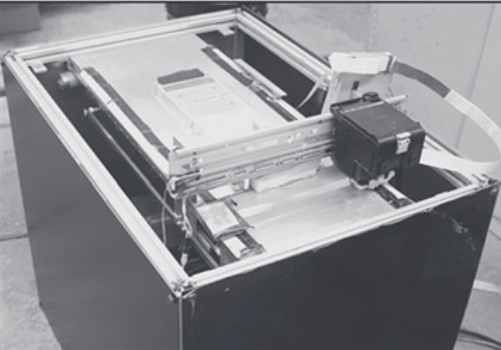
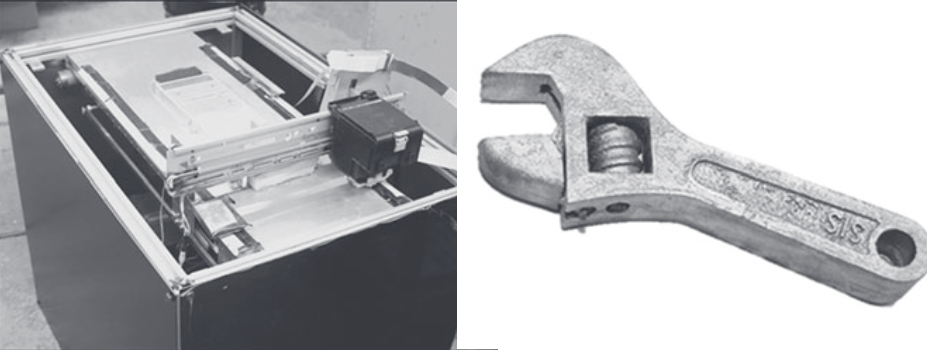
Selective Inhibition Sintering Machine
We have covered several very interesting methods of affordable 3D metal printing in the past. Although none of them has made it to market as of yet, there is little doubt that within the next few years there will be affordable desktop metal 3D printers available, likely several.
Currently, machines capable of printing with various metal alloys run anywhere from $500,000 on up, making them basically untouchable to the general pubic. Those machines which are currently under development usually combine technologies such as welding with Cartesian-based movement systems of a typical FFF/FDM printer to produce objects which are pretty rough, lacking any type of precision.
This may all be about to change thanks to research being conducted on an entirely new method of metal printing called Selective Inhibition Sintering (SIS). Developed by Dr. Behrokh Khoshnevis and his team at the University of Southern California, this new method of printing is basically the inverse of selective laser sintering and other forms of metal printing.
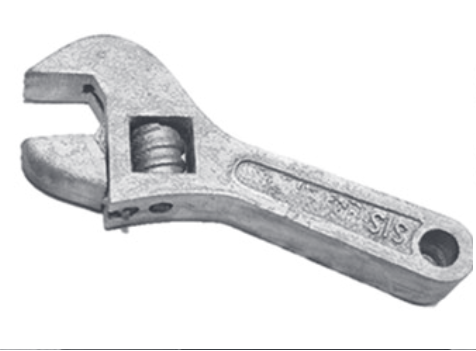
A Wrench Printed with this New Metod
SIS is quite an innovative technique. Instead of relying on lasers to melt a metal alloy layer-by-layer as seen with selective layer sintering, this new process instead relies on metals not melting. Let us explain.
Using this new technique, a machine first lays down a layer of metal powder on a print bed. At this point a commercial piezoelectric printhead deposits a liquid solution which acts an an inhibitor, preventing the metal that it is sprayed upon from melting once it’s heated. The printhead, which is similar to that found in an inkjet printer, only sprays in an area which represents the boundary of the actual print. Where this solution is sprayed, the metal clumps together and hardens. Layer by layer, more metal powder is deposited, and more of the inhibiting agent is sprayed onto the print bed. The boundary of the object slowly is built up, with metal powder inside. It basically becomes a mold filled with pristine metal powder. When complete the entire print is then melted at a high temperature, leaving behind a solid object encased inside the inhibitor shell, which is then easily removed.
Because of the fact that an expensive laser or electron beam generator is not needed, and instead only a sim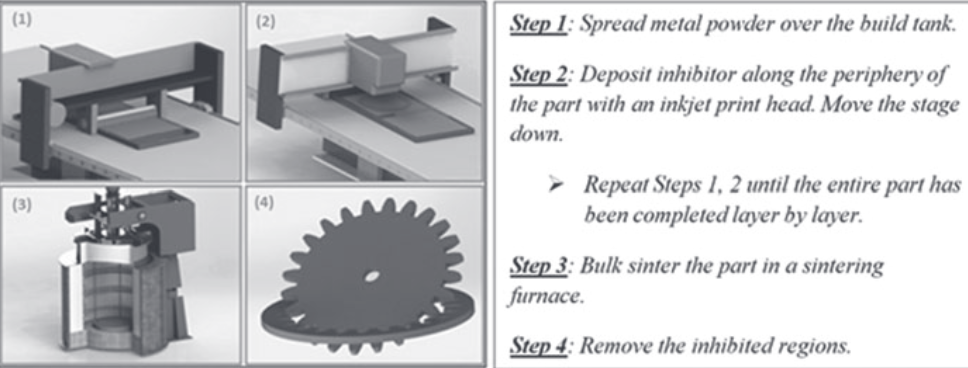 ple printhead capable of spraying a liquid inhibitor is required, such a printer should be a couple of orders of magnitude more affordable. Additionally, prints should be quite a bit faster since only the boundaries of the object need to actually be printed, and not the actual object itself.
The material researchers used as the inhibitor consisted of sucrose which was then dissolved in water with an organic surfactant. The metal powder used by the team was a bronze alloy. Overall, the results have been quite remarkable, although there is still much room for improvement, especially when it comes to the some of the software, as well as hardware used for this process. While there was some shrinkage to the parts, as well as ‘overpenetration’ of the liquid-based inhibitor, these are issues which likely can be resolved as with further research and fine tuning.
This project was funded by the National Science Foundation and was developed within the CRAFT laboratories at the University of Southern California. Let us know your thoughts on the potential of this new technology for possible desktop metal 3D printers. Discuss in the Selective Inhibition Sintering (SIS) forum thread on 3DPB.com.
Subscribe to Our Email Newsletter
Stay up-to-date on all the latest news from the 3D printing industry and receive information and offers from third party vendors.
Print Services
Upload your 3D Models and get them printed quickly and efficiently.











You May Also Like
Is AI the Next Big Shift in AM? RAPID + TCT 2026 Takes a Closer Look
There’s a moment in every technology shift when something clicks. Suddenly, the tools that once felt like experiments start solving real problems. The separate breakthroughs begin to connect. And what...
AM Applications Expected to Reach $110B in 2034, New Report Finds
Additive manufacturing may still be a relatively young industry, but the number of real parts being produced with 3D printing is growing quickly. According to a new report from Additive...
AMR Webinar to Reveal 2025 3D Printing Market Data and What 2026 Will Really Look Like
On March 24, 2026, Additive Manufacturing Research (AM Research) will host a free webinar that many in the industry won’t want to miss. Titled “3DP/AM Market Insights: 2025 Review and...
AMS 2026 in Photos: Snow, Songs, and Serious Conversations
AMS 2026 may have been altered by flight delays and snow-covered streets, but once you made it, the energy felt anything but frozen. This year’s Additive Manufacturing Strategies, which wrapped...