BEEVERYCREATIVE Continues Work with ESA: New ISS 3D Printer to be Developed


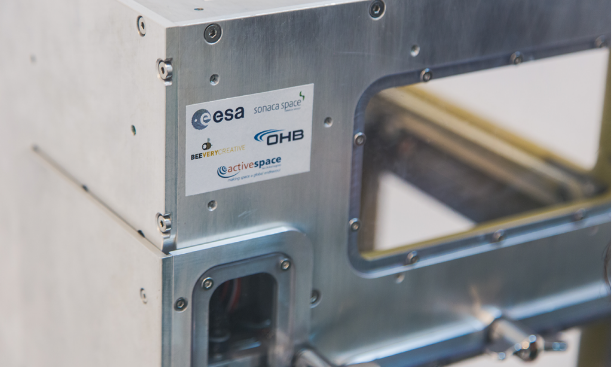
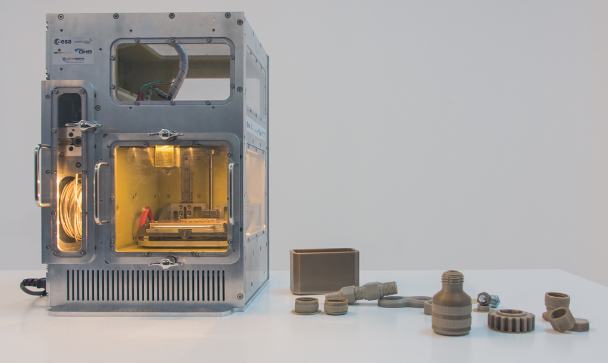
BEEVERYCREATIVE first established an outer space connection in 2016, when the Portuguese company was asked by the European Space Agency (ESA) to develop a breadboard, or prototype, 3D printer for the International Space Station. Project Manufacturing of Experimental Layer Technology, or MELT, was successfully delivered to the ISS last May as a fully functional 3D printer prototype capable of 3D printing in microgravity conditions and utilizing engineering polymers with high end mechanical and thermal properties.
 Now BEEVERYCREATIVE has been recruited by the ESA again. Project Imperial, like Project MELT, will be carried out by an international consortium of organizations. It will be led by OHB System AG, one of Europe’s three leading space companies. OHB System has been heavily involved in space manufacturing over the last three years, having participated in Project MELT as well as a study called URBAN, which involved the conception of a lunar base using 3D printing technologies.
The goal of Project Imperial is to design, develop and test a fully functioning 3D printer model that can perform under the requirements of the International Space Station. The printer will use engineering thermoplastics and alleviate build volume constraints. In order to demonstrate the 3D printer’s functionality, several parts will need to be 3D printed and tested. The printed parts, according to BEEVERYCREATIVE, will demonstrate the capability of in-space manufacturing to enable new maintenance and life support strategies for human space flight.
“This new project is a validation of our ability to develop technology in an area, aerospace, which will certainly have a great impact on our future lives,” said Mario Angelo, CTO of BEEVERYCREATIVE.
Also involved in the project will be German space company Sonaca Space GmbH and Ireland’s Athlone Institute of Technology.
Project Imperial is the latest endeavor to advance in-space 3D printing, a long-term project with many participants that began with the first 3D printer delivered to the ISS in 2014. A lot of the news surrounding 3D printing in space relates to that 3D printer and its follow-up, the Additive Manufacturing Facility, manufactured by Made In Space and sponsored by NASA. While NASA grabs many of the headlines, however, the ESA is plenty busy with the development of 3D printers capable of performing in zero gravity, as demonstrated by Project MELT and now Project Imperial.
Regardless of who is building the 3D printers, however, the fact is that in-space manufacturing is thriving, with 3D printing becoming the go-to technology for creating spare parts, medical supplies, and other needed items for astronauts on board the ISS. In-space 3D printing has come a long way since that first 3D printer was delivered, with ISS printers now capable of printing with engineering-grade materials and growing more advanced with every iteration.
Discuss this and other 3D printing topics at 3DPrintBoard.com or share your thoughts below.
[Images: BEEVERYCREATIVE]
Subscribe to Our Email Newsletter
Stay up-to-date on all the latest news from the 3D printing industry and receive information and offers from third party vendors.
Print Services
Upload your 3D Models and get them printed quickly and efficiently.












You May Also Like
Additive Economics 101, Part 1: Betwixt Rolex and Ryanair
Let’s look at what matters when we make things that matter. What considerations are there, what is important, what affects cost? Look at the levers in laser powder bed fusion,...
Can Metal Recycling Help Scale Additive Manufacturing? Continuum and AM Research White Paper Takes a Look
Metal additive manufacturing (AM) is growing, but making more parts also means using more metal powder. That raises a simple question: where will all that material come from? A new...
Chinese 3D Printer OEM Targeting Market for Tiny Metal Parts Closes Pre-Series A Round
Earlier in the year, a consortium that includes China’s BLT announced a major breakthrough in using a high-precision, liquid metal UV 3D printing process to upgrade the hinge for Chinese...
3D Printing News Briefs, August 8, 2026: Seawall Funding, Defense Capabilities, Supports, & More
We’re starting with business in this weekend’s 3D Printing News Briefs, then moving on to defense. We’ll move on to young 3D printing entrepreneurs, and finish with some research out...