Bay Area Advanced Manufacturing (BAAM) Hub Launches With 12 Companies Working With 3D Printing


 If you have attended any of the various 3D printing expos or shows, or if you follow the industry as much as we do here at 3DPrint.com, then you know that there are literally dozens of startups entering the space each and every month. It’s reminiscent of the flurry of activity in the late 90’s when the internet was first emerging.
Just like back in the 90’s, many companies will succeed, while many more will likely fail, fading away as new ideas and business models supplant the old. Also, like the internet boom of the late 90’s, the 3D print industry has quite the showing in the Silicon Valley area. One San Leandro-based company, Type A Machines, is trying to ensure themselves and others within the Bay area, success. Today, they’ve officially announced the launching of the Bay Area Advanced Manufacturing (BAAM) hub.
The hub, which will be made up of 12 non-competing member companies, which include many big names you have likely heard of within the industry, will seek to make it easier to go from ‘idea to object’ as quickly as possible. By working in unison, these companies can use a thriving ecosystem of 3D printers, scanners, software, materials, and other services to test, create, and prototype products within this innovation cluster.
“In the areas of advanced manufacturing, 3D printing, and regional economic growth, the East Bay continues to lead the way,” said Congresswoman Barbara Lee. “Today’s announcement of the formation of the Bay Area Advanced Manufacturing is another great example of that leadership and investment in business-to-business opportunities that create good-paying manufacturing jobs here in the East Bay.”
BAAM, the brainchild of Espen Sivertsen, CEO of Type A Machines, will allow member companies to create a seamless user experience between many of the products and services offered by each company. They will be able to share knowledge, connections and market insight and advice as well as help each other out with various projects.
“BAAM is dedicated to developing new manufacturing jobs as well as new manufacturing technologies,” said Espen Sivertsen, CEO of Type A Machines. “We are honored that Congresswoman Barbara Lee and Congressman Steny Hoyer could be present the day BAAM was launched officially.”
Members include all of the following companies: Type A Machines, Mind 2 Matter, OmNom, Fleet edu, Dreamforge, SoundFit, MadeSolid, Falcon Imaging, HoneyPoint 3D, PhaseSpace, Cad Crowd and Pinshape. For companies looking to join the BAAM hub, membership requires that they are working in the area of 3D printing, are not a competitor of any current member, and are willing to work together with other members to integrate user experiences and share knowledge.
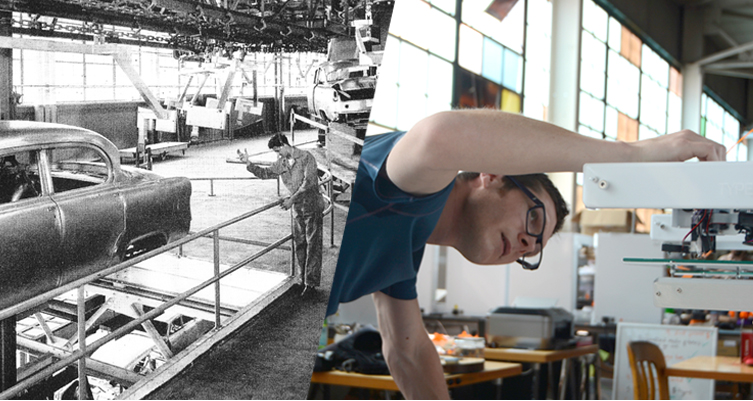
More details on the hub, which will be located at an 18 acre former Chrysler plant, known as ‘The Gate’, can be found here. Let us know your thoughts on this innovation hub, and what it could mean for the advancement of the industry in the BAAM hub forum thread on 3DPB.com.
Subscribe to Our Email Newsletter
Stay up-to-date on all the latest news from the 3D printing industry and receive information and offers from third party vendors.
Print Services
Upload your 3D Models and get them printed quickly and efficiently.













You May Also Like
Phillips Federal Participates in Marine Corps Exercise
Phillips Federal will participate in a Marine Corps exercise that will use several additive manufacturing technologies. The 1st Maintenance Battalion, 1st Marine Logistics Group, I Marine Expeditionary Force (IMEF), will...
Ceramics 3D Printing at Ceramitec 2026
Ceramitec is a key event for the ceramics industry. Held in the lovely city of Munich, it is the leading global event for the ceramics community. With around 13,000 participants...
AM Forum Berlin 2026: Tough Love From BMW’s Timo
We’re once again in the lovely city of Berlin, at the absolutely immense Estrel Center. The congress center, a musical and theater venue, towers over the easternmost reaches of the...
Printing Money Episode 35: Notable VC and M&A Deals, with Arno Held and Alex Kingsbury
Welcome to Printing Money Episode 35 and let us be the last to wish you a happy new year. For this episode Danny is joined by Arno Held (Managing Partner,...