Filasoy: Green, Soy Based 3D Printer Filament Created By Purdue Students


The adoption of 3D printers is increasing at a rapid rate among industry and hobbyists. As the prices drop further, printing material will become an ever more important aspect of a purchase. With thousands of new 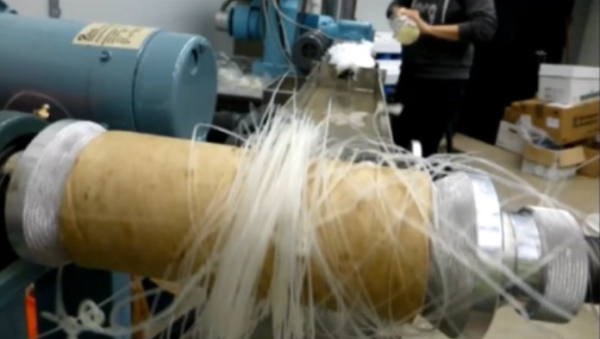 printers being sold each month, there is an increasing demand for petroleum-based plastic filament. Right now it’s not having a major environmental impact, but a few years down the road, when 3D printing becomes even more common, such filaments will begin taking a toll on our precious environment.
This has led several companies, as well as researchers, and smaller groups to look into alternate, greener filaments. One of these groups, three students from Purdue University, motivated by an annual soybean innovation contest, came up with an amazing solution.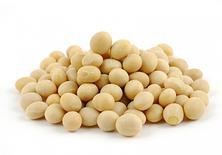
Nicole Raley Devlin of Rockville, Md., a doctoral student in chemical engineering; Carmen Valverde-Paniagua of Chihuahua, Mexico, a senior majoring in mechanical engineering, and Yanssen Tandy of Jarkarta, Indonesia, a senior student in chemical engineering, developed a new 3D printer filament, called Filasoy, which is composed of approximately 20-25% soy-based materials.
The new filament has several environmental, and functional benefits over a typical PLA filament. First off, it is made from a renewable resource, soy beans, which drive a large part of the Indiana economy, instead of petroleum based materials. Secondly, the new Filasoy filament has a much lower melting point, than that of traditional filament, meaning it requires less energy to 3d print an object. The soy based filament also reduces brittleness within printed objects, while maintaining all of the good qualities of traditional PLA filaments. Lastly, soy is known for its anti-microbia properties, meaning that it is great for printing out toys for children, or objects which will come in contact with many germs.
The three student team ended up winning the grand prize of $20,000, at the Student Soybean Product Innovation Contest, in which there were 15 teams competing.
“For 20 years, Indiana soybean farmers have supported this competition in the College of Agriculture as a way to elevate our organization, Purdue and Indiana as the center of food and ag innovation,” said Jane Ade Stevens, CEO of the Indiana Soybean Alliance, sponsor of the competition. “We are excited to see 15 student teams complete the competition this year and hope that their experience leads them to consider food and agricultural sciences as their future career.”
Feel free to discuss this new filament at the Filasoy discussion thread. Further details on Filasoy can be found at their website. Check out the video about the new filament below:
Subscribe to Our Email Newsletter
Stay up-to-date on all the latest news from the 3D printing industry and receive information and offers from third party vendors.
Print Services
Upload your 3D Models and get them printed quickly and efficiently.













You May Also Like
Kalogon Wants to Patent Its Variable Density Wheelchair Cushion
Kalogon has brought the Verro to market. This is a 3D printed wheelchair cushion, made with vat polymerization technology. Using a variable density lattice, it hopes to give wheelchair users...
Pogačar & Fairlight Cycles Show Us Low Cost 3D Printed Components for Bikes
There has been a lot going on in 3D printing for bicycles over the years. The most successful implementation so far is in bicycle seats. Carbon 3D printed seats are...
3DPOD 295: From Product to Design at Carbon, with Kristi Eveland Smith
Kristi Eveland Smith started as a competitive soccer player before moving into consulting, operations, and 3D printing. She’s now Vice President, Design to Production at Carbon 3D and has been...
AMS 2026 in Photos: Snow, Songs, and Serious Conversations
AMS 2026 may have been altered by flight delays and snow-covered streets, but once you made it, the energy felt anything but frozen. This year’s Additive Manufacturing Strategies, which wrapped...