Prusa Introduces Optimized Slic3r Prusa Edition Software

 There’s some good news for Prusa fans emerging this week! That likely comes as little surprise, as the open-source RepRap 3D printer company has been inventing and upgrading like crazy lately. The big news this year was the release of the new Original Prusa i3 MK2, followed by a mess of upgrades and new features only a few months later. Now founder Josef Průša has announced another exciting new release, this time on the software side: a customized version of Slic3r for Prusa 3D printers.
Slic3r Prusa Edition is, according to Průša, “perfectly tweaked for the MK2.”
“The main reason for our push for developing the Slic3r further is, to remove the need to fiddle with many slicing engines to get great prints,” he adds. “Many veteran MK2 operators now even comment that they would not buy Simplify3D again after playing with the updated version for few weeks. This motivates us to go even faster.”
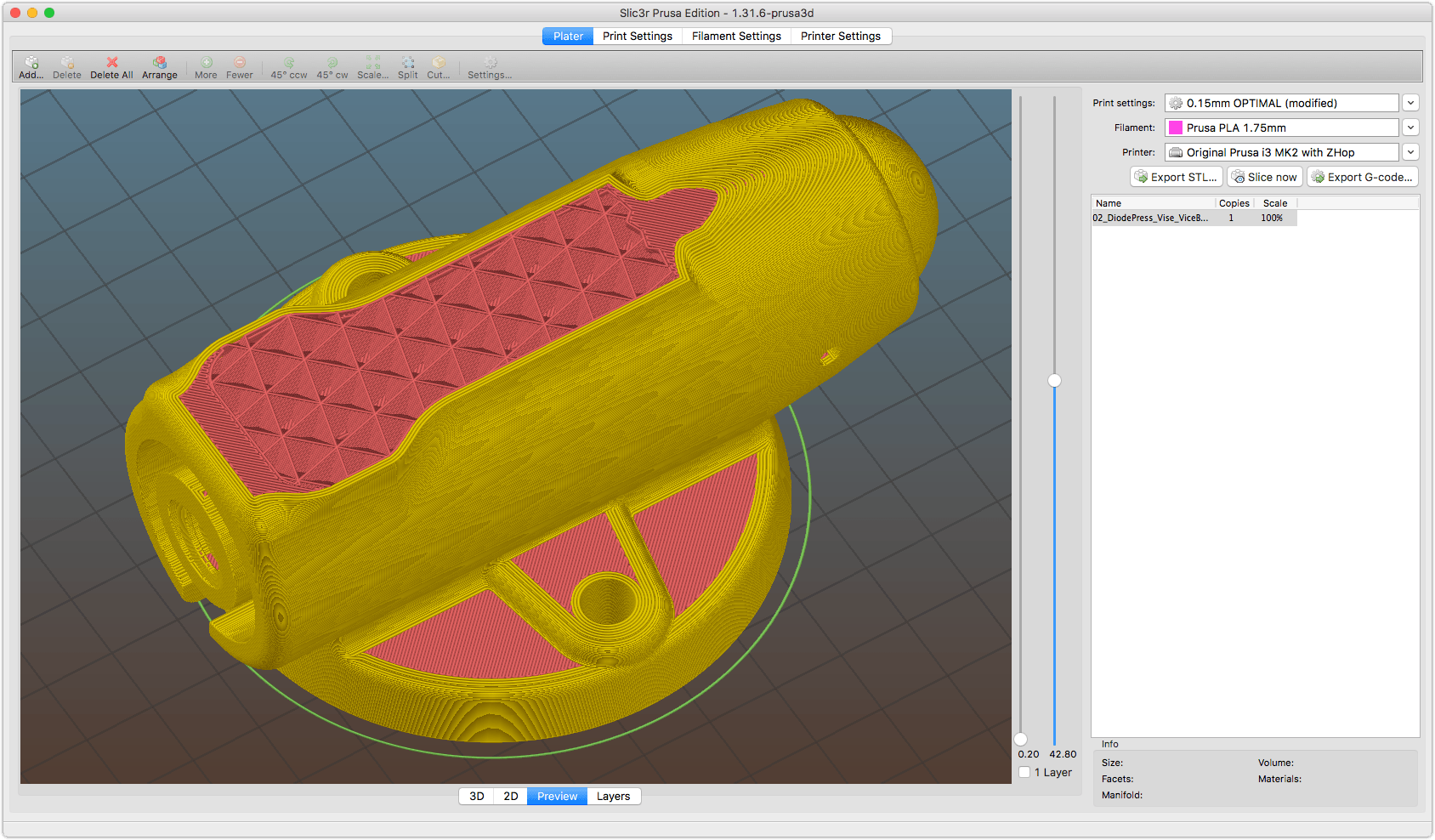
Slic3r Prusa Edition contains several features that haven’t yet been implemented in the original Slic3r. The major new improvements include the following:
- Cubic Infill, a new default infill option that makes printed objects strong in all directions. Ideal for rigid mechanical parts, cubic infill requires less time and material than typical infill options, without sacrificing strength. In the near future, infill will also be rewritten into C++11, speeding things up even further.
- Surface improvements, namely a new “ensure wall thickness” option that eliminates holes between the perimeters on a slanted surface. Slic3r Prusa Edition lays down the needed supports for perimeters, ensuring a smooth surface as you can see in the image below:
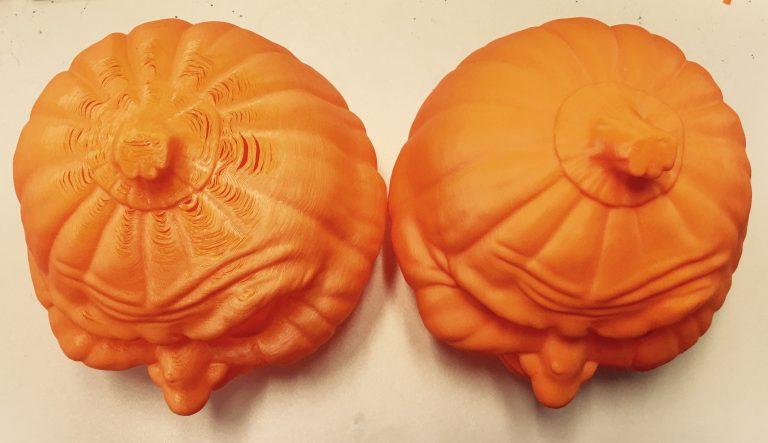
The pumpkin on the left was printed with the old edition of Slic3r, while the one on the right was printed with Slic3r Prusa Edition
- Improved supports, which have always been an issue of frustration with Slic3r. While the supports in Slic3r Prusa Edition haven’t been perfected yet, they are, according to Průša, at about 90% of the success rate of Simplify3D. While they are a bit slow, as they haven’t yet been ported to C++, the team is continuing to improve them further, including the development of soluble supports for the multi-material upgrade coming soon to the MK2.
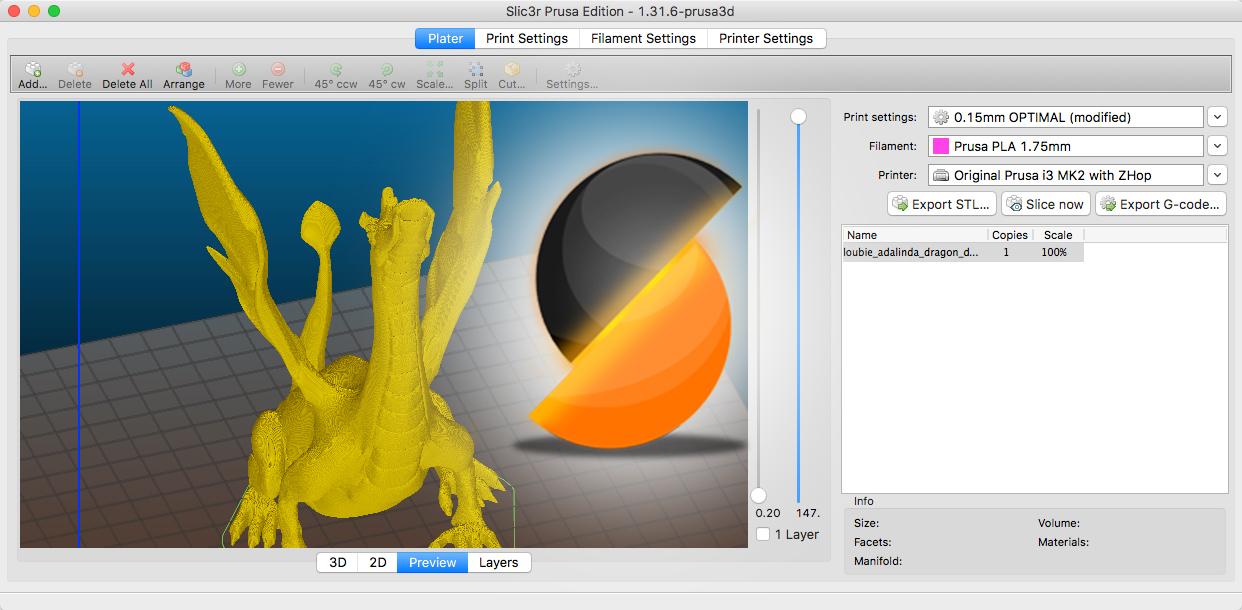
- An improved user interface includes a new slider in the g-code preview window that allows the user to see only one section or one layer of a sliced object. There’s also a “slice now” button, which generates the model without saving it. Background processing will be turned off to make the interface quicker.
Additional improvements include several bug fixes, support for AMF format, and a few experimental features such as an extrusion simulator and pressure equalizer. You can read more details, download the new software and offer feedback here as Prusa continues to tweak and improve the program. Expect more news to be coming from Prusa soon, too – the company is also developing PrusaControl, which will eventually become the main user interface. Prusa is hoping to have PrusaControl available as a beta release by Christmas. Discuss in the Prusa forum at 3DPB.com.
[Source/Images: Prusa Printers]
Subscribe to Our Email Newsletter
Stay up-to-date on all the latest news from the 3D printing industry and receive information and offers from third party vendors.
Print Services
Upload your 3D Models and get them printed quickly and efficiently.













You May Also Like
Creality K3 Opens for Pre-Order at $849, Advancing Multi-Color 3D Printing
Creality has officially opened pre-orders for the Creality K3, its latest flagship K Series 3D printer, starting at $849 in the United States. Recognized as an IFA Innovation Awards 2026...
Beyond the Printer: HP and DyeMansion Tackle the Future of Prosthetics
Making a custom orthotic or prosthetic device involves much more than producing the final part. Patients need to be measured, devices must be designed to fit their bodies, and finished...
3D Printing News Briefs, October 14, 2026: Bolus, Aerospace Tooling, Water Filter, & More
In today’s 3D Printing News Briefs, we’re starting with medical news, as Myrava has received FDA 510(k) clearance for its 3D printed bolus. Moving on to aerospace and metals, AML3D...
Can India’s AM Push Help Make it a Viable Supplement to China?
Diversifying manufacturing supply chains to locales outside of China has nothing to do with actually cultivating “substitutes” to the Chinese economy. The real stakes are these: China is an irreplaceable...