A Preview of Artec 3D’s Studio 11 Software for the Masses at RAPID 2016

 I know I’ve said it a few times already in the past few days, but I’ll say it again: I met too many interesting people last week at RAPID 2016. I spoke with representatives from well-known, well-established companies who shared their thoughts on the future and the secrets of their success thus far, as well as new companies for whom, in many cases, RAPID 2016 was the public debut of their flagship products. Then there were the established companies teasing new products, soon to be released to the general public, such as Artec 3D.
We’ve been closely following the 3D scanning company for a while, as not only have they been consistent in releasing new scanners and software, but they frequently use their own technology to do some fascinating things: from creating 3D printable online databases of endangered species to preserving historical and religious artifacts. Their scanners and software have been reliable and popular, and at RAPID I got a first look at their next release, which should prove to be of great interest not only to their established customer base but also to those who are new to 3D technology altogether.
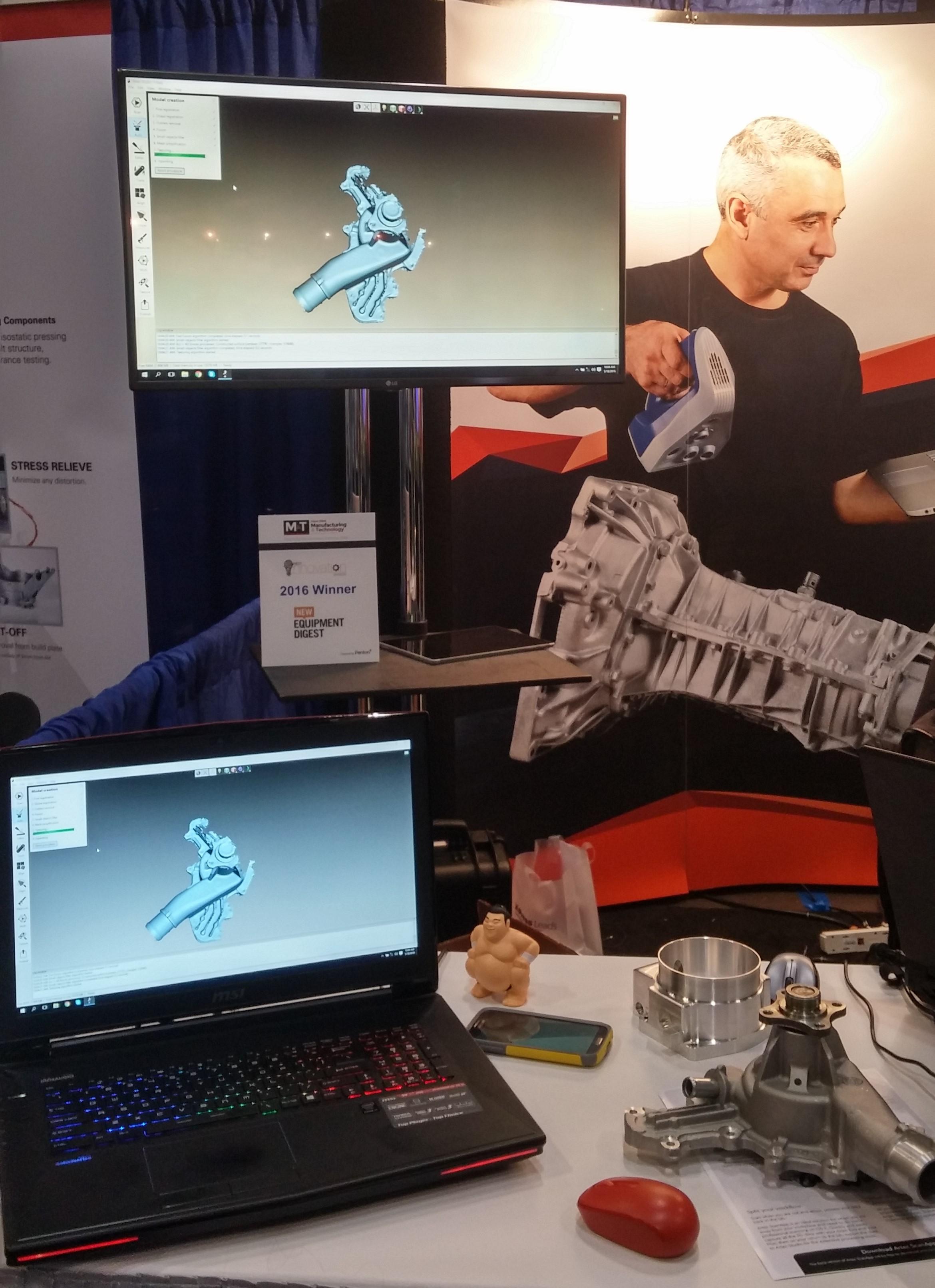 Last year Artec 3D released Studio 10, a software suite that both simplified scanning for novices and gave experienced users more options and more control over their work. Last Wednesday, I got a first look at the next iteration of Artec’s software: Studio 11, which is currently in beta but is expected to be released in full by the end of the month. I touched on the new software very briefly a few days ago, but I thought it was worth exploring in more depth, as Studio 11 looks to be a big step in making 3D scanning easy and accessible to everyone.
3D scanning, of course, has been getting more and more accessible and user-friendly to novices lately, whereas not long ago it was mostly the domain of professionals in the fields of archaeology, museum curation, and medicine. Scanners are getting more affordable and mobile, and many manufacturers have been focusing more on simplicity and ease of use. Artec Studio 11 is about as simple and easy as it gets.
I have to come clean and admit that I don’t have a great deal of experience personally using 3D scanning software, but as I watched a demonstration of Studio 11 at Artec’s booth, I thought, “Well, I could do that with no problem.” An Artec Eva scanner was used to scan a large part which was then directly imported to a laptop which sat beside it. I’d describe the following process in detail, but there’s not much to say – and that’s a good thing. Within just a couple minutes, the software had removed the base around the scanned object, automatically aligned it, textured it and presented a final, sharp, accurate image.
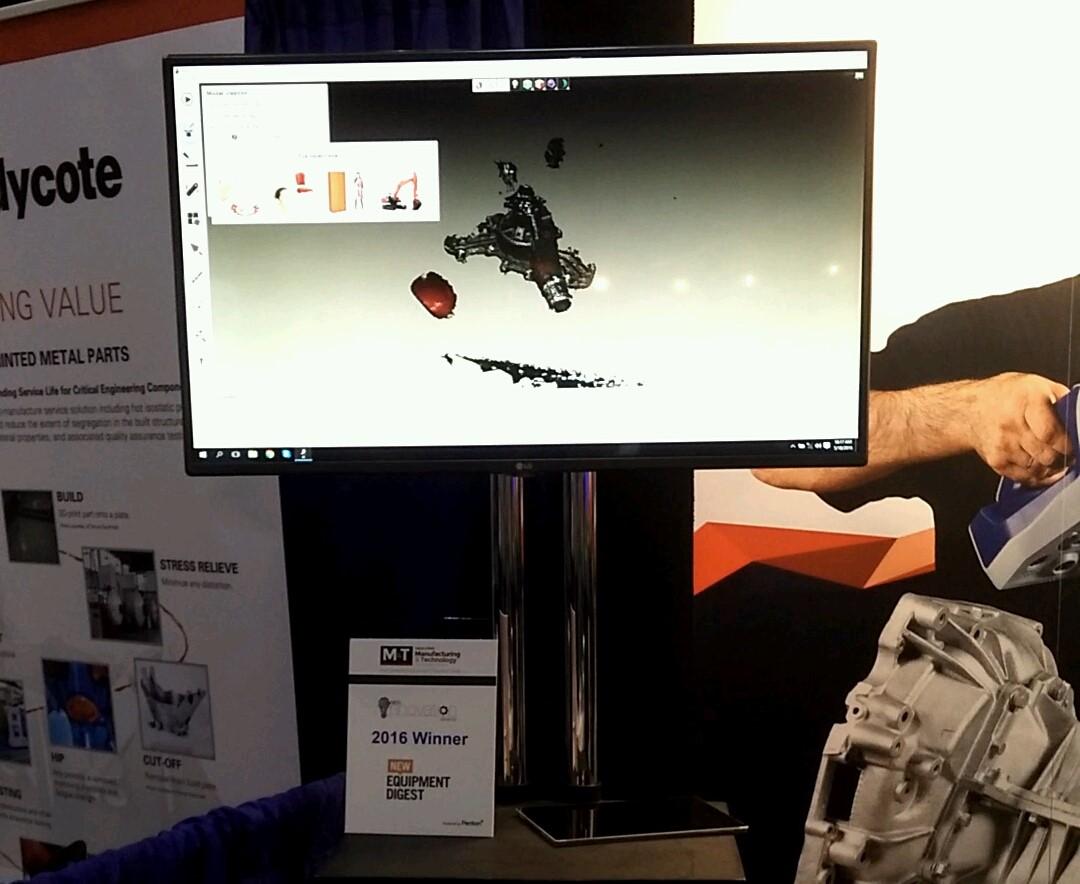 It’s not 100% hands-off; the user does have to answer a few questions and select certain options, but the software will walk you through those options if you have no idea what you’re doing. It’s not only geared towards newbies, though – the software has plenty of options and specialized tools for advanced users, who can save a lot of time by automating the basic steps before taking control over more advanced options. According to CEO Artyom Yukhin, who showed me the new software, Artec 3D tested Studio 11 with two focus groups. One was made up of complete novices, and the other of experienced users; both proclaimed themselves satisfied.
Studio 11 also allows for scanned images to be imported and exported directly to and from CAD software programs, including SOLIDWORKS and DesignX, with many more programs to be added in the future. For all of its automated ease, however, Studio 11 is only the beginning for Artec 3D and their quest to simplify scanning. Yukhin compared Studio 11, which he describes as a “breakthrough,” to a car with an autopilot feature, while the next step is a completely self-driven vehicle. Discuss further in the Artec 3D at RAPID 2016 forum over at 3DPB.com.
[All photos taken on-site at RAPID by Clare Scott for 3DPrint.com]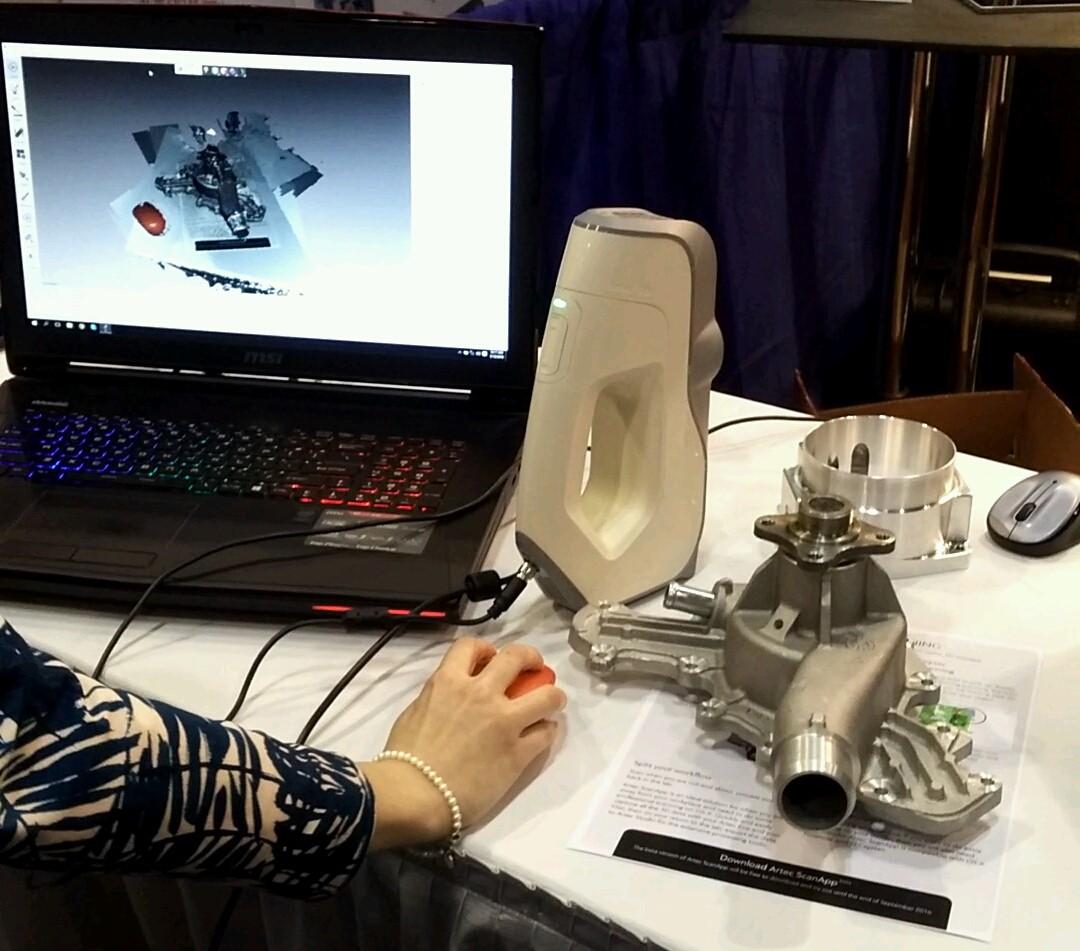
Subscribe to Our Email Newsletter
Stay up-to-date on all the latest news from the 3D printing industry and receive information and offers from third party vendors.
Print Services
Upload your 3D Models and get them printed quickly and efficiently.













You May Also Like
UniFormation S10 Heads to Kickstarter with an Integrated Resin Printing and Post-Processing System
UniFormation will launch its S10 desktop resin 3D printer on Kickstarter on October 22, 2026, with pledges starting at $999. The S10 integrates printing, washing, and drying, allowing a print...
Creality Goes Pro with Sermoon P1S 3D Scanner
From making millions of value-engineered Prusa clones, Creality really has aggressively pivoted to more complex machines. The company has made strides forward in software, and the Ender’s of yore is...
Stratasys Showcases 3D Printed Automotive Applications & New Printer at IMTS 2026
Just ahead of last week’s International Manufacturing Technology Show (IMTS) in Chicago, Stratasys launched the F870, a new large-format, production-grade FDM 3D printing platform designed to drive industrial manufacturing at...
Creality Launches SPARKX i8 on Indiegogo, Bringing Fastest, No-Purge-Waste Printing
Creality announces the launch of the multi-color 3D printer SPARKX i8 on Indiegogo, at an early-bird price of $309 (MSRP $399) starting from Sept. 21. Designed for ultimate user experience,...