Graphene 3D Lab Introduces a New Graphene Foam That Can Absorb Up to 8,000% of Its Weight in Oil

 While graphene is still being studied by researchers and scientists, it is likely to be one of the most important elements of the future. At more than 100 times stronger than steel, it is one of the toughest materials ever discovered. Because it is an excellent conductor of heat and electricity, as well as being nearly transparent, graphene likely has dozens of next-generation applications, including touchscreens, sensors, batteries, filtration systems and solar power cells. While the material was theorized as early as 1962 it wasn’t isolated in a laboratory setting until 2004. It was initially difficult to produce, and expensive, but it has gotten almost 100 times less expensive to produce since it was first discovered, and new, cutting edge applications are being developed regularly.

Conductive graphene filament from Graphene 3D Lab.
One of the first companies to begin exploring consumer applications for graphene was New York-based Graphene 3D Lab, which has been using it to develop advanced 3D printing materials. Graphene 3D Lab currently offers more than 100 graphene and graphene-related products, including conductive 3D printing filament, magnetic 3D printing filament and a raw, powder form of the material. Their products are available on the Graphene Supermarket, where they sell to some of the largest companies in the world, including NASA, Ford, GE, Apple and IBM. They have also developed a proprietary, energy-efficient process of manufacturing, sorting and classifying graphene nanoparticles at some of the lowest costs available in today’s marketplace.
This week Graphene 3D Lab is announcing that they have developed a brand new, innovative graphene material that could revolutionize the safe and efficient cleanup of chemical and oil spills. The company recently built a new production reactor that is capable of producing a five-fold increase of Graphene Oxide and Reduced Graphene Oxide, which they used to produce foam variations with excellent oil absorption properties. Graphene Oxide Foam and Reduced Graphene Oxide Foam are a class of ultralight materials that have a density of about 20 mg/cm3, which is only about 17 times heavier than air. As a comparison, water is about 784 times denser than air.
The new graphene foam materials can absorb an astonishing 3,500% to 8,000% of their own weight in organic solvents or oils, all while being completely unaffected by water. Hollywood may be content turning the Deepwater Horizon disaster into a terrible disaster-porn movie, but oil spills are horribly destructive ecological disasters that will poison the environment for decades. One of the reasons that oils spills are so devastating is the inability to remove the oil from water, forcing the local environment to disperse and absorb it. The high oil absorption capacity of the new porous graphene solid state foams could be used to enable fast and efficient oil spill clean-ups, possibly even being deployed before the spill even contacts the water. High-tech solutions are extremely sought-after for the cleaning up of oil spills.
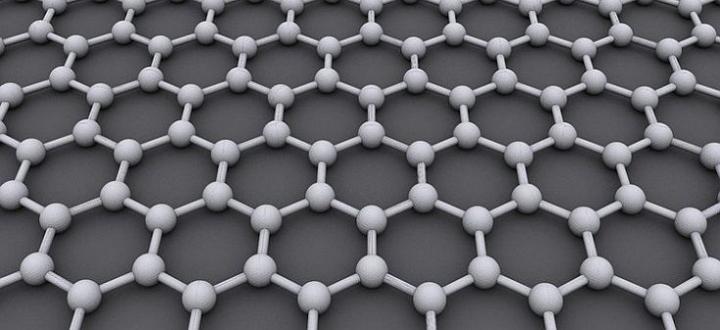
A single atom-thick layer of graphene.
While a safer alternative to transporting billions of gallons of oil all over the world is switching to cleaner, alternative energy sources, until that happens the world will still be consuming three billion gallons of oil a day. With a habit that large, oil spills are a going to be a constant reality, but with foams like those developed by Graphene Lab 3D, managing those spills is about to get safer and easier. Additionally, the foams have been shown to have potential applications in next generation energy storage devices, chemical catalysts and ultrasensitive sensors. These amazing new graphene foams are now available for purchase on the Graphene Supermarket. Discuss further in the Graphene Lab 3D Materials Clean Up Oil Spills forum over at 3DPB.com.
Subscribe to Our Email Newsletter
Stay up-to-date on all the latest news from the 3D printing industry and receive information and offers from third party vendors.
Print Services
Upload your 3D Models and get them printed quickly and efficiently.











You May Also Like
3D Printing Waste Into Function: A Look Inside the Air Force’s Container Project with re:3D
A group of airmen at an Air Force Special Operations Command wing recently tested a new type of 3D printing setup, one that fits into a shipping container, operates off-grid,...
Meltio Gains Credibility and Efficiency: Real Industrial Parts Reinforce its AM Solutions
Meltio‘s metal AM solutions are helping industries around the world to efficiently manufacture and repair metal parts in 3D, consolidating their credibility in the market. Compared to conventional manufacturing methods,...
Chitu Systems and the FilaPartner E1: “Moisture Control for Better Prints”
Moisture may not sound like a big deal, but in FDM 3D printing, it can ruin a print. Filaments absorb water from the air, and once that moisture hits the...
This Swiss Ice Cream Shop Was 3D Printed from Recycled Plastic—and It Looks Amazing
In the Alpine village of Mulegns, Switzerland, a new experimental ice cream shop looks like something out of a dream. From the outside, it resembles a classic wooden barn. But...