
More Ultimaker Upgrades: Cura 2.1 is Now in Open Beta

 It hasn’t yet been quite a year since Ultimaker announced that they had completely reworked their popular Cura software. In the spirit of constant improvement and advancement, however, the company has now declared that they’ve redone the 3D software again, and it’s better than ever. Cura 2.1 is now available in open beta, and it’s full of new and improved features for beginners and experienced users alike.
Like last time, Ultimaker states that Cura has been “completely reengineered from the ground up.” Advanced users will be pleased to know that there are now more than 140 new customizable settings, and a new, more intuitive user interface makes the software even more beginner-friendly than before. The redesign makes for “an even more seamless integration between hardware, software and materials” and primes it for future developments. Users can look forward to expanded line pattern and line width settings, more specialized supports, and more.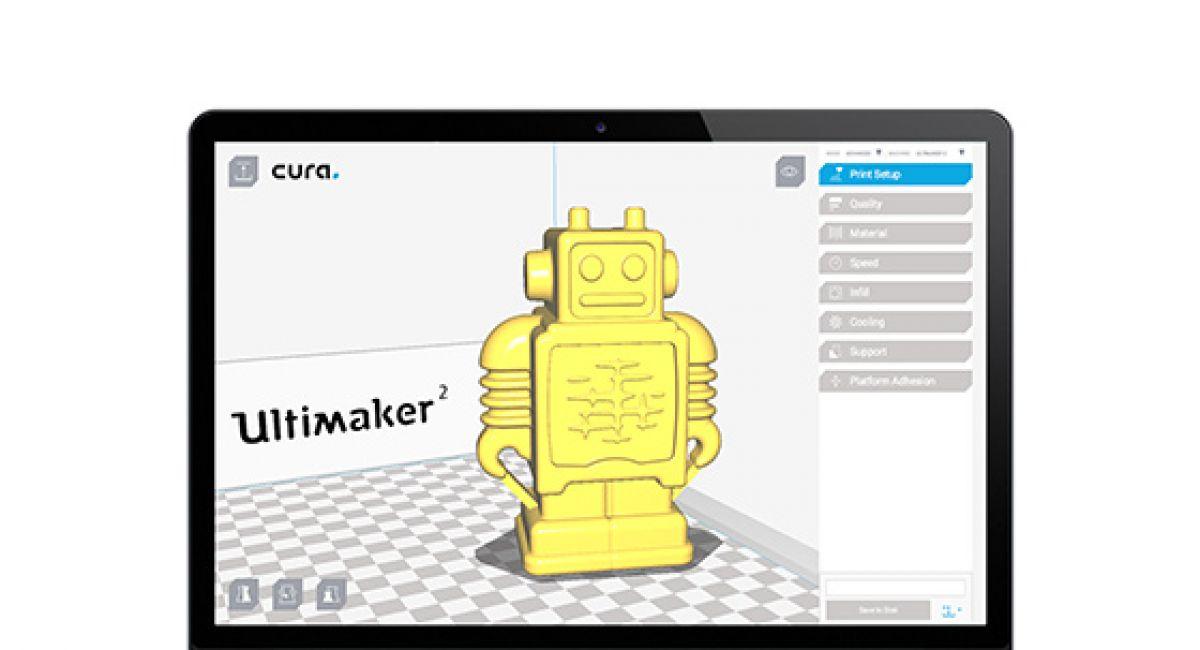
- The ability to select and manipulate multiple objects at one time or to group them together
- An undo/redo feature
- A new GUI that enables custom profiles to easily load, directly from Cura
- 3MF file loading support
- An intuitive new feature that allows you to move objects below the build plate to correct a rough bottom or print only part of an object. Ultimaker notes that this option was previously available as a setting, but that the “implementation greatly differs” from the older feature.
- An optimized 64-bit version for Windows that allows the loading of larger model files
- Automatic calculations of optimal settings for number of lines or layers
- Ability to select different profiles for individual objects and override individual settings in advanced mode
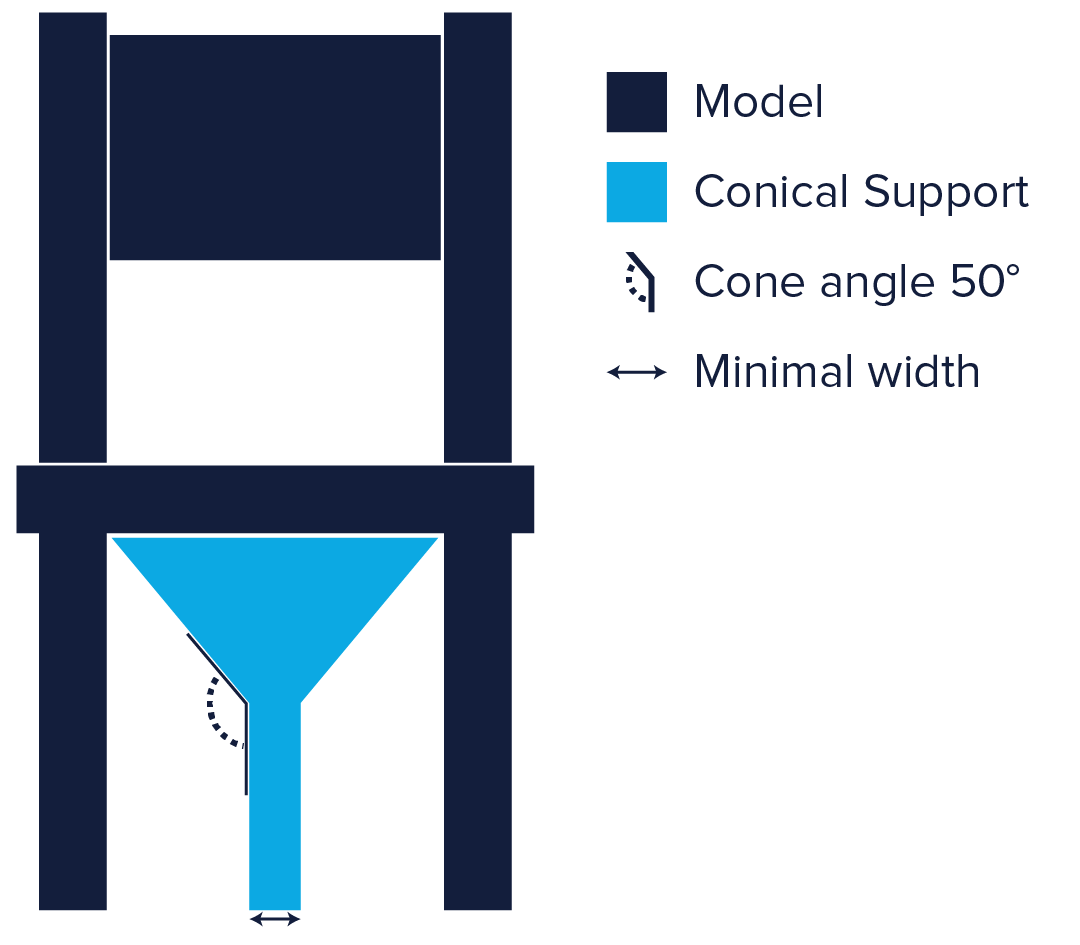 The Cura Engine now includes fixes for common problems, such as an alternate skin rotation that combats top-layer pillowing and an alternate extra wall for better infill adhesion. A “combing” feature enables the print head to move around already-printed parts to avoid collisions. Several “experimental” features are also included, like a conical support option, a draft shield setting that prints a 1-layer wall around the part to prevent air from hitting it and causing warping, and a cool-sounding “fuzzy skin” option that prints outer walls with a jittering motion for a “diffused” finish.
Additional changes to the Cura Engine include new settings for shells, infills, print speed, cooling and supports. Material waste is minimized with a retraction setting that allows you to compensate for oozed material after a travel move, plus a coasting feature that reduces oozing altogether by replacing the end of print paths with a short travel move.
Supported 3D printers include:
 Ultimaker Original, Original+, Ultimaker 2 Family, Ultimaker 2+ Family
- BQ Prusa i3
- BQ Witbox
- 3D Maker Starter
- RigidBot
- Malyan M180
- German RepRap Neo
You can find out more about Cura’s new features here. The open beta version of Cura 2.1 is now available for download, and Ultimaker looks forward to receiving community feedback to help make the software even better. Do you think it was time for another release already? Let’s discuss over in the New Cura 2.1 Release forum at 3DPB.com.
Subscribe to Our Email Newsletter
Stay up-to-date on all the latest news from the 3D printing industry and receive information and offers from third party vendors.
Print Services
Upload your 3D Models and get them printed quickly and efficiently.












You May Also Like
Solukon Goes Big with New SFM-AT850 Depowdering System
Solukon has released the SFM-AT850 depowdering system. The German depowdering specialist has updated its product line, and this machine replaces the SFM-AT800-S and SFM-AT1000-S. Rather than many small parts, this...
The Hidden Economics of Powder Bed 3D Printing: Closing the Loop in Powder Management
Automation is a very topical thing in additive manufacturing at the moment. With renewed scale, some clients are fervently looking to automate production. Other business cases only make sense with...
Oerlikon Adds ATLIX’s xBUILD 5000, Plans More for 2027
Oerlikon has installed a new ATLIX xBUILD 5000 metal 3D printer at its facility in Huntersville, North Carolina, marking the first production deployment of the system worldwide. The machine will...
The Science Lab You Can 3D Print
Researchers at Sweden’s Umeå University have shown how desktop 3D printers can be used to make lab equipment, giving scientists a cheaper way to build tools for their research. The...

























































