Paint By Numbers Inspires Jason Preuss’ 3D Printed 2D Paintings

One year ago, we reported on a Michigan man who 3D printed an incredible dome clock that stands 4 feet tall, 2 feet wide, and 1 foot deep and looks like it has been hand-carved and inspired by antique designs that pay great attention to intricate detail.

Jason Preuss
This designer, Jason Preuss, is a Michigan-based maker who has 15 years of clock-making experience. This grew more complicated when he purchased his first 3D printer a couple of years ago, and he’s been going strong mastering the fine art of 3D printing. His most recent work, which is equally as intricate in design as his clock-making work, is testimony to his artistry and printing skills. This work involves the production of mosaic tile looking 2D paintings using a 3D printer, and Hakaday’s blog has included some of the design and technical details — that were recently exhibited at the Midwest RepRap Festival in Goshen, Indiana — for everyone’s enjoyment.
Hackaday describes the effects of Preuss’ 3D printed 2D paintings as something “between very intricate inlay work and a paint by numbers kit” — and I couldn’t have said it better myself. How does Preuss create this effect? According to Hackaday:
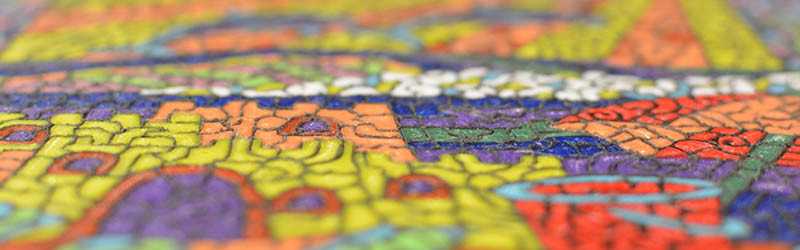
“[Jason] is using a 3D printer, a series of very specialized techniques, and a software stack that includes a half-dozen programs to print multicolor 2D scenes. This isn’t pigment, paint, dye, or ink; the artwork becomes a single piece of plastic with individual colors laid down one at a time.”
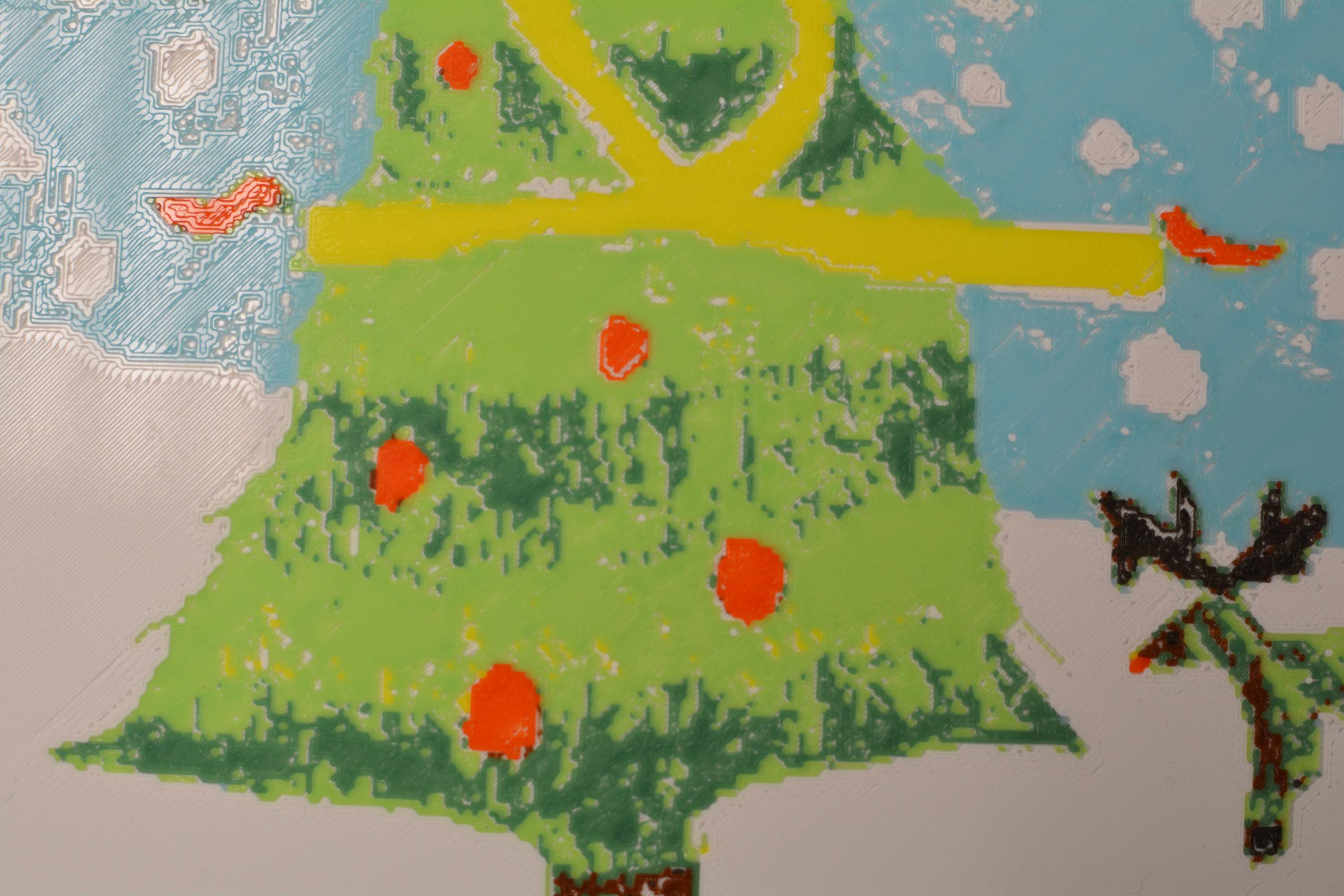
Paint by numbers is more than an artistic comparison here. Preuss has utilized this style of painting by copying a paint by numbers scene. He will outline the painting’s shapes, then separate them into different colored layers, printing it layer by layer — one color at a time. Since Preuss’ paint by numbers scenes use an average of 12 different colors, it can be an extremely labor-intensive process to get models into a slicer. You can just imagine from looking at his most detailed work (see below).
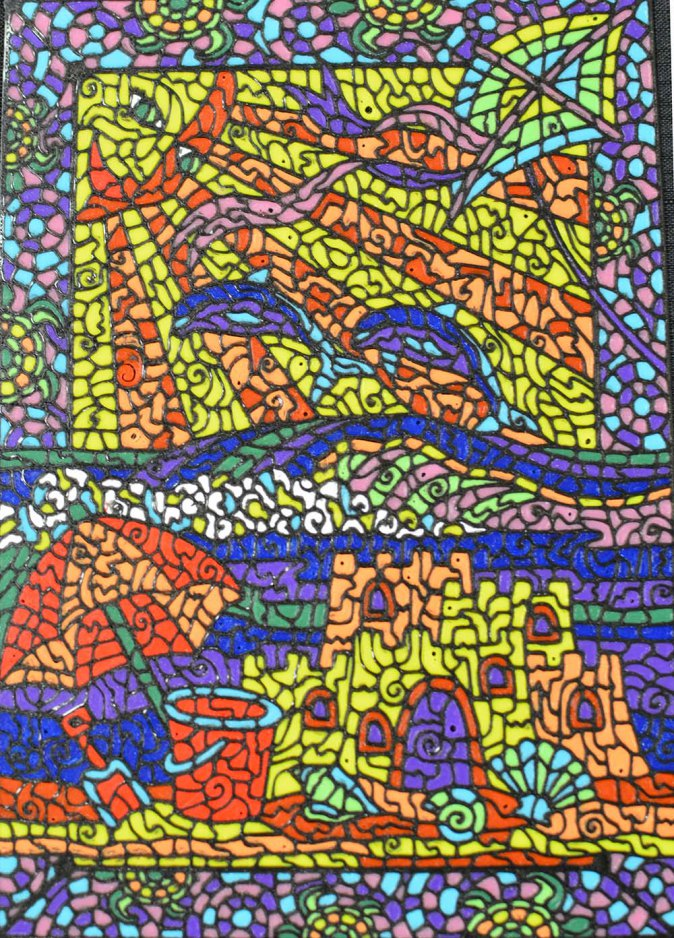
Hackaday aptly describes the “remarkable…artistry and craftsmanship” of Preuss’ 3D printed paintings. And from afar some of his work (like his beach scene below) looks like an amazing mosaic picture with tons of separate little tile pieces. Hackaday writes:
“If you don’t know what you were looking at, you would just think these art pieces are a strange industrial fabrication process. Once you look closer, you have an immediate respect for the artistry and craftsmanship that went into a sheet of plastic only a few millimeters thick and no bigger than a piece of paper.”
Because the design and printing process used here is fairly elaborate, it has taken Preuss — who considers 3D printing a hobby when he’s not busy with his family or day job — quite some time to document. He already has an active Thingiverse page that includes designs like a pop out basket, puzzle creator, celtic knot trivet, bubble frames, games, and ornaments. And now, you can add intricately designed and attention grabbing colorful 2D paintings to that growing list of 3D printed designs — with downloadable Thingiverse files to follow soon! How do you see processes like this making an impact on the world of art and technology? Discuss in the Preuss 2D Art is 3D Printed forum over at 3DPB.com.
Subscribe to Our Email Newsletter
Stay up-to-date on all the latest news from the 3D printing industry and receive information and offers from third party vendors.
Print Services
Upload your 3D Models and get them printed quickly and efficiently.













You May Also Like
Solukon Goes Big with New SFM-AT850 Depowdering System
Solukon has released the SFM-AT850 depowdering system. The German depowdering specialist has updated its product line, and this machine replaces the SFM-AT800-S and SFM-AT1000-S. Rather than many small parts, this...
The Hidden Economics of Powder Bed 3D Printing: Closing the Loop in Powder Management
Automation is a very topical thing in additive manufacturing at the moment. With renewed scale, some clients are fervently looking to automate production. Other business cases only make sense with...
Oerlikon Adds ATLIX’s xBUILD 5000, Plans More for 2027
Oerlikon has installed a new ATLIX xBUILD 5000 metal 3D printer at its facility in Huntersville, North Carolina, marking the first production deployment of the system worldwide. The machine will...
The Science Lab You Can 3D Print
Researchers at Sweden’s Umeå University have shown how desktop 3D printers can be used to make lab equipment, giving scientists a cheaper way to build tools for their research. The...