Taking 3D Printing Outside into the Plein Air


We spend a lot of time indoors, and generally the more fascinated you are by technology, the more time you spend inside…or at the very least within reachable distance of a power outlet. While 3D printers have been becoming desktop with ease, they have not yet become lap-top and so 3D printing activities usually require that we sacrifice the feeling of the wind in our faces in exchange for the excitement of creation.
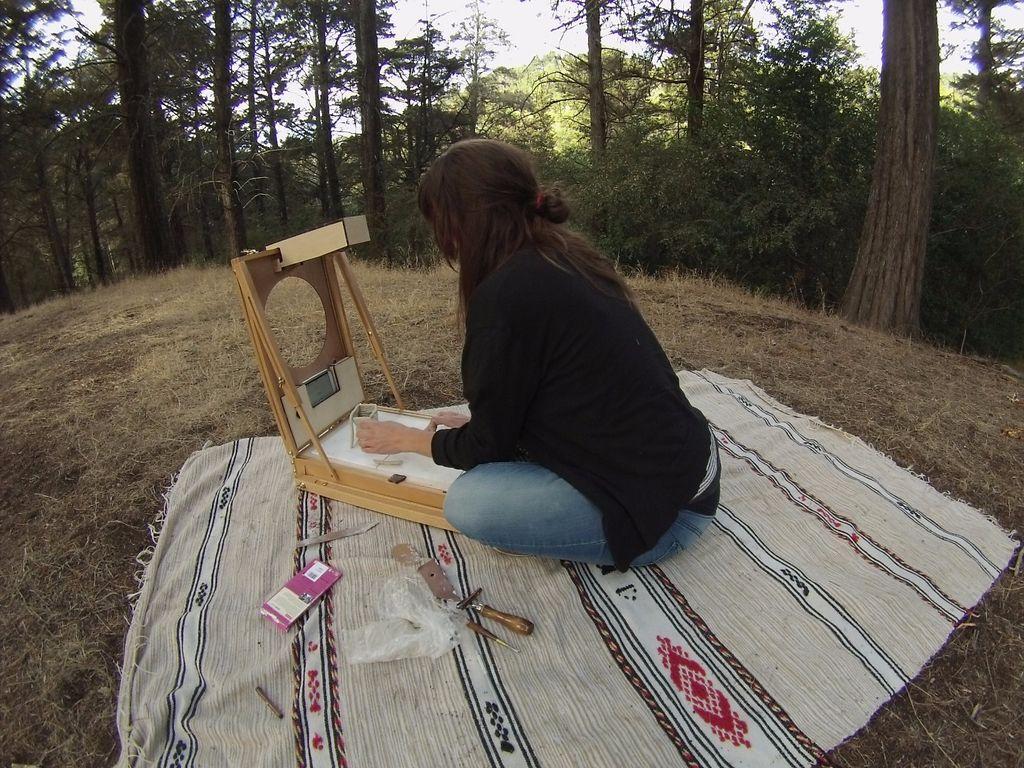 Well, at this point I have to admit that I have misled you a bit. If you were thinking that I was about to tell you about some new way that you can use your 3D printer outside, I’m sorry, but what I am going to tell you about is a way that some people who are interested in 3D printing are using the process to create an outdoors compatible mode of creation.
What is worth knowing about though is that Instructables member Laura Devendorf worked through the process of engaging in plein-air 3D printing as part of her Autodesk Artist-in-Residence and has released the technical details and how-to’s for all to enjoy. So what exactly is this? The idea of painting en plein air was developed by French Impressionist painters in the 19th century as the act of painting outside, the idea being that it was important to focus on what the eye actually sees rather than the image after it is processed and refined by the intellect.
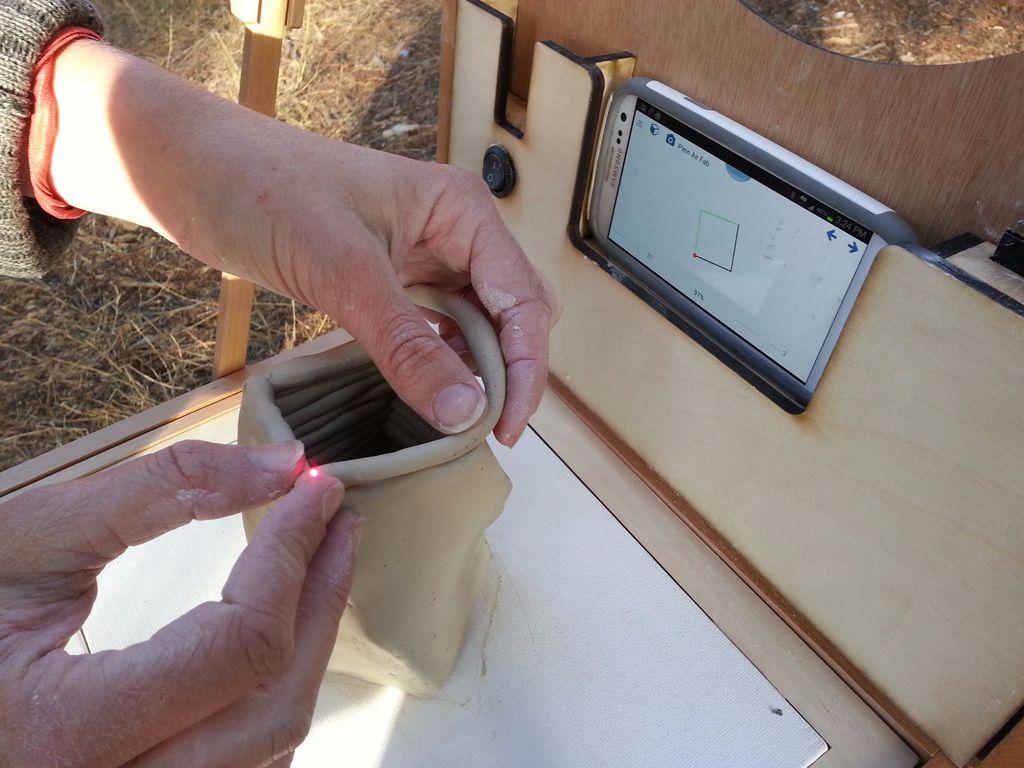 The creation she is presenting is comprised of a portable easel, a laser guide, and a mobile app. The laser guide traces the environment and the data it produces is fed through the mobile app to create a 3D model. So far, fairly familiar. What happens then is that instead of sending the commands from that model that would be necessary for a 3D printer to fabricate the model, the commands are sent as instructions for the human hands. The hands then act as the stand in for the 3D printer. On Devendorf’s website, adorably called Art for Dorks, she explained the ideas with which she worked while developing this project:
“[T]his project explores the role of place in digital fabrication. With this project, I hope to take a step back from the relationship between hand and machine to consider the role for the entire body-in-space and the machine. I like to think of it as a way to bring generative, site specific, and instruction art into conversation with one another.”
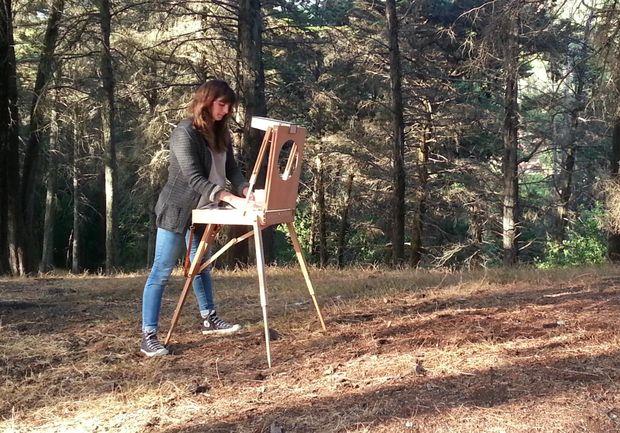 This project is a particularly interesting response to the fear that arises with any technology: that its use will leave us without the skills to do on our own. With this setup, there is no need to resolve the choice between either digital or hand made, but rather one informs the other and back again.
And in any case, this way you don’t have to get sand in your printer but you can still be obsessing about your projects…and who knows, it might actually start a conversation or two! Let’s hear your thoughts on Devendorf’s work in the 3D Printing Plein Air forum thread on 3DPB.com.
Subscribe to Our Email Newsletter
Stay up-to-date on all the latest news from the 3D printing industry and receive information and offers from third party vendors.
Print Services
Upload your 3D Models and get them printed quickly and efficiently.












You May Also Like
Why Qualification Is Becoming the Next Frontier for AM in Energy
The energy industry doesn’t have much room for failure. Components used in power generation often operate under extreme temperatures and pressures, sometimes for decades at a time. That’s one reason...
Fathom CEO Rush LaSelle on Why Additive Manufacturing Is Growing Up
For years, the additive manufacturing (AM) industry promised to reinvent production. But as the technology matured, the real challenge turned out to be proving that 3D printed parts could be...
Rheinmetall Uses Ducting Made with Minifactory for Challenger 3 Tanks
Rheinmetall UK is using Minifactory Material Extusion as the primary production method for tank ducting on the Challenger 3 Main Battle Tank program. The Challenger 3 is the UK’s formidable...
Q5D and Molrix To Supply US Army With Harness Robots
Q5D Technologies and Molrix will offer their advanced harness production manufacturing units to the US Army. One production cell will be used for the SkyFoundry project, while two further systems...