General Motors and Stratasys India Launch 3D Printing Art Program for GM Employees


 The recent resurgence of the maker movement has started a great worldwide conversation about STEM education and how important it will be to our immediate future. As we create more solutions to humanity’s problems using science and technology it is clearly vital that we ensure that the next generation is equipped with the tools to continue that progress without being left behind. However those discussions often leave out the important role that art plays in the development of technology and design, and the indispensable value that it adds to almost every STEM-related field. Many within the 3D printing industry understand its importance however and are starting to include it in their outreach to traditional industries–with STEAM focuses.
 Back in April, the largest 3D printer manufacturer in the world opened their new Stratasys 3D Printing Experience Center in Bangalore, India for the express purpose of educating the local business population on how additive manufacturing can benefit them. Not only does it feature all of Stratasys’ up to date line of 3D printers with a staff on hand to demonstrate their capabilities, but they are also making sure that business leaders are aware of every facet of the expanding 3D printing and design ecosystem. Stratasys is aware that there is more to 3D printing than the printers, companies also need to understand CAD programs and the need for an artistic eye when using design software.
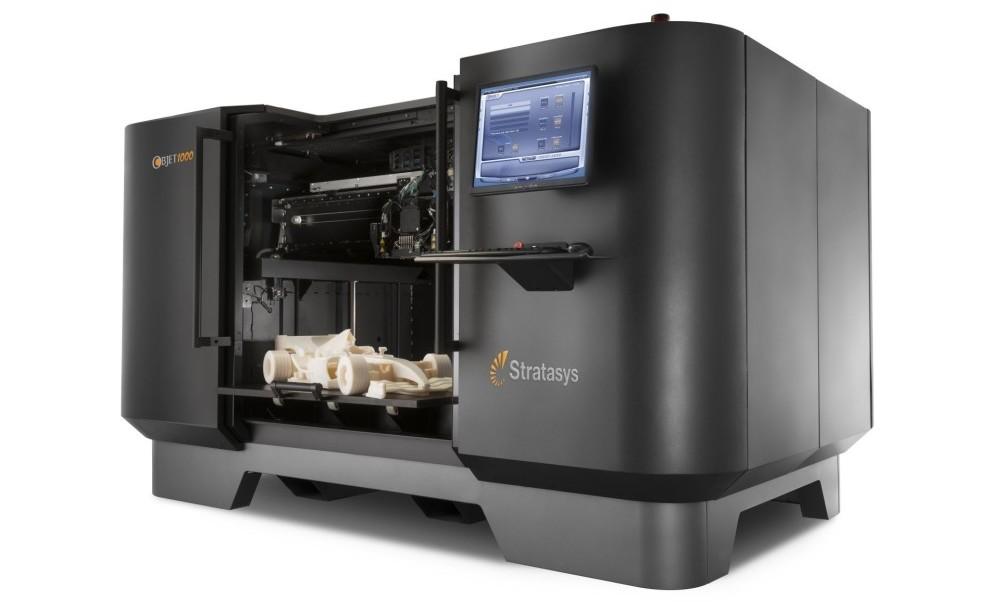
Stratasys ObJet1000
Recently General Motors partnered up with Stratasys India to launch the first 3D Print Art program for GM’s design employees in Bangalore. The three-month long program will offer GM designers the chance to work with each other and fine artists by creating 3D printable concepts to learn how 3D printing and design technology can support their work. That also includes developing their own 3D design solutions that can be applied to the development of better products for GM customers.
“From resilient prototypes to high-performance end-use parts, 3D printing breaks down barriers to innovation for manufacturers across segments. Through this unique 3D printing program, we aim to refine our team’s form visualization skills and enhance their design sensitivity,” explained the director of General Motors Technical Center (GMTC), Anil Saini.
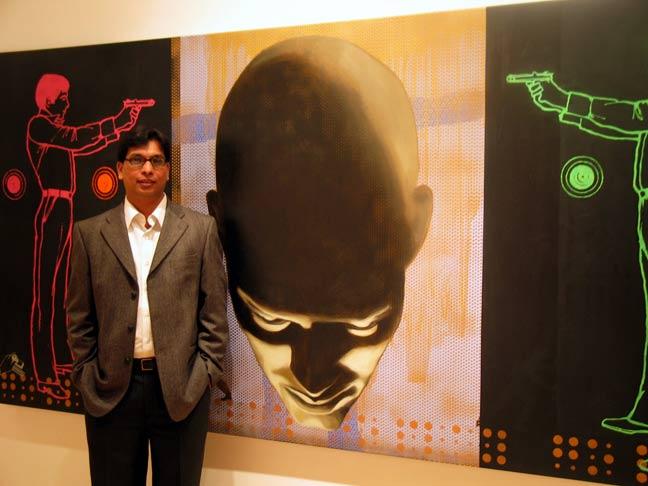
Ravikumar Kashi
The art program is being carried out in several different stages. The first was a two-day workshop that took place recently for fifteen GM designers. The workshop was led by artist and teacher Ravikumar Kashi at the 3D Printing Experience Center and will give them a crash course on implementing 3D technology into their workflow. Kashi is a well regarded fine artist and his work has been exhibited in museums, art galleries and art fairs all over the world, so he is ideally suited to help designers apply abstract art techniques to modern industrial design. The fifteen GM designers will have two months to design and present their models.
“3D printing is changing the way the world is manufacturing. We are delighted to partner with the designers from GM India to prove 3D printing’s potential, even in abstract art forms.” said General Manager of Stratasys India, Rajiv Bajaj.
-

- Artwork by Ravikumar Kashi
-
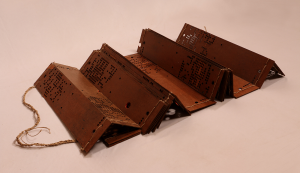
- Artwork by Ravikumar Kashi
-
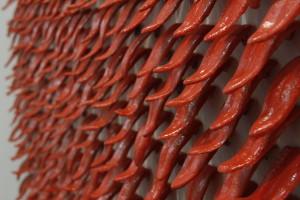
- Artwork by Ravikumar Kashi
The GM designers entries will be judged by a special jury consisting of Stratasys and GM executives as well as other industry veterans. The judging criteria will consist of the uniqueness of the idea, the designs aesthetics, attention to detail and the potential for the concept to be developed into an executable product. GM and Stratasys India are expected to announce the winning model some time in November of 2015. The winning design will be 3D printed by Stratasys and displayed at both General Motor’s headquarters and at the Stratasys 3D Printing Experience Center in Bangalore.
Discuss this story in the GM / Stratasys Art Forum thread on 3DPB.com.
Subscribe to Our Email Newsletter
Stay up-to-date on all the latest news from the 3D printing industry and receive information and offers from third party vendors.
Print Services
Upload your 3D Models and get them printed quickly and efficiently.













You May Also Like
How One Artist Is Using 3D Printing to Tell Stories About the Ocean
Artist Kimberly Callas sees something different when she looks at a 3D printer. Where others see a machine for making parts, she sees a way to tell stories about the...
Bambu Lab Wants Home 3D Printing to Feel Less Like a Workshop with PLA Pure
As desktop 3D printers become increasingly common in homes, Bambu Lab is focusing attention on something beyond print speed and hardware features. This week, the company launched a new filament,...
AM Asia Watch: China Exported 2.46 Million 3D Printers in Four Months
China’s consumer 3D printer industry seems to be reaching a new level of global dominance. According to Chinese state media outlet China Global Television Network (CGTN), China exported 2.46 million...
Bambu Launches A2L: What the New Printer Reveals About Its Strategy
Bambu Lab continues its relentless march for 3D printing domination with the launch of the A2L. The 330 × 320 × 325 mm printer will have a nozzle temperature of...