NASA Soon Able to 3D Print Trees

3D bioprinting has been all over the news lately. From 3D printed liver tissue, to 3D printed hip implants, the technology is progressing in a exponential fashion. NASA is even trying to get involved in the revolution.
 Lynn Rothschild, and her Ph.D. student Diana Gentry are working on something which could prove to be extremely useful in space, 3D printed trees. Both researchers are from Stanford University, and have biology backgrounds. Rothschild has been a major influencing figure in helping to bring synthetic biology to NASA. Together, they are looking to use a method of 3D bioprinting to culture cells which will excrete non-living material. An example of this is wood, or even meat. Rothschild and Gentry are specifically working with NASA to figure out how to generate wood in space.
Last fall, the researchers received $100,000 in funding from NASA’s Innovative Advanced Concept Program, and if all goes as planned, they hope to have a proof of concept by late this year. So how exactly will their 3D bioprinting process work? Basically the printer will spit out layers of living cells in a specific pattern. The cells will be extruded from the printer, in a gel solution, onto a growth plate of sorts. The cells then are signaled chemically to excrete a specific material. In this case it is wood. The product of the print would be no different than a freshly cut down tree. Rothschild explained the process a little bit further,
“Cells produce an enormous array of products on the Earth, everything from wool to silk to rubber to cellulose, you name it, not to mention meat and plant products and the things that we eat. Many of these things are excreted. So you’re not going to take a cow or a sheep or a probably not a silk worm or a tree to Mars. But you might want to have a very fine veneer of either silk or wood. So instead of taking the whole organism and trying to make something, why couldn’t you do this all in a very precise way – which actually may be a better way to do it on Earth as well – so that you’re printing an array of cells that then can secrete or produce these products?”
The benefits of this technology to NASA would be that astronauts would not need to bring heavy, large pieces of wood up to space. They could bring, much lighter, smaller materials up there, and then print out the cells, 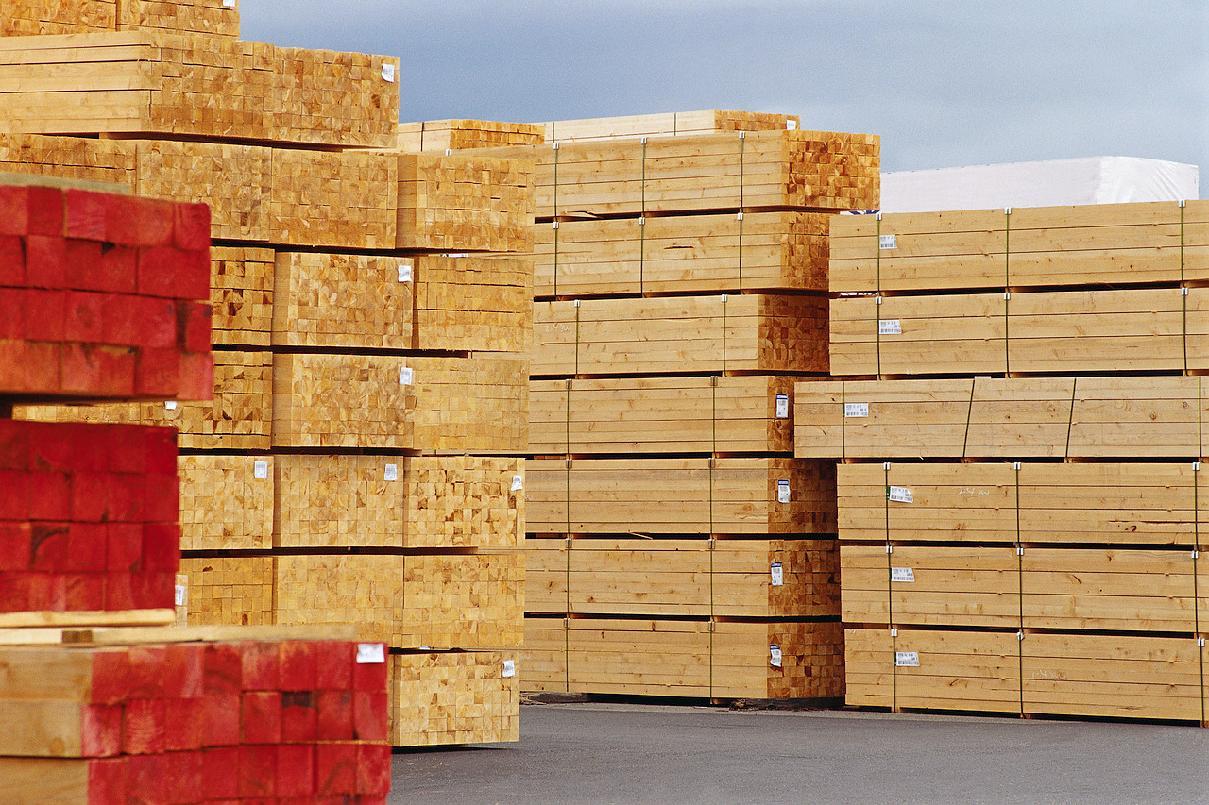 which will excrete the wood they need for whatever projects is being worked on.
The technology would certainly be valuable as well here on Earth. The positive impacts to the environment and nature would be staggering. Imagine being able to print out your own steak, saving millions of animals annually from butchering, or print out your own 2X4’s at the hardware store instead of cutting down a tree.
The methods that are being researched by Rothschild and Gentry could also eventually lead to new composite materials such as carbon fiber reinforced wood, or wood that conducts electricity. There are obstacles to get past before such a technology will be viable, but these researchers, as well as many others around the globe, are well on their way to advancing many new types of 3D bioprinting.
Discuss this research with other 3D printing enthusiasts here: https://3dprintboard.com/showthread.php?1699-NASA-Close-to-Being-Able-to-3D-Print-Trees
Subscribe to Our Email Newsletter
Stay up-to-date on all the latest news from the 3D printing industry and receive information and offers from third party vendors.
Print Services
Upload your 3D Models and get them printed quickly and efficiently.











You May Also Like
Killer 3D Printing Applications: Factory Automation
Across the globe, factories are using 3D printing to improve operations. Iterative improvements to production lines, automation tools, repairs, additions, custom parts for custom lines, housings for new sensors, and...
American Rheinmetall Orders $300K in 3D Printed Titanium Prototypes for U.S. Army Systems From IperionX
As I’ve noted more than once in recent months, 2025 was the year for critical minerals, and the U.S. additive manufacturing (AM) industry made the most of that. IperionX, the...
Roboze Opens U.S. Aerospace & Defense Headquarters in El Segundo
The manufacturing sector is made up of clusters: “geographic concentrations of interconnected companies” that both cooperate and compete with each other. Of course, this is true about any sector in...
EOS Invests $3M In Its Texas Manufacturing & Logistics Facilities to Serve North American Customers
The trajectory of reshoring under President Trump has been largely a mixed bag so far. While tariffs still seem to be doing more harm than good to the U.S. domestic...