Win the Battle of Britain Again with Your 3D Printed RC Spitfire Mark XVI

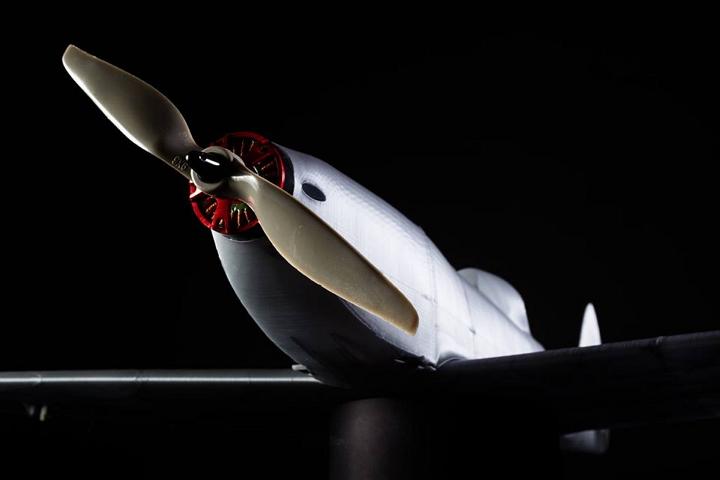 The Spitfire was built by Reginald J Mitchell, and the iconic aircraft represented the last iteration of long line of development at Supermarine. The warplane marked a quantum leap in the development of monoplane aircraft design and engine technology, and it was easily one of the most important military aircraft in history.
The first of them, the Mk1 Spitfires, went into service with the RAF in 1938, and though they appeared fragile, they were capable of outstanding performance packed with overwhelming firepower. After their critical role in the Battle of Britain, Spitfires went on to be deployed and fight in every theater of the Second World War, and they stayed in active RAF service until 1954.
By the end of the plane’s development, the Spitfire made use of an engine which produced more than twice the horsepower of the original, take-off weight and rate of climb had doubled, the rate of fire had been jacked up five times and the maximum speed of the fighter was pushed up a third.
Much of the increase in power could be attributed to the inclusion of the Packard Merlin engines, an American powerplant built by the Packard car company. By the end of their production run, some 1,053 Spitfire Mk XVI models, the last of the line, were produced.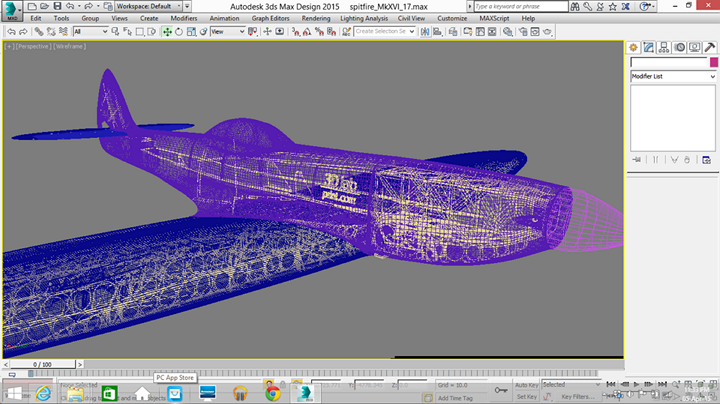
Stepan Dokoupil, an architect and pilot in Brno, Czech Republic, knows the history of the Supermarine Spitfires well, and so he decided to take the time to design, build and test a working model version of the classic warplane he sells through his 3D LabPrint site.
Dokoupil calls his creation “the first fully printable airplane with suitable files prepared for your 3D printer,” and he says the plane has flight characteristics which are comparable to — or better than — classic build model airplanes.
To have one of his planes as your own and take to the skies, you simply download and then print one, and according to Dokoupil, it should take just $10 worth of filament.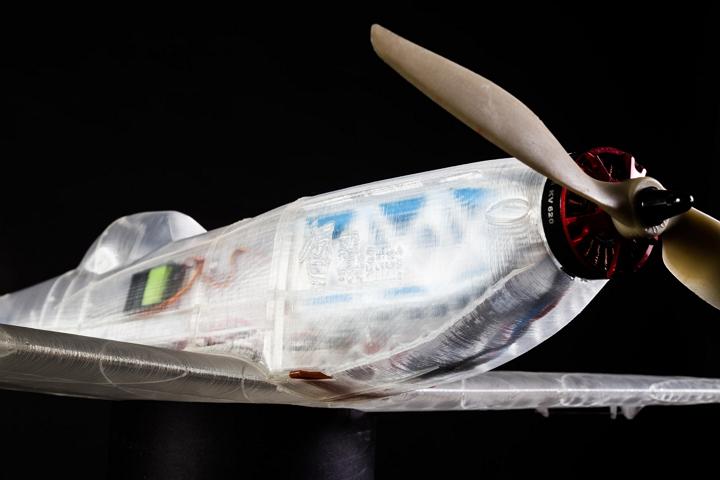
“Both parts of the wing and the fuselage feature extensive, high tech, 3D structural reinforcement which makes the model very rigid while still maintaining the lightweight airframe and exact airfoil,” Dokoupil says of his design. “This perfect and exact 3D structure is possible only due to additive 3D printing technology, so welcome to the 21th (sic) century of model flying.”
And the planes are more than just functional and good-looking, they also comply with ACES air combat rules.
Dokoupil says the planes are easy to assembly and don’t require additional tools or hardware, and that once the various elements of the build are printed, they need only be glued together. He also provides detailed build documentation to guide prospective pilots through the process of adding the necessary brushless motor, ESC, servos and radio system via a step-by-step set of printed instructions and videos.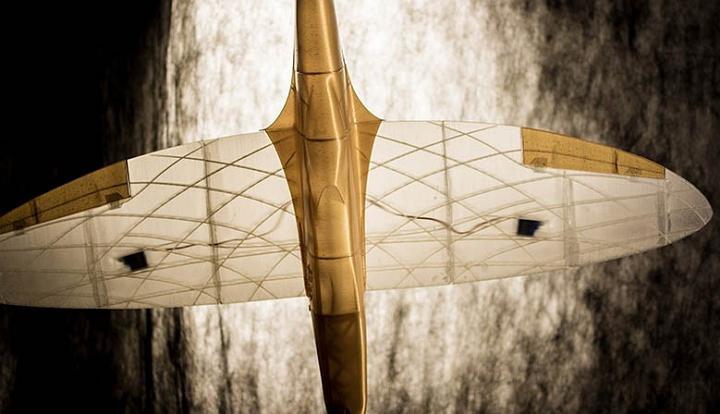
So what do you have when you’re done? For the $20 price of the Supermarine Spitfire Mark XVI, you’ll have a performance model airplane which can fly for more than seven minutes at full throttle and at speeds of 150 kph.
The price does not cover the necessary motors and servos, but Dokoupil’s extensive documentation and build sheets provide all the information you’ll need to get your hands on those.
Subscribe to Our Email Newsletter
Stay up-to-date on all the latest news from the 3D printing industry and receive information and offers from third party vendors.
Print Services
Upload your 3D Models and get them printed quickly and efficiently.













You May Also Like
EOS Bets on Mexico’s AM Market with Axiomatek Sales Channel Deal
Mexico is one of the biggest beneficiaries of the push to diversify manufacturing out of China. This development is perhaps inevitable given the current global trade environment, but even with...
Stratasys Showcases 3D Printed Automotive Applications & New Printer at IMTS 2026
Just ahead of last week’s International Manufacturing Technology Show (IMTS) in Chicago, Stratasys launched the F870, a new large-format, production-grade FDM 3D printing platform designed to drive industrial manufacturing at...
3D Printing Financials: $28M in China, U.S. Deals and a Metal AM Comeback
Money continues to go into additive manufacturing (AM). From a $30 million raise for a Chinese metal 3D printing company to new funding for naval AM and a European company...
Let the Games Begin! Xi Throws Down the Advanced Manufacturing Gauntlet
Sangmin Lee went to TCT Asia back in March and reported on the event for 3DPrint.com. He wrote two articles arguing that China’s AM industry looks “ready to scale.” This...