3D Printing Aids Babies Healing from Flat Head Syndrome

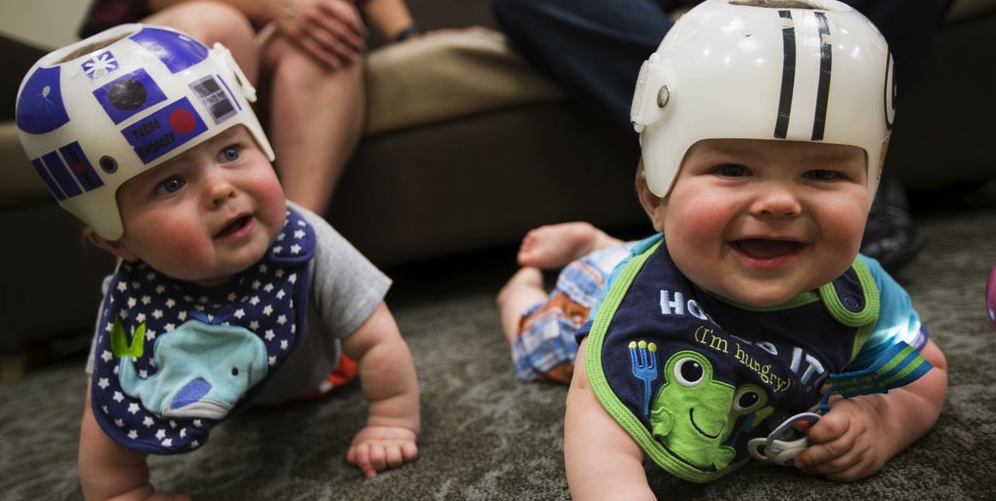
We have heard about many groundbreaking applications of 3D printing in the medical arena — far too many to list here. Simply stated, 3D printing’s ability to produce quality products customized from body scans to the exact specifications of the patient, positions the technology to make great contributions in a variety of medical and dental applications. Recently “headway” is being made around the use of 3D printing for “CranioCaps” to treat a condition in infants’ known as Flat Head Syndrome.
In 1992, the American Academy of Pediatrics launched a campaign called 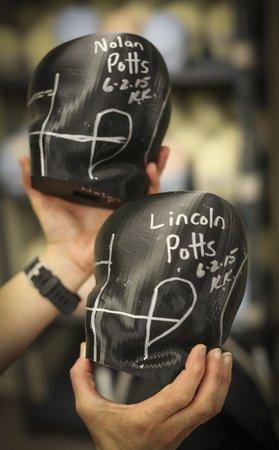 “Back to Sleep” to raise awareness about placing infants on their backs while sleeping, in order to prevent Sudden Infant Death Syndrome (SIDS). While this has helped reduce SIDS cases, more and more infants now sleep on their backs — potentially leading to what is commonly called Flat Head Syndrome. Flat Head Syndrome is a condition that occurs when a baby positions his or her head the same way repeatedly. This positioning can either occur on the side or the back of the head, and over time the pressure on that part of the head flattens it.
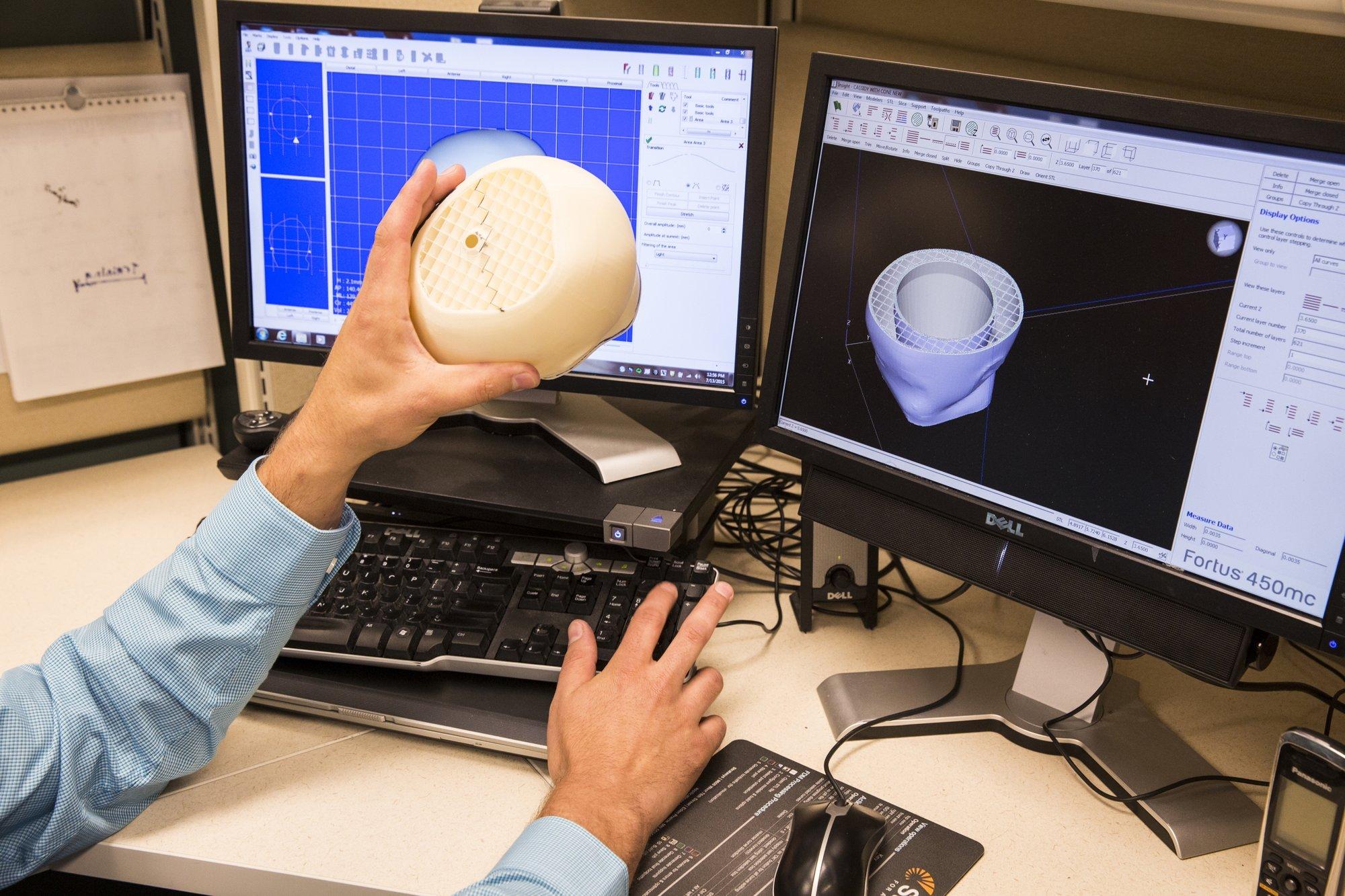
One way to correct this condition is by outfitting the babies with helmets, also known as “CranioCaps” that are custom-fitted for the babies to wear during a critical 14 week growth period. You can imagine that 3D printing can come in quite handy making these customized CranioCaps, and it has!
 9 month old twins, Lincoln and Nolan Potts, are two such lucky babies who have received support healing from Flat Head Syndrome. One got a conventionally made CranioCap, while the other receieved a 3D printed version. First it was Nolan’s turn. St. Paul, Minnesota’s Gillette Children’s Specialty Healthcare scanned Nolan’s head, emailing it to a carving company in Florida. It took about a week for the modeled head to arrive back, and work could then begin on vacuum-molding Nolan’s CranioCap.
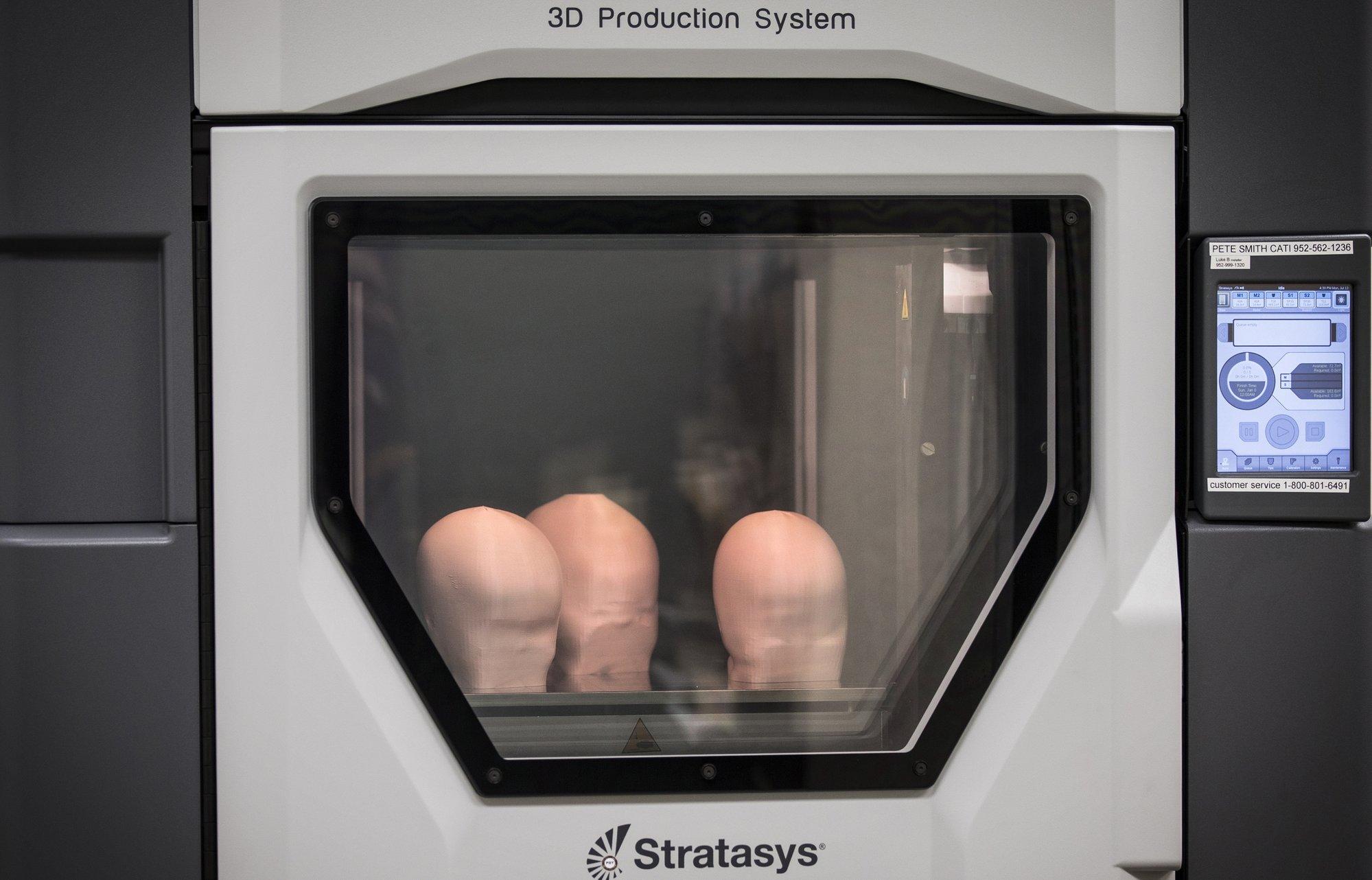
Nolan’s twin, Lincoln, benefitted from the luck of timing, as the hospital had purchased a “$225,000, refrigerator-sized” Stratasys 3D printer by the time they were ready to start on his own CranioCap. It took 5 hours overall: three hours to make the replica of Lincoln’s head and two to make the CranioCap. Stratasys machines make the head molds that lead to CranioCaps. The twins’ mother was delighted by the presence of 3D printing technology in her child’s treatment program, calling 3D printing “awesome” and saying she first heard about it on the television show “Grey’s Anatomy.”
Gillette Children’s Specialty Healthcare reports that it treats around 1,100 children with Flat Head Syndrome annually. According to one 1996 study, this syndrome saw a dramatic rise from 1 in 300 to 1 in 60 infants diagnosed. (But there is no definitive study of the rate of occurrence of Flat Head Syndrome today.) Just the case numbers that Gillette Children’s Specialty Healthcare sees annually proves that the Stratasys printer will definitely be a welcomed addition at the hospital, as more babies, like Lincoln and Nolan Potts, get treated in an efficient manner with hopefully full recovery awaiting them.
Let’s hear your thoughts on this story and how 3D printing can help a variety of conditions like this in the 3D Printing & Flat Head Syndrome forum thread on 3DPB.com.
Subscribe to Our Email Newsletter
Stay up-to-date on all the latest news from the 3D printing industry and receive information and offers from third party vendors.
Print Services
Upload your 3D Models and get them printed quickly and efficiently.













You May Also Like
How Should Businesses Build New Business? Dirk Simon Weighs In — Part 1
Dirk Simon had deep experience in materials and chemistry before joining the 3D printing industry. Instrumental in BASF and Farsoon’s market introduction, Dirk has spent a lot of time thinking...
The Frankenservice Part 2: Have Your Cake and Eat it Too
This series of articles delves into a thought experiment. What if we let go of using a few machines very optimally, but instead use lots of different machines to meet...
The Additive Chicken Coop, Part IV: Lemmings
If we look at our past, we can see how making custom machines, incessantly watching ourselves, and our inability to rescope shaped our industry. We have also looked at the...
The Additive Chicken Coop, Part III: Bananas
A friend of mine, Ed Davis, once pointed out the level of strategic replication in additive. I wasn’t aware of it before and haven’t been able to unsee it since....