FIT AG Set to Invest €20 Million in German AM Facility

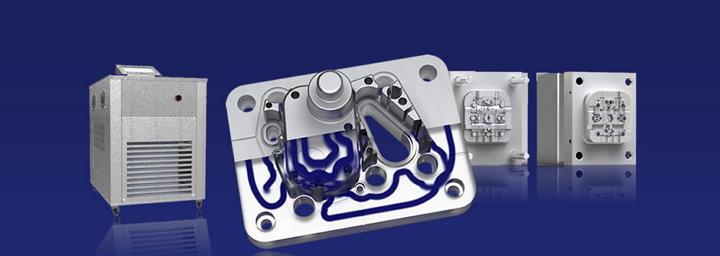
 FIT Production GmbH, an autonomous division of FIT Additive Manufacturing Group, focuses on creating high-performance, contract manufacturing components via additive manufacturing.
With nearly 20 years of expertise in the field, the company also provides expert engineering services for additive construction processes for the broad range of manufacturing methods. Now the German specialist in AM plans to invest €20 million (some $21.9 million) to build a new dedicated facility.
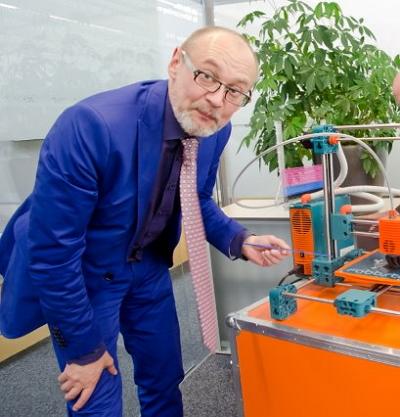
Carl Fruth, CEO of the FIT Group
Based in Bavaria, the FIT Group has experienced growth and gained a reputation as a reliable contract manufacturer and outsourcing partner as worldwide demand for innovative additive parts for prototyping and volume manufacturing increases, high-tech industries such as motor sports, aviation and aerospace, and medical technology have led to this latest venture.
FIT began construction of the new, purpose-built facility, and will also be building a new office building. The company says this new plant will begin production and go live in 2016, and in doing so, it will become “the first facility entirely designed for high volume additive manufacturing.”
Called FAB@FIT, the company’s manufacturing concept is aimed at deploying high volume additive manufacturing knowledge to clients.
“We are about to enter a new era of industrial production, and with our new factory, we intend to make a major contribution to this trend,” says Alexander Oster, the CTO of the FIT Group. “The successful development of the new standard format 3MF for industrial print data by Microsoft and FIT has proved to be a good start.”
 Carl Fruth, the CEO of the FIT Group, says his company’s portfolio of production techniques has helped them double production capacities over the course of the past year alone.
“Having bought nine laser melting systems during the last year, we are now going to order three additional big multilaser melting machines as well as two further electron beam melting machines,” Fruth says. “The more important milestone is, however, to combine these technologies in an integrated purpose built additive factory with reliable processes, minimizing the technology risks. This is what qualifies us as the industrial partner to implement new manufacturing concepts with customers worldwide.”
According to Fruth, this “model plant” boasts a modular structure and will serve as a master concept for industrial additive manufacturing located near customers.
“By copying the entire production process of an efficiently operating Additive Design and Manufacturing (ADM) plant, manufacturing costs will be reduced and quality of the parts improved,” Fruth said. “Thus, the local concept FAB@FIT will turn into a successful international FAB@X.”
FIT AG was founded in 1995, and they are the creators of netfabb AM software.
 What do you think about the recent moves in AM coming out of German consortium FIT Group? Let us know in the FIT Group forum thread on 3DPB.com.
Subscribe to Our Email Newsletter
Stay up-to-date on all the latest news from the 3D printing industry and receive information and offers from third party vendors.
Print Services
Upload your 3D Models and get them printed quickly and efficiently.











You May Also Like
Is AI the Next Big Shift in AM? RAPID + TCT 2026 Takes a Closer Look
There’s a moment in every technology shift when something clicks. Suddenly, the tools that once felt like experiments start solving real problems. The separate breakthroughs begin to connect. And what...
AM Applications Expected to Reach $110B in 2034, New Report Finds
Additive manufacturing may still be a relatively young industry, but the number of real parts being produced with 3D printing is growing quickly. According to a new report from Additive...
AMR Webinar to Reveal 2025 3D Printing Market Data and What 2026 Will Really Look Like
On March 24, 2026, Additive Manufacturing Research (AM Research) will host a free webinar that many in the industry won’t want to miss. Titled “3DP/AM Market Insights: 2025 Review and...
AMS 2026 in Photos: Snow, Songs, and Serious Conversations
AMS 2026 may have been altered by flight delays and snow-covered streets, but once you made it, the energy felt anything but frozen. This year’s Additive Manufacturing Strategies, which wrapped...